
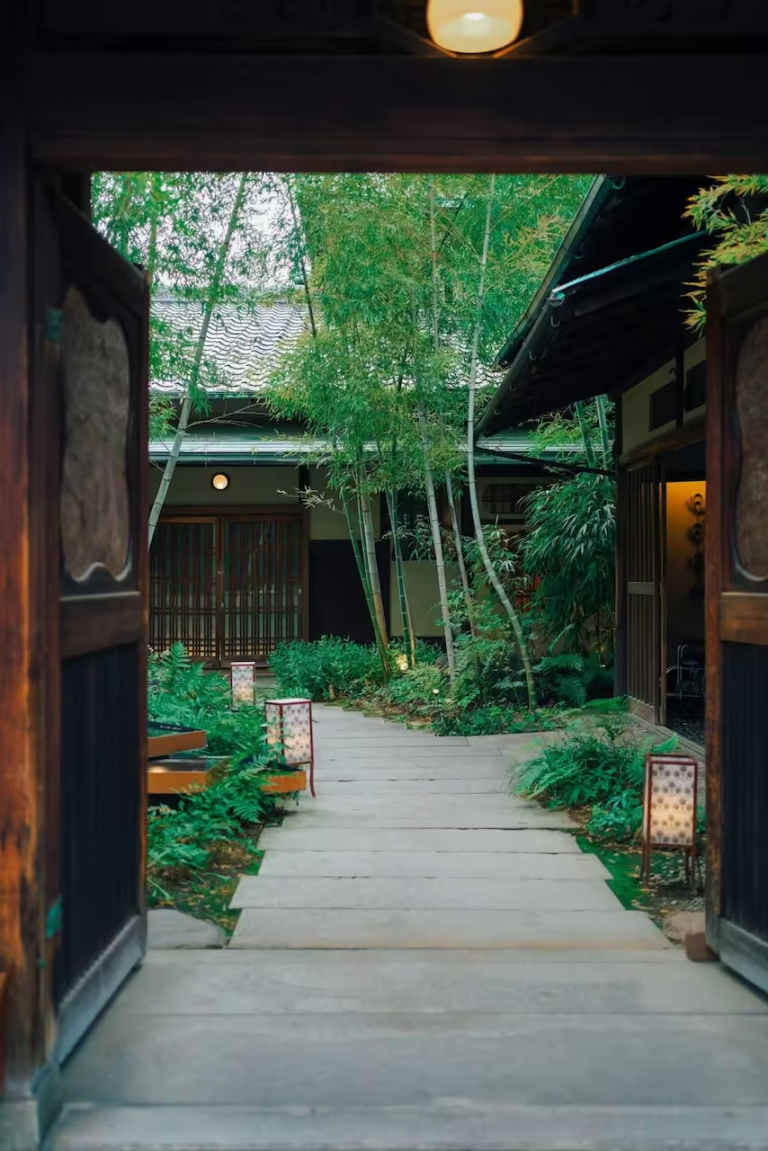
The kanji that form the word ryokan can be read separately: ryō, to travel, and kan, a building. A house for those who travel. But the word carries only half the experience. The moment you remove your shoes at the entrance, something shifts. A quiet boundary is drawn between the time outside and the time that belongs here. That is where a ryokan begins.
What Is a Ryokan — and What It Is Not
The first thing worth knowing is that a ryokan is not a hotel with tatami floors.
A hotel is designed for efficiency. Check-in is quick. Meals are optional. The room is a place to sleep between activities. A ryokan operates by an entirely different logic. Here, time itself is what is being offered.
The origins of ryokan reach back to the Edo period, when Japan's major roads carried the movement of feudal lords, pilgrims, and merchants across the country. Along these routes, establishments known as hatagoya — roadside inns — offered a night's lodging, a meal, and hot water to those who arrived exhausted from days of walking. Centuries have passed. The form has refined itself. But the underlying purpose has not changed: a ryokan is a place designed not merely to shelter you mid-journey, but to make the night itself worth arriving for.
In Japanese aesthetics, there is a concept called ma — the meaningful interval between things. The silence between sounds. The space between objects. The pause that gives the surrounding moments their weight. Time in a ryokan is shaped by this sensibility. The stillness between one course arriving and the next. The unhurried passage from bath to room to dinner. These are not absences. They are design.
What to Decide First
On Meal Plans — Why Dinner Is Rarely Optional
Most ryokan offer accommodation on an ippaku nishoku basis — one night, two meals, meaning dinner and breakfast are included. This is not simply a pricing convention. At a ryokan, the evening meal is an expression of the inn's philosophy. Which ingredients are chosen, how they are prepared, in which vessels they are served — all of this is how the inn speaks. Skipping dinner is, in a sense, asking to hear only part of the sentence.
Meal-free plans (sudomari) do exist. They make sense if you have specific dietary restrictions the inn cannot accommodate. For a first-time ryokan stay, however, a plan with both dinner and breakfast will give the most complete picture of what this kind of place actually is.
If you have allergies or dietary requirements — vegetarian, halal, severe shellfish allergy — inform the inn at the time of booking. Most ryokan will make adjustments when given adequate notice.
Price Tiers and What They Signal
Ryokan prices in Japan are quoted per person, per night, including meals — a point of confusion for travellers accustomed to room-rate pricing.
| Price Range | What It Signals |
|---|---|
| ¥15,000–¥25,000 per person | Community-rooted hot spring inns. Food is honest and local. The shared baths are the heart of the experience. |
| ¥30,000–¥60,000 per person | Visible intention in food quality, room design, and the manner of service. Private or reserved baths are usually available. The care taken becomes legible. |
| ¥80,000+ per person | Rooms with private open-air baths. Multi-course kaiseki-style dinners. Staff who know your name by the second hour. The price here is not for luxury in a conventional sense — it is for density of attention and generosity of space. |
Think of price less as a comfort scale and more as a measure of how much considered thought has been given to every element of the stay.
On Solo Travel
Many ryokan apply a single supplement, charging solo travellers a higher per-person rate than those sharing a room. This reflects the reality that rooms, meals, and staffing are designed around two guests. The number of ryokan that specifically welcome solo travellers is growing. Searching with a guest count of one on booking platforms will filter results to plans that accommodate single occupancy.
Where to Book
| Platform | Character |
|---|---|
| Ikyu.com | Strong curation of high-quality ryokan. English interface, international cards accepted. Detail and photography are reliable. |
| Relux | Strictly curated selection. English-compatible. Member benefits and exclusive plans. |
| Trip.com | Familiar to international travellers; useful for comparing prices or combining with transport bookings. |
| Booking.com | Wide inventory, but ryokan-specific plan details — meal options, bath configurations — are often less complete than on Japan-focused platforms. |
Find Your Inn
Browse ryokan on Ikyu.com (English) → Browse curated ryokan on Relux → Browse ryokan on Trip.com →The Choreography of Being Received
Arrival at a ryokan is not check-in. It is a beginning.
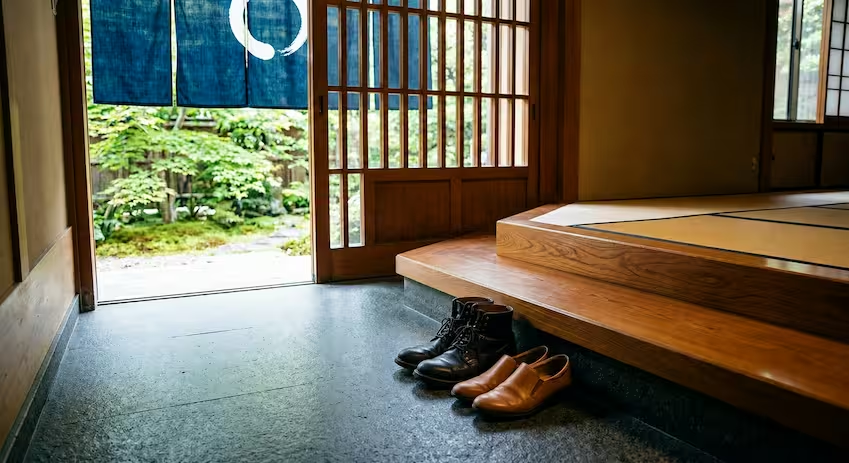
At the entrance — the genkan — you remove your shoes and place them with toes pointing outward, toward the door. This small act is both hygienic and symbolic: the world outside stays outside. A member of staff will be waiting. You will be guided through corridors that are wider and quieter than you might expect, toward a room that has been prepared with specific attention to season and occasion.
If you pass another guest in the hallway, a brief, quiet bow is enough. Be conscious of your volume. The stillness of a ryokan's corridors is intentional — not accidental — and other guests have come here for the same silence you have.
In the room, a welcome tea and seasonal sweet will often be waiting. A staff member will explain the bath schedule, dinner time, and room facilities. Should you need to communicate something specific, a translation app is entirely appropriate and will cause no offence.
In the tokonoma — the decorative alcove — you will find a hanging scroll and a simple flower arrangement. Both have been chosen for this season, possibly for this week. A quiet attentiveness from whoever chose it can be felt in the details.
Wearing It Is Part of the Experience
Many first-time visitors feel uncertain about the yukata, as though wearing it were a performance that required getting right. The anxiety tends to dissolve once you understand what the yukata is actually for.
In a ryokan, the yukata is the inn's way of saying: from here, a different pace applies. Changing out of your travel clothes and into the robe is less a costume change than a kind of agreement — that for the hours ahead, you will move at the speed this place was built for.
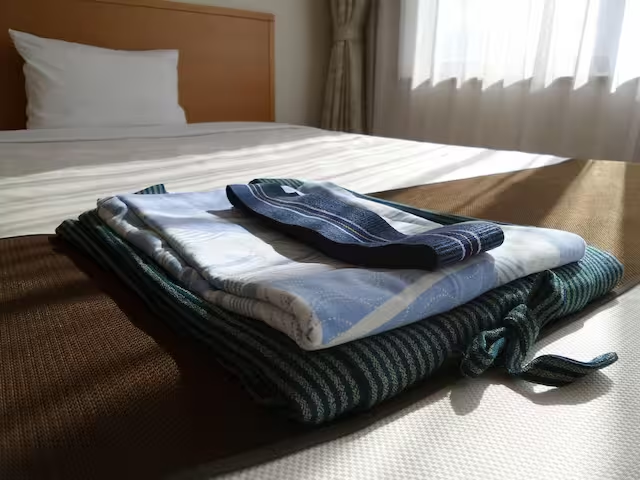
The yukata was originally a lightweight cotton robe worn after bathing. In modern ryokan, it is worn from the moment you change in your room through dinner, the baths, and back again — a single garment suited to the entire arc of the stay.
How to Wear Yukata
Which side goes first? The single rule that matters is migi-mae — right side first. From your own perspective, bring the right panel of the collar across your body first, then lay the left panel over it. Left-over-right is how robes are placed on the deceased at Japanese funerals. A simple test: if your right hand can slide naturally into the collar from the front, you are wearing it correctly.
What to wear underneath. Underwear beneath the yukata is entirely fine. T-shirts, camisoles, regular undergarments — wear whatever is comfortable. The fabric is thin, and layering is common.
Tying the obi. The obi sash is tied in a simple bow. For women, the sash sits at the natural waistline; for men, lower across the hips. The most important thing is not technical precision — it is keeping the collar (erimoto) neat and closed. A yukata that gapes open at the chest reads as careless in a shared space. Bring the collar together cleanly, and the robe will look exactly as it should.
Venturing outside. In the right surroundings — near a hot spring town's lanes, a riverside path, a covered arcade — wearing the yukata outside is entirely natural. Sandals (zōri) or wooden clogs (geta) are standardly provided. The first few steps in geta are awkward for everyone. That, too, is part of the experience.
Before You Step Into the Water
Think of the onsen simply as a place to cleanse the body and ease the fatigue of the day. A few points of etiquette, understood in advance, are all you need to feel entirely at ease.
The Ritual Before the Water
Upon entering the bathing area, go first to the washing station. Sit on the low stool, use the shower or hand basin to clean your body thoroughly, and only then enter the shared bath. This is not optional. The communal water is kept clean by the collective observance of everyone in it.
Before entering the bath, take a small ladle of water and pour it over your body — this is kakeyu, and it serves both to acclimatise the body to the temperature and as a final act of preparation. Keep your towel at the poolside; it does not enter the water. If your hair is long, tie it up so it does not trail in the bath.
On Tattoo Policies
Some ryokan — particularly those with large shared baths — maintain policies that restrict tattooed guests from using communal facilities. The origin of this practice is historical, connected to the association between visible tattoos and organised crime in an earlier era. The policy is evolving: a growing number of establishments have revised their rules in recent years, particularly in response to the increase in international visitors. The most straightforward solution is to confirm the policy with the inn before booking, or to select a room with a private bath where the question does not arise.
Private Baths — What They Are and How They Work
A kashikiri-buro — a reserved private bath — is a self-contained bathing room booked for a set period, giving complete privacy to a couple, family, or solo traveller. Booking is either made at check-in on a first-come basis or reserved in advance depending on the inn.
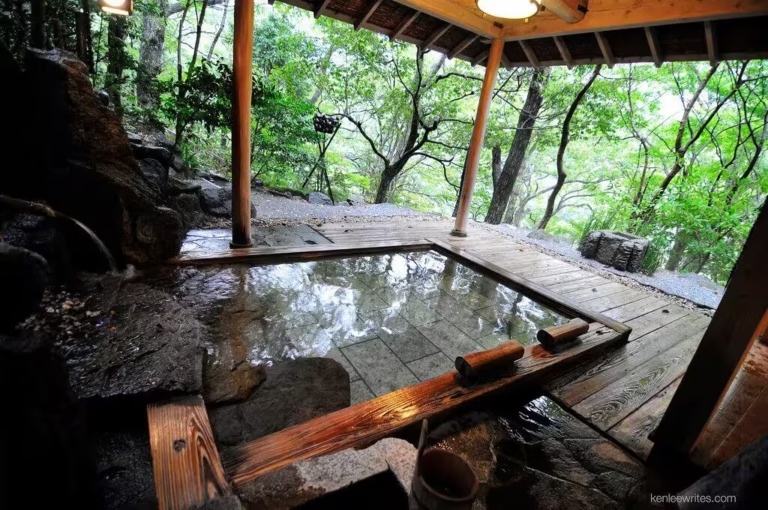
Rooms with a private open-air bath (rotenburo) attached offer something different still: the freedom to enter the water at midnight, before dawn, or at two in the afternoon — without a reservation, without a timetable, without another person in sight. This experience of bathing in genuine hot spring water on your own terms is one reason many guests seek out rooms of this kind.
Dinner as Ceremony
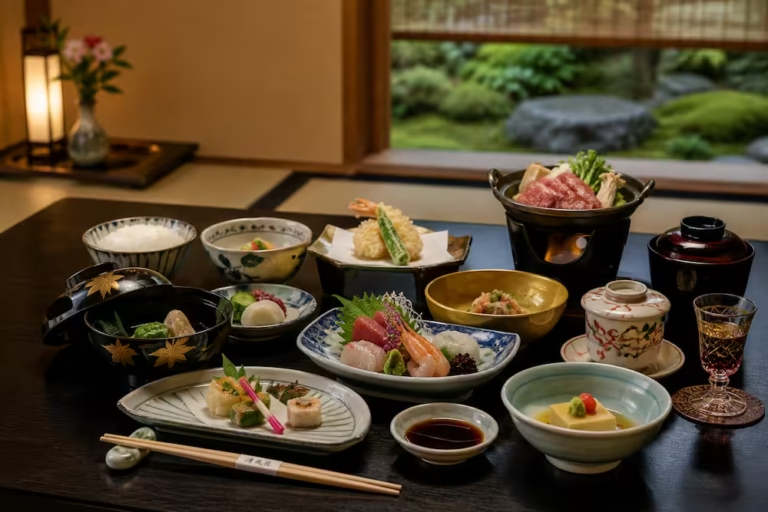
A ryokan dinner is not served. It is composed.
Kaiseki ryōri is a sequential meal in which each course arrives individually, in a specific order. It begins with sakizuke, a small appetiser that sets the register for the evening. Then wanmono, a lidded soup. Then tsukuri, sliced raw fish. Then yakimono, something grilled. Then takiawase, a simmered dish of seasonal vegetables and protein. Finally, rice, miso soup, pickles, and a light dessert to close. Each element reflects the season, the region, and the judgment of the kitchen.
Dinner is served either in-room — heyashoku — or in a dedicated dining space, depending on the inn and the plan. In-room dining is the most intimate arrangement; every decision about pace belongs entirely to you.
On the matter of etiquette: hot dishes are meant to be eaten while hot, cold ones while cold. When a lidded soup bowl is placed in front of you, lift the lid, set it to one side, eat, and replace the lid when finished. At the end of the meal, wipe your chopsticks clean and return them to their rest. These small attentions take almost no effort and are noticed.
Breakfast at a ryokan is a quieter, simpler affair — grilled fish, rice, miso soup, pickled vegetables, a soft-boiled egg — but it carries the same deliberateness. Many guests find, unexpectedly, that breakfast becomes one of the sharper memories of the stay.
Honest Answers to Real Concerns
Will ryokan accept foreign guests?
The vast majority will. Japan's accommodation sector has become considerably more accustomed to international visitors over the past decade, and most ryokan — particularly those listed on English-compatible platforms — have processes in place for guests who do not speak Japanese.
Will English be spoken?
It varies. Some ryokan have staff who are comfortable in English. Others operate primarily in Japanese. In practice, the core of the experience — the bath, the meal, the room — requires very little shared language. A translation app is a perfectly acceptable tool; no one will think less of you for using it.
What if I accidentally break a rule?
Ryokan staff do not approach international guests as potential offenders. They approach them as guests who are unfamiliar with the form — which is an entirely different thing. What carries you through is simpler than any rule: a respectful attitude, consideration for the guests sharing the space, and a willingness to follow the lead of those around you.
Can I really stay alone?
Yes. The atmosphere at most ryokan — quiet, unhurried, attentive without intrusion — suits solo travel particularly well. Search platforms with a guest count of one to find plans that accommodate single occupancy without prohibitive pricing.
Questions
How is a ryokan different from a Japanese hotel?
A hotel is designed around efficiency and convenience. A ryokan is designed around the quality of time. Food, bathing, and the room itself are not separate services to be selected — they are aspects of a single considered experience shaped by the inn's philosophy. You are not simply a guest occupying a room; you are spending a particular kind of evening in a place that has thought carefully about what that evening should feel like.
What do I do before getting into the onsen?
Wash your body thoroughly at the washing station before entering the shared bath. Pour a ladle of water over yourself (kakeyu) before stepping in. Keep your towel out of the water. These three things cover the essentials.
Can I wear anything under the yukata?
Yes. Underwear, a T-shirt, a camisole — whatever is comfortable. Layering is common and entirely accepted.
What is the difference between a private reserved bath and a room with a private open-air bath?
A reserved private bath (kashikiri-buro) is a shared facility booked for a set time slot — private during that window, but scheduled. A room with a private open-air bath is attached to the room itself and available at any hour, without reservation. The freedom of the latter — stepping into genuine hot spring water at midnight because the impulse arrives — is what draws many guests to seek it out specifically.
Which booking platform is easiest to use?
For English-language users who want reliable information and high-quality options, Ikyu.com (English version) and Relux are the strongest starting points. Trip.com is useful for those combining ryokan with broader travel bookings or comparing across a wider price range.
Can I stay at a ryokan as a solo traveller?
Yes. Many ryokan have a single supplement — a higher per-person rate for solo guests — but options exist. Searching with a guest count of one will surface plans designed for single occupancy. The ryokan atmosphere, quiet and attentive without being programmed, tends to suit solitude well.
A ryokan is not a place you need to fully understand before you arrive. What it asks is simpler: that you arrive with respect for the culture that shaped it, a smile for the people you encounter along the way, and enough consideration for the guests sharing the space to keep the corridors as quiet as you found them.
Cultural difference, approached with that kind of sincerity, rarely remains a barrier for long. It becomes, instead, the beginning of something.