
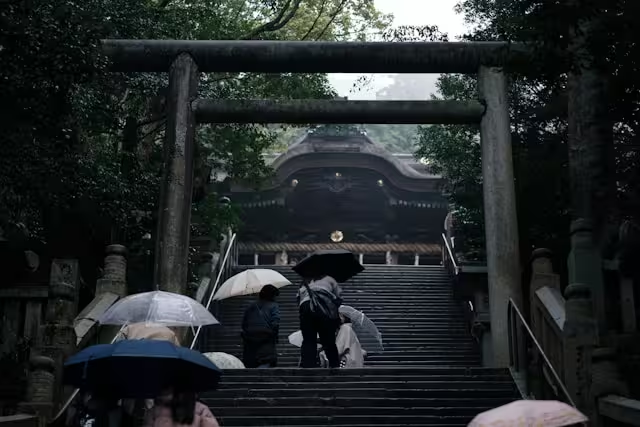
June is Japan's rainy season. Tsuyu. The word itself sounds like something closing, a door pulled quietly shut. Hotels discount. Flight searches thin out. Travel forums fill with the same question: should I go in June? The honest answer is the one nobody expects. Yes. Especially yes.
What Rain Does to Japan That Sunshine Cannot
The industry that profits from Japan's image has every reason to suppress tsuyu. Rain is not photogenic, not in the way cherry blossoms are. But rain does something to Japan that sunshine cannot: it slows everything down, deepens everything, makes the stone walls darken and the moss brighten and the gardens breathe. The traveller who arrives in June, prepared to move at the pace the weather sets, finds a country that has stopped performing for its visitors.
You notice it first in the quality of light. In June, Tokyo sits under a low, diffused sky that makes colours appear saturated in a way that direct sun never quite manages. The greens are not bright — they are deep. The grey of temple stone reads almost blue. In a garden, the gravel between rocks holds moisture and darkens to near-black at the edges, and the contrast with the pale stone is something a photographer might spend years trying to replicate with post-processing software.
This is not poetic licence. It is botany, and architecture, and the very reason Japan's garden tradition evolved the way it did. The aesthetic of controlled restraint — a single perfect branch, a raked surface, a stone placed just so — requires a specific light to reveal its intention. Flat, even, overcast light. June light.
The moss needs it too. Japan's temple gardens are among the finest moss ecosystems on earth, and they exist because the climate makes them possible. Visiting in April, in the dry brightness of cherry-blossom season, you see moss as background. Visiting in June, after three days of soft rain, you see it as the subject.
Ajisai Temples: The Ones the Crowds Haven't Found
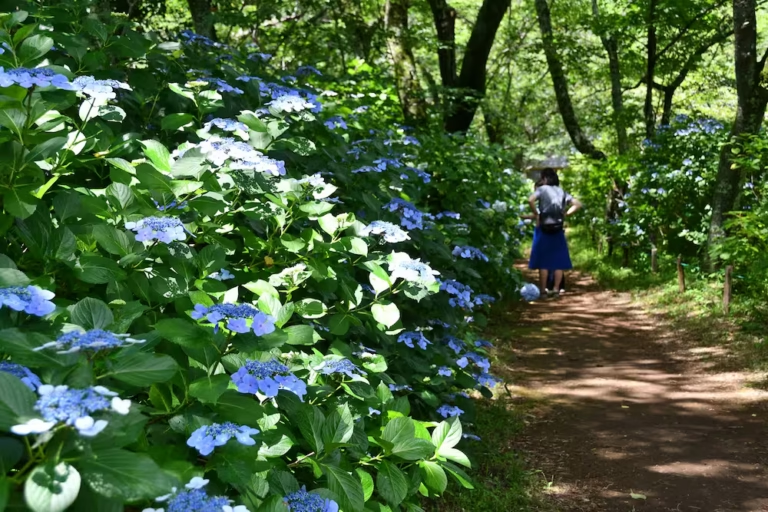
By June, the hydrangea — ajisai — has replaced the cherry blossom as Japan's defining seasonal image. But unlike the sakura, which demands its own vast parks and castle moats, ajisai belongs to temple gardens. It grows best in the partial shade beneath old trees, alongside stone lanterns and mossy walls, in places where the aesthetic is already established and the flower simply intensifies it.
Most English-language guides point immediately to Kamakura: Meigetsuin, Hasedera, Engakuji. These are genuinely beautiful. They are also genuinely crowded, and genuinely well-documented. If you are visiting from Tokyo with limited time, the three temples below will serve you better.
本土寺 — Hondoji, Matsudo
Hondoji is a Nichiren Buddhist temple with origins in the thirteenth century, and its grounds are home to around ten thousand ajisai plants. Ten thousand is not a number that requires qualification. It is more hydrangea than most people will see in a lifetime, surrounding a temple complex of serious antiquity: a five-storey pagoda, a pond garden, stone pathways worn smooth by six centuries of foot traffic.
What Hondoji offers that Kamakura does not is proportion. The garden is intimate enough that the flowers never become scenery — you move through them rather than past them. The temple also maintains an iris garden — hanashobu — which peaks in early June, before the hydrangeas come fully into bloom later in the month. Visit at the right moment and Hondoji offers a rare seasonal overlap.
Access: JR Joban Line from Ueno Station to Kita-Kogane Station, then 10–15 minutes on foot. Weekday morning is the better choice during flower season.
二本松寺 — Nihonmatsuji, Itako
Nihonmatsuji's ajisai garden — known as Ajisai no Mori, the Forest of Hydrangea — spreads across forty thousand square metres, with ten thousand plants across one hundred varieties in bloom simultaneously. One hundred varieties means the colour range runs from the white of bleached bone to the near-black of deep indigo, with every gradation of blue, violet, and pink between them. You stop at a flower you have not seen before. Then another. The garden keeps offering things the path has not shown you yet.
The pathways narrow as you move deeper into the grounds. This is not a temple where you arrive, photograph, and leave in forty minutes. It is a temple where you sit, and let the garden do what it was designed to do.
Access: Express highway bus from the Yaesu South Exit of Tokyo Station to Suigo Itako, approximately 70 minutes. Services run every 10–15 minutes; no advance reservation needed.
宗吾霊堂 — Sogoreido, Narita
Sogoreido is a temple that does not perform for visitors. Its formal name is Meishōzan Tōshōji. It enshrines Kimura Sōgorō — a seventeenth-century farmer's representative who petitioned the shogunate on behalf of villagers suffering under heavy taxation. The appeal succeeded; the act was forbidden. Sōgorō and his family were executed, then later restored to honour. The atmosphere of a temple that holds this kind of weight is different from a temple that does not.
The hydrangea garden holds 5,500 plants, including more than a thousand kashiwa-ba ajisai — oakleaf hydrangea — rare enough in Japan that this concentration alone makes the garden worth the visit. The oakleaf variety blooms in long conical clusters, standing at full height among the conventional blues and violets.
The annual Ajisai Matsuri festival runs from 7 June to 28 June 2026.
Access: Keisei Line from Ueno or Nippori to Keisei-Narita, then two more stops to Sōgo-Sandō Station. From there, approximately 15 minutes on foot. Or: direct bus from Keisei-Narita Station, central exit, stop 7.
The Rotenburo Argument: Why Rain Makes the Outdoor Bath Perfect
There is a particular experience that only becomes available in rain, and it involves sitting in very hot water outside while the rain falls around you.
The rotenburo — an outdoor hot spring bath — becomes a strange contradiction in June. You are wet. The garden beyond the bath is wet. The bamboo and cedar and stone wall are all wet. And the temperature of the water is such that the rain on your face and shoulders is irrelevant, is in fact pleasant, is in fact the point. Japanese inn culture has understood this for centuries: rain does not close the outdoor bath. Rain perfects it.
Ryokan rooms with private rotenburo are among the most expensive and sought-after accommodations in Japan. In October, during koyo (autumn colour) season, they are fully booked months in advance at peak pricing. In June, the same rooms are available at meaningful discounts, often with last-minute flexibility. The infrastructure is identical. The experience is arguably superior — the sound of rain on the garden is the soundtrack the architecture was built for.
Two Inns Worth Naming for June
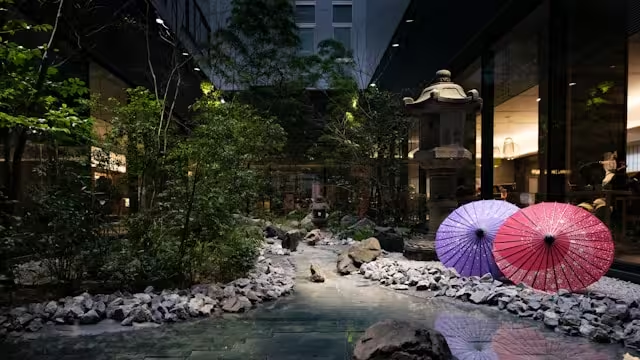
Shinra Yoro Valley — set in the forested Yoro River valley of southern Chiba Prefecture. A rotenburo here in June places you at the point where the forest meets the water — the river audible, the canopy overhead holding the rain.
Book Shinra Yoro Valley on Trip.com →Mizunoto, Hakone — draws from two of Hakone's seventeen named springs. Some rooms include a private outdoor bath for the particular pleasure of sitting in hot water while rain falls on the garden at your own hour, undisturbed.
Book Mizunoto on Trip.com → Note: in-room outdoor baths at Mizunoto use heated water rather than hot spring water. The communal and garden baths use the inn's named springs.Tea Ceremony and Kimono: The One Experience Worth Slowing Down For
Not every cultural experience in Japan merits the word cultural. Most of what is marketed to foreign visitors as traditional experience is theatrical in the pejorative sense: a performance staged for people who will not be present long enough to know the difference.
There are exceptions. The tea ceremony — chado, the way of tea — is one, when it is conducted properly and in the right context. It is not primarily about the tea. It is about the full activation of attention in a single room, over a period of time that most visitors are unaccustomed to giving to a single room. The sound of water heating. The weight of the bowl. The way the host moves. Chado was designed, in part, as a discipline for exactly the kind of rushing that travel tends to produce.
In Tokyo, one experience worth noting combines the ceremony with dressing in kimono beforehand — not as costume, but as preparation. The act of being dressed in kimono before entering a tea room changes your posture, your pace, the width of your step. You arrive at the tatami a different kind of body than you were twenty minutes earlier.
June makes this experience specifically resonant. The garden visible from the tea room will be at peak green. If it is raining — and in June, it often is — the sound of rain on the roof of the tea house is not a disruption. It is, in the tradition's own terms, a gift.
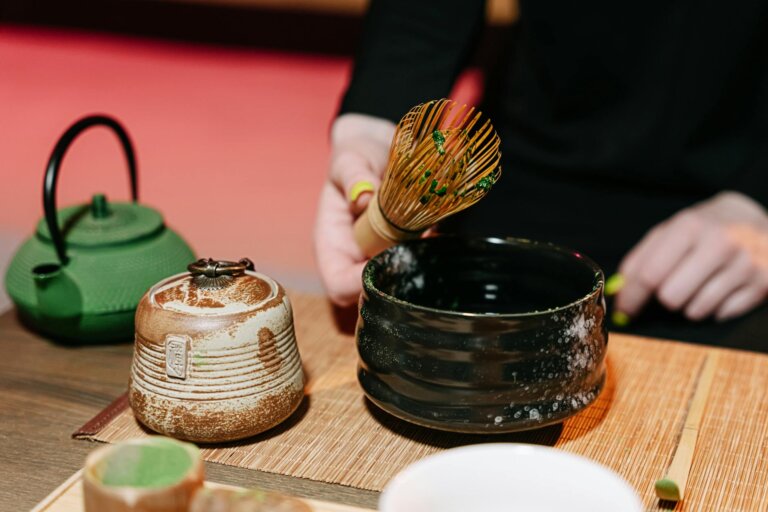
Kimono Tea Ceremony in Tokyo
Small-group format, conducted in English. Matcha and wagashi included. Approximately two hours. Conducted indoors — one of the few June activities that rain actively improves rather than merely leaves unaffected.
Book via GetYourGuide →Hotaru: Fireflies and the Darkness They Require
Fireflies do not appear in most versions of the Japan tourism conversation. They have no obvious product attached to them. They cannot be efficiently experienced on a half-day excursion from Tokyo. And they require conditions — specific, uncompromising ecological conditions — that make them impossible to fake.
Hotaru — Japanese fireflies — appear in late May and June, in the hours after dusk, along clean rivers and streams in areas with minimal light pollution. They are biologically constrained: they need unpolluted water, high humidity, low ambient light, and temperatures in a specific range. The places that have them are, by definition, places that have kept their rivers clean and their nights dark. Finding fireflies in Japan is finding a place that has made a different set of choices about what to preserve.
A riverbank in complete darkness, and then the first light — a slow pulse, green-gold, three seconds on, three seconds off, moving through the vegetation at the water's edge. Then another. Then, if the conditions are right, dozens. The darkness is not incidental to this. The silence is not incidental. Both are part of what you came for.
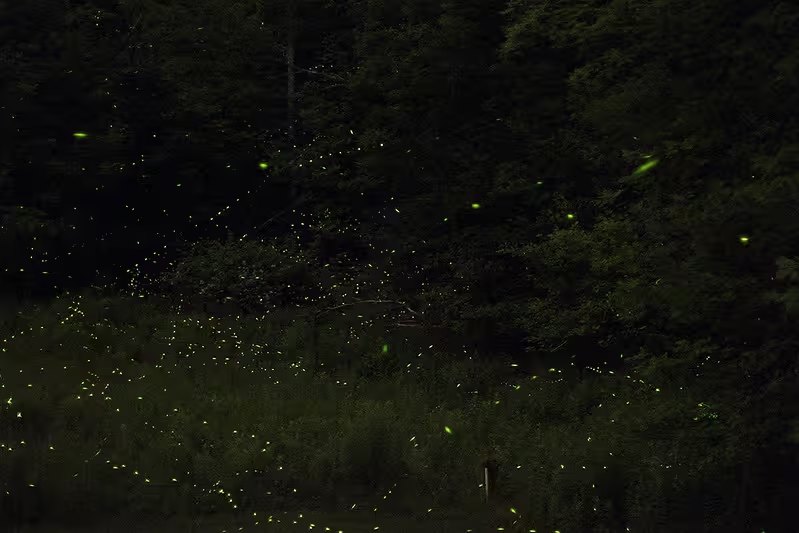
"Catskills Fireflies (single exposure)" by s58y, CC BY 2.0
Hotel Chinzanso Tokyo — Firefly Fantasy 2026
The most unexpected place to see fireflies without leaving central Tokyo. The hotel has been cultivating fireflies in its garden since the 1950s. The 2026 Firefly Fantasy runs from 17 May through 30 June, viewing hours 6:00–9:00 p.m. Access requires a dining reservation, hotel stay, or advance-purchase garden admission ticket.
Book Hotel Chinzanso Tokyo on Trip.com → Also worth noting: Yuyake Koyake Fureai Village in Hachioji and Hotaru Park in Fussa both offer fireflies in mid to late June, roughly an hour from central Tokyo by train. Full details at the Go Tokyo official guide.Sanno Matsuri: The Procession Edo Built for Itself
Every other year, in June, a procession of approximately five hundred people moves through central Tokyo. Priests and shrine officials in Heian court dress. Portable shrines carried by teams of bearers. Imperial messengers — a role that has existed without interruption since the festival's formal establishment in the Edo period. Horses. Floats. A cortege that takes two full days to complete its route through the city.
This is the Sanno Matsuri, held at Hie Shrine in Akasaka, and 2026 is a honmatsuri year — the year of the full festival, which occurs only in even-numbered years.
To understand why it is worth seeing, you need a short piece of history. The shogunate elevated Hie Shrine's status and guaranteed its resources; in return, the Sanno Matsuri became one of the two great festivals of Edo that explicitly demonstrated the legitimacy and stability of Tokugawa rule. The procession was permitted to enter Edo Castle. Ordinary citizens were not. What moves through central Tokyo today is the same procession, carrying the same symbolic weight, along routes that would have been recognisable to any Edo-period townsperson. The buildings have changed entirely. The function of the ritual has not.
No booking is required for street viewing. The 2026 festival runs from 7 June (Sunday) to 17 June (Wednesday), with the main Shinkosai procession taking place across two days within that period. The procession passes within walking distance of major hotels in the Akasaka and Toranomon areas. Full schedule at tenkamatsuri.jp (Japanese; Chrome translate works well for dates and route details).
Shun: The Flavours That Only Exist in June
Japanese cuisine is organised around shun — the peak season of an ingredient, the moment when it is at maximum flavour and minimum distance from where it was caught or harvested. Shun is not a preference. It is a structuring principle. June has its own shun, and it is among the most distinctive in the calendar.
Ayu — The Sweetfish
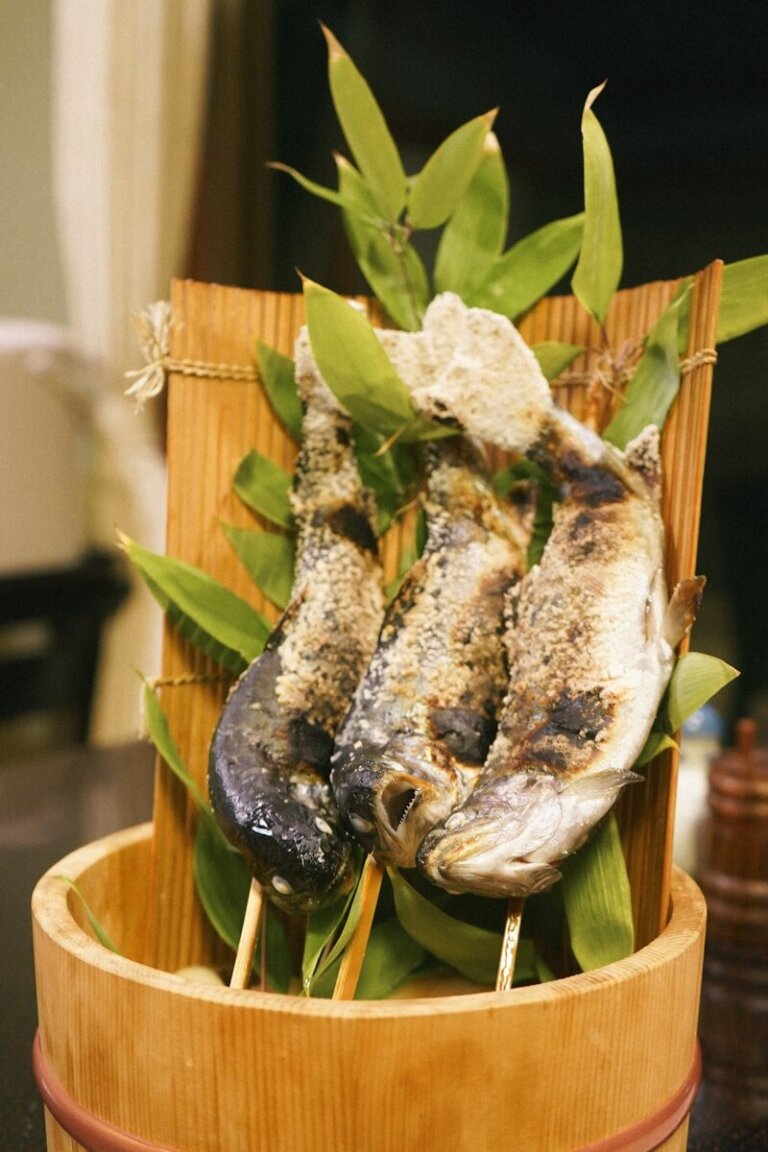
Ayu is a small river fish caught by a technique called tomozuri — using a live ayu as a lure to attract another — and it tastes like the river it swam in. This is not metaphor. Ayu from a clear mountain river in Gifu tastes different from ayu from a different river in a different prefecture, because the algae the fish feeds on differs, and the flavour of that algae comes through the flesh. Ayu is the only fish in Japanese cuisine where terroir is a meaningful concept.
The standard preparation is shioyaki — salt-grilled over charcoal. The liver is not removed. It contributes a slight, specific bitterness that is considered the mark of quality. Ayu season opens in June and runs through summer, most celebrated in the river regions of Gifu, Shizuoka, and Kyoto Prefecture.
Hamo — The Pike Conger
Hamo is Kyoto's summer fish, and it is inseparable from the city's identity in a way that requires a knife to explain. Pike conger has fine bones running through its flesh in a pattern that makes filleting in the conventional sense impossible. The Kyoto solution, developed over centuries, is honekiri: a technique in which a skilled fishmonger makes cuts through the flesh at two-millimetre intervals, severing the fine bones without separating the flesh.
The technique exists because Kyoto, landlocked and historically dependent on preserved or transported seafood, received hamo alive via courier from Osaka Bay — the only fish robust enough to survive the journey in the summer heat. Hamo became the summer fish by necessity and remained it by preference. In June, before the Gion Matsuri crowds arrive in July, Kyoto's kaiseki restaurants serve hamo in its earliest and most delicate form.
Tsukiji Jisaku — Ozashiki Tempura Kaiseki Plan
A seasonal kaiseki course centred on freshly fried tempura in a private garden-view room. Summer ingredients include conger eel and hamo — pike conger — making it an elegant way to taste June shun without leaving the city.
View the seasonal course at Tsukiji Jisaku →Hatsu-Gatsuo — The First Bonito of the Season
The Japanese have an expression: me ni wa aoba, yama hototogisu, hatsu-gatsuo. The eyes see fresh green leaves; the ears hear the mountain cuckoo; the mouth tastes the first bonito of the season. It is a poem from the Edo period, placing hatsu-gatsuo as the third of June's signature sensory events.
First-of-season bonito is leaner and firmer than the autumn fish. It is served as tataki — seared briefly over straw flame, then sliced and dressed with ponzu and ginger. It appears on izakaya menus across Tokyo and Osaka throughout June, and at this point in the calendar it is not expensive. It is simply the fish of the month. Order it when you see it.
Questions
Does it rain every day in Japan in June?
Not necessarily. June is Japan's rainy season, but that does not usually mean constant rain from morning to night. Many days are cloudy, humid, or marked by intermittent showers rather than continuous heavy rain. The better question is not whether it will rain, but whether your itinerary can absorb rain without collapsing.
Is June a bad time to visit Japan for a first-time visitor?
June can be a beautiful time for a first visit, but it depends on what you want from Japan. If your ideal trip requires clear skies, Mount Fuji views, and long outdoor sightseeing days, June may frustrate you. If you are drawn to gardens, temples, ryokan, seasonal food, tea rooms, and slower travel, June can be unusually rewarding.
What should I wear in Japan in June?
Pack for humidity as much as for rain. Light, breathable clothing, comfortable shoes with good grip, a compact umbrella, a thin rain jacket, spare socks, and a small hand towel will serve you better than heavy waterproof gear. Avoid shoes that become uncomfortable when wet.
How far in advance should I book for June travel?
June is not Japan's busiest travel month, but the best parts of a June itinerary still deserve advance planning. Book ryokan with private outdoor baths at least two to three months ahead, especially for weekends or rooms with garden views. Small-group tea ceremonies, craft experiences, seasonal dining, and firefly tours should be booked several weeks in advance. Ordinary city hotels can often be booked later than in cherry blossom or autumn foliage season, but the more intimate the experience, the earlier you should reserve it.
Is June a good time to visit Japan with children?
June can work well for families, but it requires a slower itinerary than spring or autumn. Build each day around one main activity, then leave space for indoor options: aquariums, museums, department-store food halls, tea or craft experiences, and a ryokan stay with baths and dinner included. For families, June is less about covering Japan efficiently and more about choosing places where bad weather does not feel like a failure.
The visitors who remember June are not the ones who pushed through it. They are the ones who let it set the pace.
Fewer things. Truer things.
Disclosure: This article contains affiliate links. If you purchase through them, Untranslated Japan may earn a small commission at no additional cost to you. We recommend only experiences, properties, and restaurants we have researched carefully and believe are consistent with the values of this site.