Japanese Knives
A blade that
honors life
From Japan’s blade-making tradition to the modern kitchen.
A Japanese kitchen knife is not simply a tool for cutting.
It belongs to a long culture of fire, steel, water, and the human hand.
How Japan’s
Blade-Making Culture
Lives On in the Kitchen Knife
For centuries, Japan cultivated some of the world’s most refined blade-making traditions. The sword was once the most visible expression of that culture, but it was never the only one.
In 1876, during the Meiji period, the Japanese government issued the Haitorei, often translated as the Sword Abolishment Edict. It restricted the public wearing of swords and marked a turning point in the role of the sword in Japanese society.
The sword gradually disappeared from everyday life.
But the knowledge behind the blade did not disappear with it.
The skills of forging, sharpening, polishing, and shaping steel continued to live on across Japan in quieter forms: tools, craft objects, agricultural implements, and kitchen knives.
A Japanese kitchen knife should not be understood as a sword simply reborn in another form. The history is more complex than that.
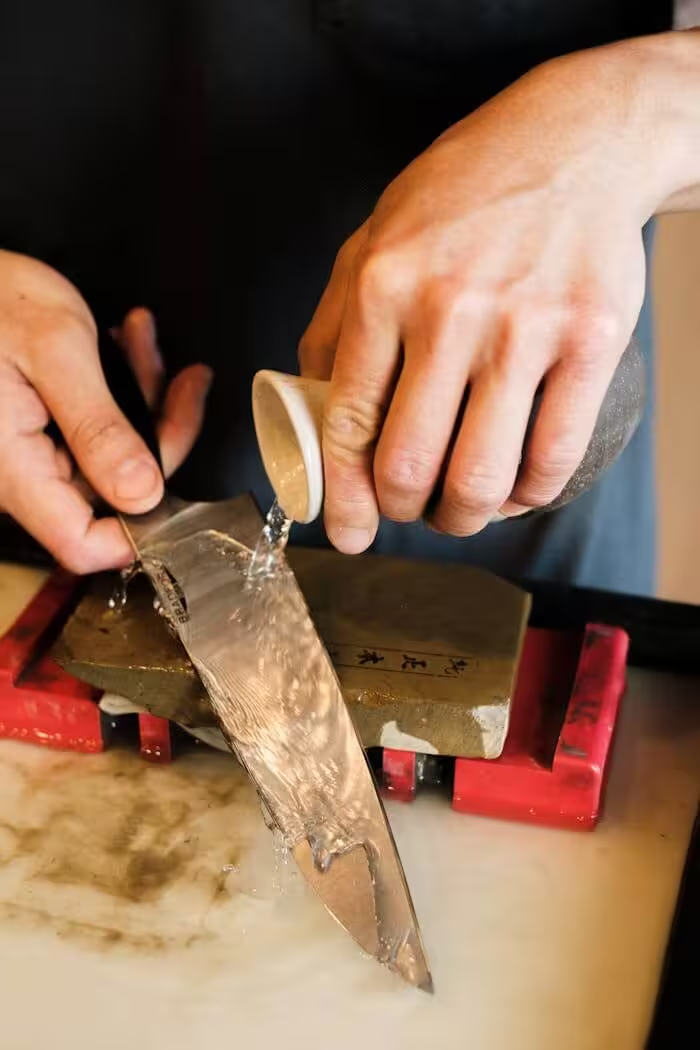
In the kitchen, that edge is no longer an expression of status or force. It becomes an instrument of preparation, attention, and care. A blade that honors life.
Why Cutting Matters
in Japanese Cuisine
In Japanese cooking, cutting is not a secondary task. It is one of the foundations of the cuisine.
A fish is not merely sliced.
A vegetable is not merely divided.
A piece of sashimi is not simply prepared.
The movement of the knife affects texture, aroma, appearance, and the way flavor is experienced in the mouth. A clean cut preserves the structure of an ingredient. A poor cut can crush it, bruise it, or change the way it feels when eaten.
There is an old expression in Japanese cuisine: Kasshu Hoju – often understood as “cutting is primary, cooking follows.”
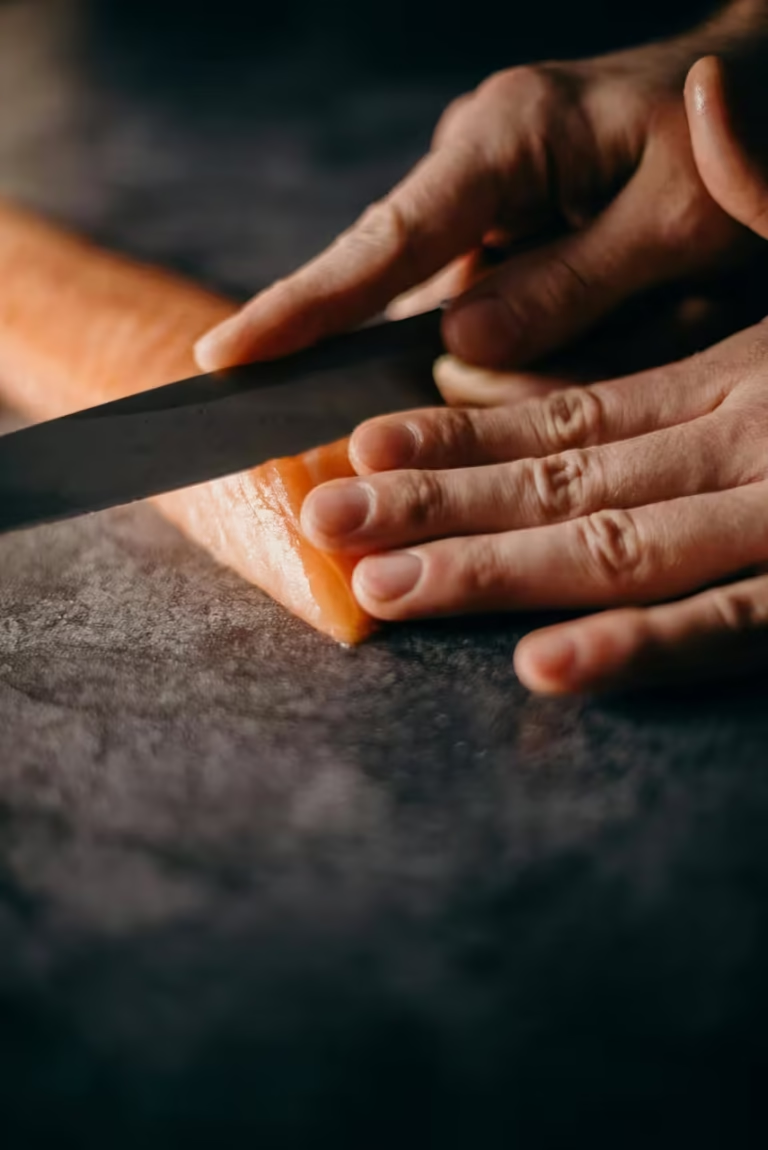
This is where a Japanese kitchen knife reveals its true character.
A sharp knife does not force its way through food. It passes through with control. It respects the grain of fish, the fibers of vegetables, and the quiet integrity of the ingredient itself.
A good knife does not make cooking louder. it makes the cook more attentive.
Sakai: One of Japan’s
Great Centers of Blade-Making
To understand Japanese kitchen knives, one should understand Sakai.
Located in Osaka Prefecture, Sakai has long been one of Japan’s important centers of metalwork. Its history includes the production of tools, firearms, tobacco knives, and later, high-quality kitchen knives.
Sakai’s reputation did not emerge from one moment or one craft alone. It developed through accumulated skill: the ability to shape steel, refine an edge, and produce blades for highly specific purposes.
Today, Sakai remains one of the most respected names in Japanese culinary blades.
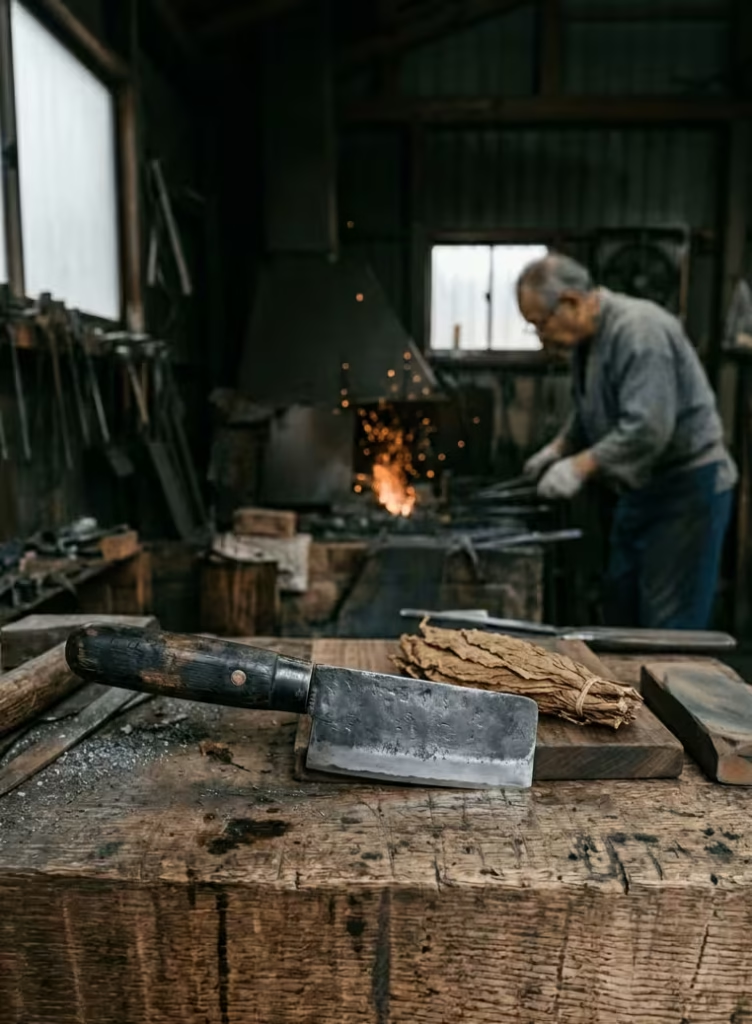
Each stage requires a different kind of expertise. The result is not merely a sharp object. It is a tool shaped by many hands, each responsible for a particular part of its character.
A Sakai knife often carries a quiet confidence. It does not need ornament to prove its value. Its quality is felt in balance, edge, control, and the way it responds to the hand.
From the Heritage of Sakai to Your Kitchen
The Wisdom of the Form: Defining Your Blade
The beauty of Sakai knives lies not only in their history but in their incredible diversity. In Sakai, every blade is shaped with a specific purpose in mind—from the delicate slicing of sashimi to the robust chopping of root vegetables.
While there are dozens of specialized shapes within the artisan’s workshop, we have focused on three essential types that are most versatile and effective in the modern kitchen.
To find the blade that resonates with your style, it is essential to understand the specific purpose behind each design. Each of these three shapes tells a story of Japanese culinary tradition, refined over centuries to become a natural extension of your hand in everyday cooking.
Santoku Knife
The Most Natural First Step into Japanese Knives
The Santoku is often the most practical first Japanese knife for a home kitchen.
Its name is commonly understood as “three virtues” or “three uses”: meat, fish, and vegetables. Shorter and more compact than many Western chef’s knives, it is easy to control and suited to everyday cooking.
A Santoku does not require the formality of a specialist knife. It belongs naturally in the daily rhythm of preparing vegetables, slicing fish, and cutting boneless meat.
For many people, this is the clearest introduction to what a refined Japanese edge can do.
Best For
A Santoku is best for home cooks who want one versatile Japanese knife for daily use.
It is especially suited to:
– Vegetables
– Herbs
– Fish fillets
– Boneless meat
– Everyday meal preparation
– Cooks new to Japanese knives
Not Ideal For
A Santoku is not the best choice for every task.
It is not ideal for:
– Cutting through bones
– Breaking down whole fish
– Heavy butchery
– Frozen food
– Users who prefer a large, heavy Western-style chef’s knife
What to Check Before Buying
Before choosing a Santoku, look carefully at:
– Blade length
– Steel type
– Handle shape
– Weight and balance
– Whether the blade is stainless, carbon steel, or semi-stainless
– Whether the knife is suitable for right-handed or left-handed use
– Maintenance requirements
Steel and Maintenance Notes
For most first-time buyers, stainless or semi-stainless steel is usually easier to live with. It offers good sharpness while requiring less daily attention than carbon steel.
Carbon steel can take an exceptional edge, but it needs more care. It should be washed by hand, dried immediately, and protected from prolonged moisture. Over time, it may develop a patina.
This is not necessarily a flaw. Many experienced users appreciate how carbon steel changes with use. But it is not the most forgiving choice for every kitchen.
Recommended Santoku Knife
Entry Level
[Sakai Takayuki 33-Layer Damascus Santoku]
Why we recommend this:
This Santoku is the ideal bridge between professional performance and daily practicality. The VG-10 stainless steel core offers exceptional sharpness and edge retention, yet stays resistant to rust—making it a ‘forgiving’ choice for those new to Japanese knives.
The 33-layer hammered Tsuchime finish is both beautiful and functional, helping food release from the blade. It provides the authentic ‘Sakai experience’ in an easy-to-maintain package that welcomes any home cook to the world of fine cutlery.
Standard Level
[Sakai Takayuki Aogami Super Kurouchi Santoku]
Why we recommend this:
For those ready to embrace the true soul of Japanese steel, this is the “Sweet Spot.” It features Aogami Super—the highest grade of Blue Steel—renowned for an edge that stays sharp significantly longer than almost any other material.
The rugged Kurouchi (blacksmith) finish and hammered texture not only prevent food from sticking but also provide a protective layer against oxidation. It is a masterpiece of the Sakai division of labor, offering professional-grade performance with a rustic, artisanal aesthetic that feels alive in your hand.
High End
[Sakai Takayuki 33-Layer Damascus Gingami No.3 Santoku]
Why we recommend this:
For those who demand the pinnacle of performance without the high maintenance of carbon steel. This masterpiece features Gingami No.3 (Silver Paper No.3) steel, a rare material that mimics the legendary sharpness of traditional high-carbon blades while remaining completely stainless.
It represents the ‘quiet confidence’ of Sakai craftsmanship—a blade that feels like an extension of your hand, offering a perfect balance and a sophisticated 33-layer Damascus finish. It is not merely a kitchen tool, but a functional work of art for the most discerning chefs.
Yanagiba Knife
For Sashimi, Precision, and the Beauty of a Single Cut
The Yanagiba is one of the most iconic Japanese kitchen knives.
It is used primarily for slicing sashimi and raw fish. Its long, narrow blade is designed to draw through the ingredient in one smooth motion. Rather than sawing back and forth, the cook uses the full length of the blade to create a clean, elegant surface.
This matters because the way fish is cut affects not only its appearance, but also its texture and mouthfeel.
A well-cut slice of sashimi has a quiet clarity. Its edges are clean. Its surface catches the light. It feels composed.
The Yanagiba is a specialist’s knife. It is not usually the first knife most home cooks need. But for those who prepare sashimi or want to understand Japanese knife culture more deeply, it expresses something essential: beauty begins before the food reaches the plate.
Best For
The Yanagiba is best for cooks who regularly prepare raw fish or want a dedicated sashimi knife.
It is especially suited to:
– Sashimi
– Sushi preparation
– Clean slicing of fish fillets
– Presentation-focused cooking
– Experienced users interested in traditional Japanese knife technique
Not Ideal For
A Yanagiba is not an all-purpose knife.
It is not ideal for:
– Chopping vegetables
– Cutting through bones
– General daily cooking
– Rocking motions
– Users who want one knife for every task
– Beginners who are not ready for a specialized blade
What to Check Before Buying
Before choosing a Yanagiba, look carefully at:
– Blade length
– Steel type
– Single-bevel construction
– Right-handed or left-handed orientation
– Handle shape
– Maintenance requirements
– Whether you have access to sharpening support or are willing to learn
Steel and Maintenance Notes
Many traditional Yanagiba knives are made with carbon steel and a single-bevel edge.
This allows for exceptional sharpness and precise cutting, but it also requires care. Carbon steel must be dried quickly after use. A single-bevel knife may also require more specialized sharpening than a standard double-bevel kitchen knife.
Left-handed users should be especially careful. Many Yanagiba knives are made for right-handed use unless otherwise specified.
Recommended Yanagiba Knife
Entry Level
[Goh Umanosuke Yoshihiro White 2 Steel Yanagiba]
Why we recommend this:
For a Yanagiba, ‘entry level’ should never mean compromising on the soul of the blade. We selected this model because it is the most accessible gateway to authentic White Steel No.2—the high-purity carbon steel favored by professionals for its surgical sharpness.
While more affordable stainless versions exist, they cannot replicate the clean, shimmering cut that defines true Sashimi. This Jousaku series offers the essential weight, balance, and ‘bite’ of a Sakai-made blade, making it the honest starting point for those who value genuine Japanese craftsmanship and performance.
Standard Level
[Goh Umanosuke Yoshihiro Aogasumi Blue 2 Steel Yanagiba]
Why we recommend this:
If the entry-level blade is your introduction to the craft, the Aogasumi series is where you discover the true endurance of Sakai craftsmanship. Forged from Blue Steel No.2, this Yanagiba is engineered for the serious enthusiast who demands an edge that lasts significantly longer through repeated use.
The ‘Aogasumi’—or ‘Blue Haze’—finish is a testament to the master smith’s skill in heat treatment. It offers a perfect equilibrium: the legendary sharpness of carbon steel combined with superior edge retention. This is a blade designed for those who have moved past the basics and are ready to refine their technique with a tool that truly grows with their skill.
High End
[Sakai Takayuki 45-Layer Damascus Urushi ‘Genbu’ Yanagiba]
Why we recommend this:
For the discerning collector and the professional chef, the Genbu represents the absolute zenith of Sakai’s artistry. This is more than a knife; it is a synthesis of three Japanese master crafts: the forging of a 45-layer Damascus blade, the precision of Gingami No.3 stainless steel, and the ancient art of Urushi (Japanese lacquer) on the handle and scabbard.
The ‘Sakimaru’ tip—reminiscent of a samurai sword—provides an aura of quiet authority. While its beauty is breathtaking, its performance is uncompromising, offering a surgical cut that honors the finest ingredients. It is a legacy piece, designed for those who wish to own a functional work of art that captures the very soul of Japanese tradition.
Gyuto Knife
A Japanese Interpretation of the Chef’s Knife
The Gyuto is often compared to the Western chef’s knife, but it carries a distinctly Japanese sensibility.
It is versatile, refined, and capable of handling meat, fish, and vegetables with ease. For cooks who are already comfortable in the kitchen, the Gyuto may become the knife they reach for most often.
Its appeal lies in balance.
It offers the familiar shape and utility of a chef’s knife, but often with a thinner blade, lighter feel, and more precise edge than many Western equivalents.
If the Santoku is the natural first step into Japanese knives, the Gyuto is often the next one: a knife for those who want more length, flow, and precision in their daily cooking.
Best For
The Gyuto is best for confident home cooks and culinary professionals who want a versatile primary knife.
It is especially suited to:
– Meat
– Fish
– Vegetables
– Longer slicing motions
– Daily cooking
– Users familiar with chef’s knives
– Cooks who want a refined all-purpose blade
Not Ideal For
A Gyuto is versatile, but not indestructible.
It is not ideal for:
– Cutting through bones
– Frozen food
– Heavy chopping
– Users who prefer a short, compact knife
– Those who want minimal maintenance and no sharpening routine
What to Check Before Buying
Before choosing a Gyuto, look carefully at:
– Blade length
– Steel type
– Blade thickness
– Weight and balance
– Handle style
– Edge geometry
– Maintenance requirements
– Whether the knife suits your cutting style
Steel and Maintenance Notes
A stainless Gyuto is often a strong choice for everyday use. It offers practicality, corrosion resistance, and easier maintenance.
A carbon steel Gyuto may offer a more responsive edge and a more traditional feel, but it requires more attention. It should be cleaned and dried immediately after use, especially after contact with acidic ingredients.
Semi-stainless steels can offer a useful middle ground, combining some of the character of carbon steel with improved resistance to rust.
Recommended Gyuto Knife
Entry Level
[Sakai Takayuki 33-Layer Damascus Gyuto (210mm)]
Why we recommend this:
The Gyuto is the quintessential ‘all-rounder’ of the Japanese kitchen, and this 210mm model from Sakai Takayuki is the gold standard for your first serious blade. It strikes an impeccable balance between professional length and approachable handling, making it perfect for everything from precise vegetable prep to slicing larger cuts of protein.
Forged with a VG-10 stainless steel core, it offers incredible sharpness without the high maintenance of carbon steel. The 33-layer hammered Tsuchime finish ensures that food releases effortlessly from the blade, providing a seamless cutting experience. This is the most reliable ‘forgiving’ entry point for those ready to upgrade their daily culinary journey with the precision of Sakai.
Standard Level
[Sakai Takayuki SPG2 Damascus Kengata Gyuto (190mm)]
Why we recommend this:
For those seeking the absolute frontier of modern metallurgy, this is the definitive choice. Forged with SPG2 (Super Gold 2) powder stainless steel, this blade offers a level of edge retention and sharpness that was once thought impossible for a rust-resistant knife.
The Kengata (sword-shaped) tip provides surgical precision for detailed work, while the 190mm length offers a nimble, responsive feel in the hand. Featuring a stunning hammered Damascus finish, it is a masterpiece that balances the ancient spirit of the forge with the relentless innovation of modern Sakai. This is the ‘Sweet Spot’ where high-tech performance meets artisanal beauty.
High End
[Satoshi Nakagawa Aogami No.2 Kurouchi Gyuto (240mm)]
Why we recommend this:
To own a blade by Satoshi Nakagawa is to possess a piece of Sakai’s living history. Having trained for 16 years under the legendary master Kenichi Shiraki, Nakagawa has emerged as one of the most gifted young blacksmiths of his generation.
This 240mm Gyuto is a masterclass in the ‘water-quenching’ technique, a perilous and difficult process that results in a Blue Steel No.2 blade with exceptional hardness and a soul-stirring edge. Paired with a rugged Kurouchi finish and an Urushi-lacquered handle, it represents the pinnacle of ‘Shokunin’ philosophy—where ancient techniques meet a modern, uncompromising aesthetic. For the connoisseur, this is not just the ultimate kitchen tool; it is a legacy of Japanese craftsmanship.
[Note] These recommendations are not a strict ranking of cutting performance. While sharpness is vital, we have carefully balanced other essential factors, such as ease of maintenance, the character and rarity of the steel, the skill of the blacksmith, and the overall longevity of the tool. Our goal is to help you find a knife that fits your lifestyle as much as it fits your kitchen.
Before You Choose
a Japanese Knife
A Japanese knife is not a disposable object.
It asks for care.
This does not mean every Japanese knife is difficult to own. Many modern Japanese knives are made for practical daily use. But they should still be treated with more attention than a mass-market kitchen knife.
Before buying, consider the following.
Steel Type
Stainless Steel
Stainless steel is usually the easiest choice for most home cooks.
It is more resistant to rust and staining, and it requires less immediate care after each use. It may not always feel as responsive as high-carbon steel, but for many users, it offers the best balance of performance and practicality. High-grade stainless steels, such as Gingami No.3 or SPG2, can even rival the sharpness of carbon steel.
Best for:
– Beginners and home chefs who want a reliable, high-performing tool without the steep learning curve of carbon steel.
– Busy kitchens where efficiency is key and immediate maintenance isn’t always possible.
– Everyday cooking that involves acidic ingredients like citrus or tomatoes, which can react with other steels.
– Users who value a pristine, consistent blade that remains beautiful and rust-free for years to come.
Carbon Steel
Carbon steel is valued for its sharpness, edge feel, and ease of sharpening. It represents the soul of traditional Japanese blacksmithing.
While it reacts more readily to moisture and acidic ingredients, requiring careful drying to prevent rust, it develops a unique patina over time, becoming a personal tool that reflects its history of use.
Best for:
– Enthusiasts and experienced cooks who prioritize the ultimate cutting experience
and are comfortable with the unique characteristics of reactive steel.
– Those who value a “surgical” edge and a tactile, connected feel that allows for the most
precise and delicate culinary work.
– Users who enjoy the ritual of maintenance, finding satisfaction in the act of sharpening
and caring for a tool that evolves with their skill.
Semi-Stainless Steel
Semi-stainless steel sits between stainless and carbon steel. It may offer some of the sharpness and feel associated with carbon steel while providing better corrosion resistance.
Best for:
– Performance-driven users who demand the edge retention of carbon steel but require
a more forgiving material for a fast-paced environment.
– Cooks upgrading from entry-level knives who are ready to explore higher-grade alloys
without the full commitment of a high-carbon maintenance routine.
– Those who seek a “best-of-both-worlds” compromise, offering a balanced blend of
professional sharpness and modern corrosion resistance.
Edge Type
Double-Bevel Knives
Most Santoku and Gyuto knives are double-bevel.
This means the edge is sharpened on both sides, making it more familiar to users of Western kitchen knives. Double-bevel knives are usually easier for beginners and more versatile for daily cooking.
Single-Bevel Knives
Many traditional Japanese specialist knives, such as Yanagiba, are single-bevel.
This allows for highly precise cutting, but it also requires more technique and more careful sharpening. Single-bevel knives are often made specifically for right-handed or left-handed users.
Before buying a single-bevel knife, confirm the orientation.
Handle Type
Japanese knives may come with Western-style handles or traditional Japanese wa-handles. Western-style handles often feel familiar to those used to European or American kitchen knives.
Traditional wa-handles are usually lighter and can shift the balance of the knife forward. Some users find them more precise and elegant, while others may need time to adjust.
There is no universal best choice. The right handle is the one that suits your hand and your way of cooking.
Care and Maintenance
To protect a Japanese knife:
– Wash it by hand
– Do not put it in the dishwasher
– Dry it immediately after washing
– Avoid cutting bones or frozen food unless the knife is designed for it
– Use a proper cutting board
– Store it safely
– Sharpen it regularly or use a trusted sharpening service
A good knife rewards attention.
Over time, it becomes more familiar. The handle settles into the hand. The edge becomes part of the rhythm of cooking. The object becomes less separate from the person using it.
In a world of replaceable things, that relationship is rare.
To hold one is to hold a small part of Japan’s craft history – not as
something preserved behind glass, but as something alive in the hand.
Frequently Asked Questions
What makes Sakai knives special?
Sakai knives are respected for their long connection to Japanese blade-making and metalwork. The city’s history includes tools, firearms, tobacco knives, and high-quality kitchen knives.
Today, Sakai is especially known for culinary blades used by professional chefs and serious home cooks. Many Sakai knives are produced through a division of labor, with different specialists responsible for forging, sharpening, and handle attachment.
What is the best Japanese knife for beginners?
For most people, a Santoku is the best first Japanese knife. It is versatile, compact, and suitable for vegetables, fish, and boneless meat. It offers a clear introduction to Japanese sharpness without requiring the technique of a more specialized knife.
Should I choose stainless steel or carbon steel?
Choose stainless steel if you want easier maintenance.
Choose carbon steel if you value sharpness, edge feel, and are willing to care for the knife properly.
Carbon steel should be washed by hand, dried immediately, and protected from moisture. Stainless steel is more forgiving for daily use.
What is a Yanagiba used for?
A Yanagiba is used primarily for slicing sashimi and raw fish.
Its long blade allows the cook to cut in a single pulling motion, helping preserve the texture and appearance of the fish. It is a specialist knife and is not usually recommended as a first Japanese knife for general cooking.
Is a Gyuto the same as a chef’s knife?
A Gyuto is similar to a Western chef’s knife in purpose, but it often feels lighter, thinner, and more precise.
It is a versatile knife for meat, fish, and vegetables, and is well suited to cooks who want a refined all-purpose blade.
Are Japanese knives difficult to maintain?
Not necessarily.
Many Japanese knives are practical for everyday use, especially stainless or semi-stainless models. However, they should still be washed by hand, dried carefully, and sharpened regularly.
Carbon steel knives require more attention, but many users find that care to be part of the pleasure of ownership.
Are Japanese knives suitable for left-handed users?
Some are, and some are not.
Double-bevel knives are usually suitable for both right-handed and left-handed users, though handle shape can still matter.
Single-bevel knives, such as many Yanagiba, are often made specifically for right-handed or left-handed use. Always check before buying.
The Source of Our Insight
Our guides are built upon “untranslated” knowledge, drawn directly from primary Japanese technical literature, heritage archives, and the lived expertise of Sakai’s master craftsmen. We unlock these insights to help you discover the genuine quality and story behind every Sakai blade.
A Note on Affiliate Links
Some links on this page may be affiliate links. This means that if you purchase through them, Untranslated Japan may earn a small commission—at no additional cost to you. These commissions help support our mission to document and share Japan’s hidden craftsmanship.
Our editorial standards remain strictly independent. Affiliate partnerships do not influence our selection. We only feature products that meet our rigorous criteria for craftsmanship, usefulness, transparency, and cultural integrity.