
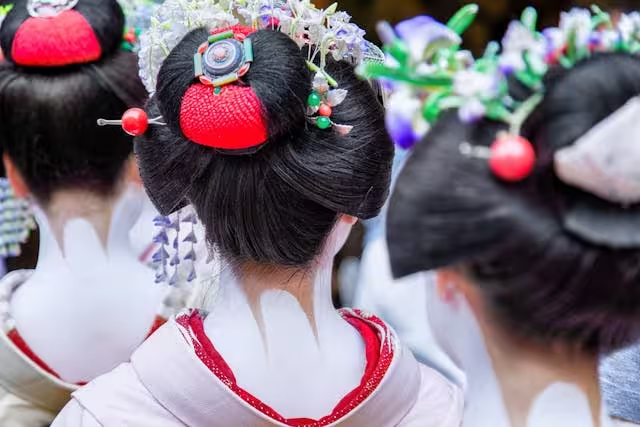
This world is not closed to visitors. It asks, instead, that you arrive knowing something about it.
Before the practicalities: the cultural essay this guide was written to accompany.
Read first — The Geisha That Never Existed: And What She Was Replaced With →If You Encounter One on the Street
You are walking through Gion Kōbu in the early evening — along Hanamikoji-dori, perhaps, or one of the narrower lanes between the teahouses — when a maiko appears ahead. She is moving quickly. She has an appointment. She is not, in this moment, a photographic opportunity.
This matters because Kyoto's flower districts are working environments, not performance spaces. The geiko and maiko who move through them are travelling between engagements, arriving at teahouses, returning home after a late ozashiki. An encounter on the street is a coincidence, not an invitation.
The conduct that Kyoto's hanamachi have asked of visitors is not complicated:
- Do not approach, stop, or physically intercept a geiko or maiko on the street.
- Do not touch her kimono, obi, or hairpins — the dressing process for a maiko takes more than an hour and her obi alone weighs approximately six kilograms.
- Do not follow her or attempt to predict her route.
- Do not photograph without distance and without making yourself conspicuous. A long lens aimed at someone's face from two metres away is not unobtrusive.
- Do not enter ochaya (teahouses) without an introduction or reservation. These are private establishments. Most do not accept walk-in guests under any circumstances.
Gion Kōbu introduced a photography ban on private streets within the district in 2019, with fines for violations. The ban followed years of escalating tourist behaviour — blocking lanes, surrounding maiko, touching obi to stop them from passing. What prompted the policy was not abstract. It was specific incidents, repeated across seasons.
If you are hoping to see a geiko or maiko, there are better ways than waiting in Gion at 5pm with a telephoto lens. The seasonal public performances described below are designed exactly for this — they are the legitimate, unhurried, culturally honest version of the encounter.
Where to See Performances — and Which to Choose
The most reliable way to encounter geiko and maiko is through a seasonal public performance. Each of Kyoto's five hanamachi (花街, flower districts) stages at least one each year — a multi-act program of classical dance performed by geiko and maiko together, with jikata musicians playing live on stage. These are not tourist productions. Each has been staged annually since the Meiji era — the Miyako Odori dates to 1872 — and continues largely unchanged.
A performance ticket is the most honest encounter this culture offers an outsider. You are seated. You are still. You watch. What you are watching is the actual art — the same dance, the same music, the same seasonal costumes — performed by working practitioners, not recreations of them.
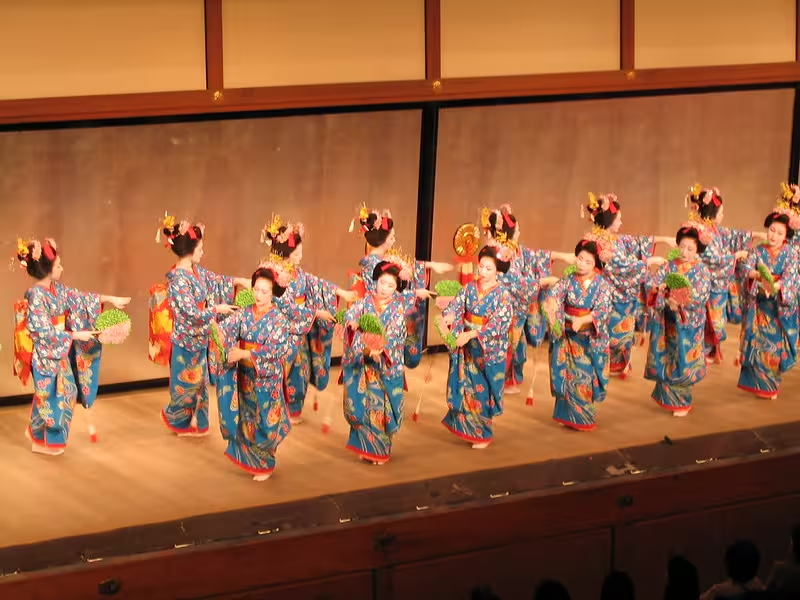
"Miyako Odori; cherry dance in Kyoto" by Nullumayulife, CC BY 2.0
The five hanamachi each hold their own dance, in their own theatre, under their own school of movement. Knowing which is which helps you choose — or plan your trip around the right season.
Staged by Kamishichiken, the oldest of the five hanamachi, near Kitano Tenmangu shrine in the northwest of the city. The smallest district; the performances reflect it — unhurried, less crowded, and further from the tourist circuits of Gion. A good choice if you want the experience without the full-house pressure of the spring dances.
Official site (Japanese) →The flagship performance of Kyoto's hanamachi season, staged by Gion Kōbu — the largest and most formally prestigious district. The Inoue school of dance, performed here, is the most restrained and technically demanding of the Kyoto traditions. Book well in advance; this is the most attended of the five.
Official site (English) →Staged by Miyagawachō, southeast of Gion along the Miyagawa River. Less visited than the Gion performances and correspondingly less crowded. The finale — all maiko and geiko dancing in unison — is the highlight. A quieter alternative if the Miyako Odori is sold out.
Official site (English follows Japanese) →Staged by Pontochō, the narrow riverside lane that runs parallel to the Kamo River. The Onoe school of dance incorporates more modern elements than Gion's traditions, and the programme has a reputation for dramatic story plays. Timed well with Kyoto's early May weather.
Official site (English) →The only autumn performance among the five, staged by Gion Higashi — a smaller, more intimate district than Gion Kōbu. Less crowded than the spring dances. If you are visiting in November and want an unhurried experience in a half-full theatre rather than a packed one, this is the performance to seek out.
Official site (English follows Japanese) →Some performances offer a ticket tier that includes a brief ozashiki-style tea service beforehand — geiko and maiko move through the room, tea and a sweet are served, and photographs are permitted. For visitors attending a public performance, this offers a brief glimpse of an ozashiki-style setting without requiring a formal introduction. Check each hanamachi's ticketing page for current availability of this option.
All five hanamachi on one stage — Miyako no Nigiwai
Each seasonal odori is staged by a single hanamachi. There is one exception. Every June, all five flower districts appear together at the Minamiza theatre in a joint performance called Miyako no Nigiwai (都の賑い). Approximately seventy geiko and maiko take the stage — the only annual event in which this happens. Each district presents its own piece under its own school of dance; the programme closes with a joint maiko ensemble called Maiko no Nigiwai, followed by a shared finale.
The performance was established in 1994 to mark the 1,200th anniversary of Kyoto's founding and has been held annually since. For a visitor who can only attend one performance and wants to understand the full breadth of Kyoto's hanamachi — the differences in movement, music, and character between districts — this is the one to plan around. It is also the only performance held at the Minamiza, Kyoto's historic kabuki theatre on Shijo-dori, rather than in a hanamachi kaburenjo.
Ticket prices range from ¥6,500 (third floor) to ¥14,000 (special seats). Tickets go on sale in late April. To purchase online, visit the event page and click the ticket button — the booking site offers an English-language option. Current dates and the booking link are maintained at: ookinizaidan.com/event/nigiwai.
Tickets can be purchased through each hanamachi's official website or at the theatre box office on the day, subject to availability. The Ōokini Zaidan maintains an English-language site with current schedules and ticket links for all five: ookinizaidan.com.
Gion Corner — Seven Arts on One Stage
If you have one evening in Kyoto and no prior knowledge of traditional Japanese performing arts, Gion Corner is the most considered starting point available to a visitor. The programme is approximately fifty minutes long and places seven distinct Japanese art forms on a single stage: Kyomai dance performed by maiko from Gion Kōbu, chanoyu tea ceremony, ikebana flower arrangement, koto music, bugaku court dance, kyogen comedy, and — depending on the month — either bunraku puppet theatre or a noh play excerpt.
The theatre sits within the Gion Kōbu Kaburenjo complex on Hanamikoji-dori. It holds 165 seats. Thirty of these are designated premium seats, which include a digital tablet providing contextual information and translations throughout the performance — useful for visitors unfamiliar with any of the art forms being presented. The theatre is operated by the Ōokini Zaidan, the same foundation that oversees all five of Kyoto's hanamachi.
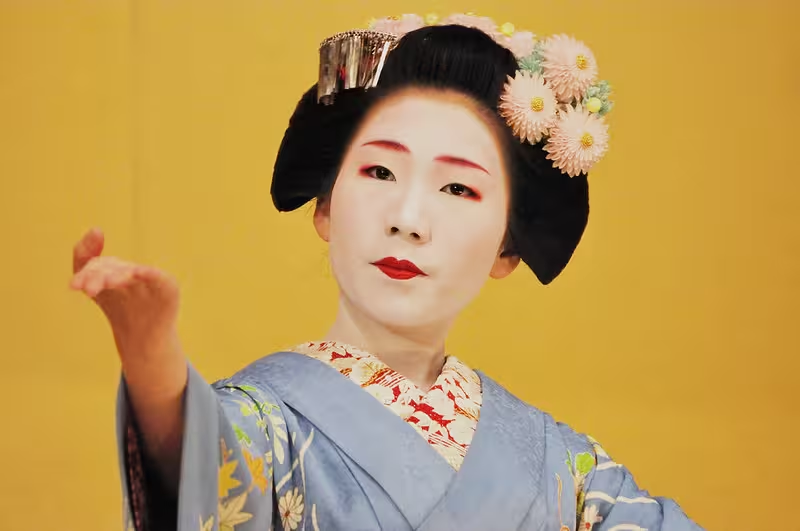
"Maiko at Kyoto Gion Corner" by Michael Elleray, CC BY 2.0
What you will see
Maiko from Gion Kōbu perform two pieces: one chosen for the current season, and the classic Gion Kouta. The dance style associated with Gion Kōbu — the Inoue school — is characterised by restrained, deliberate movement derived from noh theatre and Heian court dance. It is not showy. It asks you to look carefully.
The remaining six art forms are presented in abbreviated but accurate form. Ikebana is arranged live on stage while the koto musicians play. The kyogen piece performed is Bo-shibari — a comic play about two servants who get drunk while their lord is away — which requires no prior knowledge of the form to follow. Bugaku, performed in full ornate court costume and mask, is the most visually striking segment of the programme for most first-time viewers.
During the winter season (December through mid-March), Tuesday to Friday performances include a maiko photo opportunity after the show — a brief, structured moment in which guests can be photographed with a maiko. This is one of the few settings in which this kind of photography is explicitly invited rather than merely tolerated.
Performances, tickets, and access
Regular performances run daily at 6:00pm and 7:00pm. The theatre is closed on 16 July, 16 August, and from 26 December to 4 January. Current ticket prices, seat categories, and any seasonal schedule changes are listed on the official site.
Gion Corner — Official Website
Tickets, performance schedule, seasonal programme changes, and access information are all maintained on the official site. This is the most reliable source for current dates and availability, particularly around the winter schedule when Tuesday-to-Friday closures apply.
Gion Corner Traditional Arts Performance — Book via Klook
Gion Corner tickets are also bookable through Klook, which can be a convenient option for visitors managing multiple bookings in one place. The experience listed includes standard admission; check the listing for current seat tier availability.
Guided Cultural Experiences
For visitors who want more than a theatre seat — a smaller setting, a conversation, a chance to watch the dance from close range — there are guided cultural experiences that provide exactly this. The format varies, from structured visitor experiences to a small number of specially arranged encounters inside actual ochaya. The difference matters, and it is worth understanding.
A formal ozashiki traditionally requires a personal introduction through a known patron or established contact. For most visitors, it is not something you can simply book with an ochaya yourself.
Most visitor experiences operate differently: they are structured for accessibility, while still offering trained practitioners, real instruments, and meaningful time with geiko or maiko. But there are now a small number of specially arranged experiences that go further, opening the doors of actual ochaya to guests who would not normally have an introduction.
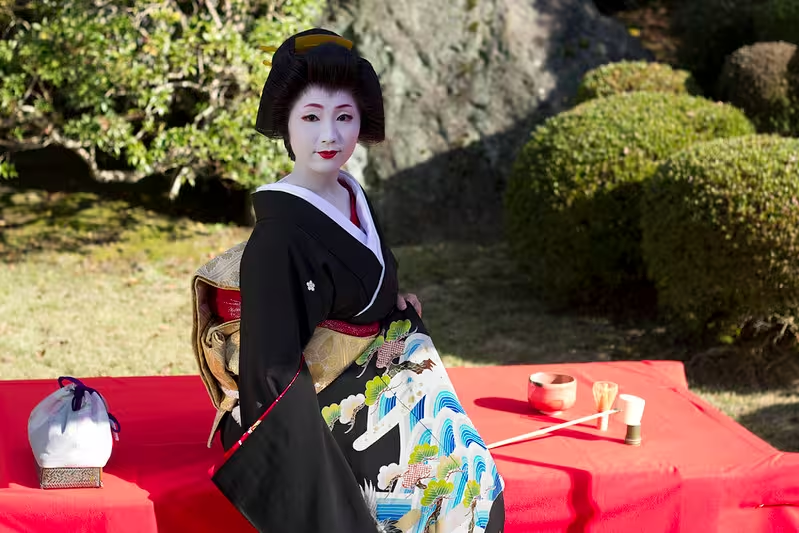
"Geisha Sayaka 3" by Japanexperterna.se, CC BY-SA 2.0
Maiko Tea and Entertainment at Umeno, Kamishichiken
For a quieter introduction to the hanamachi, this private experience takes place at Umeno, an ochaya and okiya in Kamishichiken, the oldest of Kyoto's five flower districts. A maiko performs at close range, then prepares matcha as you talk with her and Umeno's proprietress-to-be about life and training in the hanamachi.
The experience also includes a traditional ozashiki game and a rare look inside the okiya dressing room used by Umeno's maiko. It is a particularly good choice if you are less interested in simply watching a performance than in understanding the world around it.
For something closer to a traditional evening of hanamachi entertainment, there is another option in Gion Higashi.
Private Geiko and Maiko Evening at Ochaya Man, Gion Higashi
This private evening takes place inside Ochaya Man, a traditional ochaya in Gion Higashi that normally follows Kyoto's introduction-only custom but accepts guests through this specially arranged experience.
A maiko performs traditional dance accompanied by a geiko on shamisen, followed by conversation, ozashiki-asobi party games, and a seasonal Japanese dinner prepared in the ochaya's own kitchen. Rather than watching the culture from a theatre seat, you experience the entertainment in the kind of tatami room for which it was originally created.
If you would prefer a more accessible introduction without entering a traditional ochaya, structured group and small-group experiences are also available.
Kyoto: Maiko Show and Dinner Experience
A structured evening that includes a maiko performance, a demonstration of dance and instrument, and a traditional dinner in a Kyoto setting. The format is designed for visitors without connections to the flower districts and provides a genuine introduction to the art form in a relaxed group setting. Photographs are permitted during designated portions of the evening.
Kyoto: Private Maiko Cultural Experience
A smaller-group or private format that includes a geiko or maiko meet, a demonstration of classical dance, shamisen, and tea ceremony elements, and time for questions. This kind of experience tends to feel considerably more personal than a large-group theatrical evening — the practitioner is present as an artist, not a performer for a crowd, and the format allows for a real exchange.
On Maiko Dress-Up Studios
Kyoto has a well-established industry of studios where visitors can be dressed in maiko costume, have professional photographs taken, and walk through Gion in full regalia. These studios are legitimate businesses. The costumes are detailed. The photographs are often beautiful. They are also completely separate from the hanamachi and from the profession itself.
There is a specific problem that has emerged from this industry in recent years: visitors in maiko dress who are mistaken — or who present themselves — as actual maiko. Genuine maiko do not walk unaccompanied through Gion. If you see someone in full maiko costume walking alone through Hanamikoji-dori at midday, she is almost certainly in dress-up studio clothing. If a photo studio offers an "outdoor walk" package through the Gion district, this is the context to understand.
If you choose a maiko dress-up experience, the most thoughtful approach is to keep the studio photography within the studio itself, or in designated photography areas, rather than staging photographs in working areas of the hanamachi where the presence of dressed visitors creates confusion or disruption. Some studios are explicit about this boundary. It is worth asking before you book.
Kyoto: Maiko Makeover and Photo Session
A studio-based makeover experience with professional styling and photography. This kind of experience is best understood as a portrait session rather than a cultural immersion — an opportunity for a beautiful photograph in a considered setting, with no pretension of being something it is not. The better studios in Kyoto approach it exactly this way.
To understand what distinguishes the actual profession from the image — the training, the system, the women who chose this — the cultural essay is the better starting point.
The Geisha That Never Existed — And What She Was Replaced With →Can I visit an ochaya (teahouse) in Gion without an introduction?
Almost certainly not. The ochaya system in Kyoto's hanamachi operates on an introduction basis — a new guest must be vouched for by an existing patron before the teahouse will accept them. This is not a rule designed to exclude tourists specifically; it is the structure the system has always used. Some teahouses now accept visitors through specially arranged experiences and trusted intermediaries, while other visitor experiences take place outside the traditional ochaya system. In either case, these are structured arrangements, not walk-in access. The seasonal public performances — the Miyako Odori, Gion Odori, and others — are the genuine public-facing version of the culture and require no introduction whatsoever.
What is the difference between a geiko and a maiko?
A maiko is an apprentice geiko, typically between fifteen and twenty years of age, in the most intensive period of her training in Kyoto's flower districts. Her appearance is immediately readable: red embroidered collar, the darari trailing obi sash, elaborate seasonal flower hairpins. A geiko is a fully trained professional who has completed her apprenticeship — her collar becomes plain white, her obi is tied in a standard format, and her appearance becomes considerably quieter. The skill grows as the visual display recedes. Both are specific to Kyoto's hanamachi; the equivalent in Tokyo is called a geisha or hangyoku. For a full account of these distinctions, see the companion article: The Geisha That Never Existed.
When is the best time to attend a hanamachi performance?
For visitors who want the most celebrated experience: the Miyako Odori in April (Gion Kōbu) is the flagship performance and worth planning a trip around, though it is also the most attended. For a less crowded alternative with the same quality of craft: the Gion Odori in November (Gion Higashi) or the Kitano Odori in late March (Kamishichiken) offer a considerably quieter experience. If you are visiting in May, the Kamogawa Odori (Pontochō) is a good option that coincides with pleasant river weather. All performances typically run for two to four weeks — check the Ōokini Zaidan website for current dates.
Is it disrespectful to photograph geiko and maiko on the street?
The issue is less about the photograph and more about the behaviour required to take it. A discreet photograph from a respectful distance, without intercepting or following, is different from blocking a lane or approaching to within arms-length. Gion Kōbu's private streets now carry explicit photography bans with fines attached — these apply in the specific lanes marked, and they were introduced because the volume and manner of photography had become disruptive to the working environment. The clearest guidance: if taking the photograph requires you to stop, approach, or wait for her to come to you, don't take it. The performances provide legitimate, unhurried, permitted photography opportunities instead.
Are there geisha districts in cities other than Kyoto?
Yes. Tokyo has its own geisha districts — historically centred on areas including Yanagibashi, Shinbashi, Akasaka, Kagurazaka, Mukōjima, and Asakusa, each with distinct characters and histories. In Tokyo, the fully trained professional is called a geisha or geigi; the apprentice is a hangyoku rather than a maiko. The visual markers differ from Kyoto: there is no equivalent of the maiko's darari obi, and the distinction between apprentice and fully trained professional is less immediately readable in appearance. Other cities — including Kanazawa, Niigata, and Atami — also have active geisha traditions. Kyoto's hanamachi are the most well-documented and the most accessible to visitors through public performances, but they are not the only ones.
The culture is still here. It asks only that you look at it clearly.
This article contains affiliate links. If you book an experience through one of these links, Untranslated Japan may earn a small commission at no additional cost to you. All experiences are selected on editorial grounds — we link only to operators whose format and standards we consider consistent with the values of this site.