
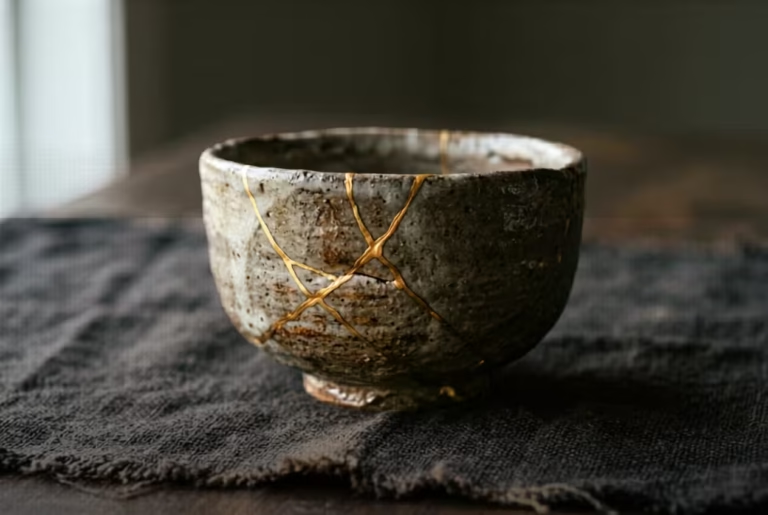
The philosophy is clear enough. The market is something else entirely.
Before You Buy
This page is the companion to the kintsugi philosophy and technique guide. It is written for readers who have moved past the question of what kintsugi is and are now facing the next one: how to find a piece worth owning, a kit worth using, or a class worth attending.
The risk is real. As kintsugi has gained visibility outside Japan, the market has filled quickly with products that use the word without honouring what it describes — epoxy resin sold as lacquer, brass powder sold as gold, workshops taught by people with no craft background. A purchase made without asking about materials, maker, or method can produce a lasting regret rather than a lasting object.
Everything on this page has been evaluated against three criteria: the integrity of the materials, the transparency of the seller, and the quality of the work. The selection is deliberately small. That is the point.
Five Things to Assess Before Any Purchase
- 01 The lacquer
Is it hon-urushi — true lacquer, derived from the sap of the urushi tree? Genuine urushi is food-safe once cured and grows harder and more lustrous with age. Epoxy-based "simplified kintsugi" looks similar in photographs but degrades over time. If the listing does not specify the type of lacquer, that omission is itself an answer.
- 02 The metal
Pure gold (24k), pure silver, or platinum will not tarnish. Brass powder looks gold initially but oxidises and darkens within years. Reputable pieces and kits name the metal specifically. If the listing says "gold-coloured" rather than "pure gold," the distinction is being carefully avoided.
- 03 The maker
Who is behind the piece — the artisan, the gallery, the company? Trustworthy sellers name their craftspeople and publish their backgrounds. A listing that offers only a generic studio name with no traceable history should prompt questions before payment.
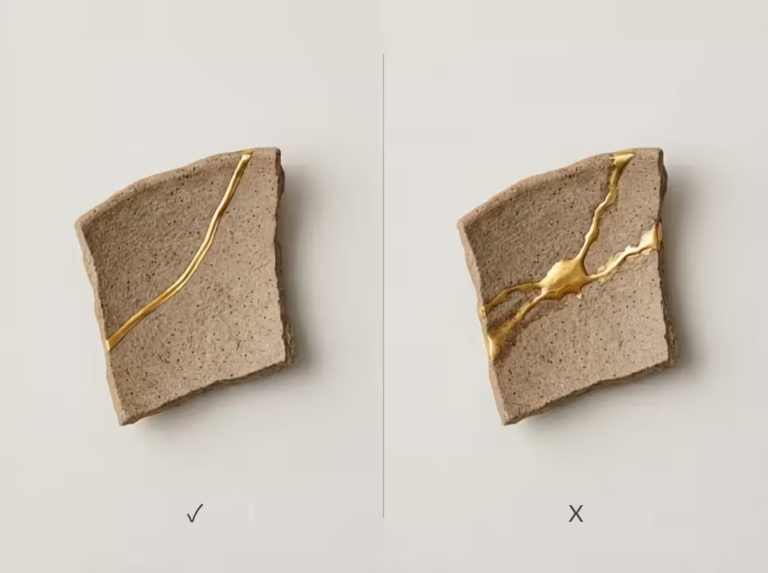
- 04 The seam lines
Look at the gold lines in the photographs. A skilled repair moves with the certainty of a brushstroke — unhesitating, purposeful. If the lines waver, if the gold has pooled at intersections, if the boundary between seam and ceramic is unclear, those photographs are telling you something about the craftsperson's level of mastery.
- 05 The base ceramic
A kintsugi piece is also the ceramic beneath the repair. Works from documented kilns — Imari, Bizen, Karatsu, Hagi, Shino — carry cultural and historical weight that is part of what you are acquiring. When the origin of the base ceramic is undisclosed, a layer of meaning is missing.
By Purpose and Budget
What you are looking for depends on where you are in your relationship with kintsugi. The following four entry points cover most readers. Find yours, then move to the relevant section below.
Choose works where the artisan's name and technique are documented and the base ceramic has verified provenance.
Budget: US$600 – $3,000+
A single piece, chosen carefully, for someone who understands the philosophy — or someone you want to introduce to it. Prioritise pieces that come with background information you can pass on.
Budget: US$100 – $600
Hon-urushi and confirmed food safety are non-negotiable here. Verify both before purchasing.
Budget: US$100 – $600
A kit at your own pace, or a workshop under artisan guidance. Both are covered below. Neither requires prior experience.
Budget: A$90 – A$500 (kits and classes)
Recommended Shops
The following have been selected on the basis of material integrity, transparency of information, and the quality of the work itself. These are not marketplace listings. Each operates in a context that takes seriously what kintsugi actually is.
Millennium Gallery Japan
A gallery specialising in kintsugi restoration by Japanese artisans including Taku Nakano. The collection runs to 65+ pieces — tea bowls, plates, cups — with provenance documented for each base ceramic. One of the very few kintsugi-focused galleries to publish its operating company name and Tokyo address alongside the work. The combination of named artisans, documented ceramics, and traceable business information is not common in this market.
Global shipping available. Confirm costs at checkout.
Our first recommendation for a serious collection piece. Tokyo-based, artisan-named, broad inventory — it meets all three conditions we require. Browse the Collection at Millennium Gallery Japan →eBay — Kintsugi Pottery
For a wider range of price points and styles — particularly for a first piece — eBay's kintsugi pottery listings cover a significant range of sellers and origins. Quality varies considerably. Before purchasing: check the seller's rating, read the material disclosures carefully, and confirm the return policy. The five criteria above apply here more than anywhere.
A useful starting point for browsing, not a curated selection. Apply your own judgment at each listing. Search Kintsugi Pottery on eBay →Kits and Workshops
Kintsugi is understood differently once you have held the lacquer brush. Working at your own pace with a kit, or learning under an artisan's eye in a workshop, produces a kind of knowledge that looking at photographs cannot. This section covers both paths.
DIY Kits
Suigenkyo (水源郷)
A Kyoto-based craft shop offering a genuine hon-urushi kintsugi starter kit. The set includes wheat-starch paste, wood powder, lacquer, and gold or silver powder. Completed pieces are food-safe. The English-language product pages explain the distinction between their materials and simplified alternatives clearly — a transparency that is itself a signal of quality. They have a track record of serving international customers.
International shipping worldwide. PayPal accepted.
Our first recommendation for anyone who wants to work with real materials. Hon-urushi, Kyoto-based, English-ready. View the Suigenkyo Starter Kit →HIKARU Kintsugi Kits
An Australian kintsugi kit brand with strong international logistics: 2–5 days within Australia, 6–10 days tracked to the US. DIY kits and materials are sold through a Shopify store with clear payment and shipping information. For readers in Oceania and North America who need a kit quickly, the reliability of the supply chain here is the primary advantage.
Best for readers in Oceania and North America who need a kit without a long wait. The real strength is logistics. View HIKARU Kintsugi Repair Kit →A note on urushi sensitivity: urushiol — the active compound in urushi lacquer — can cause contact dermatitis in some people during the uncured stage. If you have sensitive skin, cashew-resin kits are a practical alternative. Suigenkyo can advise on alternative materials on request. ClassBento workshops below also accommodate allergen concerns.
Workshops
ClassBento
A platform connecting learners with craft instructors across Australia, the US, and the UK. For kintsugi specifically, they list 20+ options: online classes, in-person sessions, kit-included experiences. Over one million workshops facilitated, rated 4.9 from more than 19,000 reviews. Each class listing details materials, difficulty level, and the type of lacquer used — which makes it straightforward to find a class that uses genuine materials.
Online classes are open globally. US kit-included courses ship nationwide. Check each listing for allergen accommodations before booking.
Our first recommendation for learning with your hands. The range of options and the transparency of each listing make it easy to find the right class for your level and location. Find a Kintsugi Class on ClassBento →Frequently Asked Questions
Can kintsugi pieces actually be used as tableware?
Hon-urushi kintsugi, once fully cured, is food-safe and suitable for hot liquids including tea and soup. Three conditions apply: the lacquer must be fully cured — typically several weeks to a month after the final coat; the metal used must be pure gold, silver, or platinum (brass is not food-safe); and the piece should be hand-washed only — no microwave, no dishwasher. For any piece intended for regular food and drink use, hon-urushi is the only reliable choice. Epoxy-based simplified kintsugi varies by product; do not assume food safety.
Why is the price range for kintsugi so wide?
Four factors determine price: the extent of the damage — a chip and a multi-fracture are very different undertakings; the metal used — pure gold costs more than silver or platinum; the value of the base ceramic — older kiln pieces with documented provenance command higher prices; and the artisan's accumulated experience. Pieces sold for under US$300 often involve simplified materials or undisclosed sourcing. Works in the US$600–$3,000+ range honestly reflect the cost of materials, the timeline of months, and the skill required.
Can you tell from photographs whether a piece is genuine?
To a degree. Three things to look for: the flow of the gold lines — do they read like purposeful brushstrokes, or do they waver and pool at intersections; the surface quality of the metal — pure gold has a soft, deep lustre that brass does not replicate, though this is difficult to assess in photographs, which is precisely why written material disclosure matters; and the coherence of the price and the material claims — a listing that says "pure gold, hon-urushi" priced at US$50 almost certainly contains a false statement somewhere.
How should kintsugi pieces be cared for?
Hand-wash only — dishwasher heat and pressure damage both lacquer and ceramics. Use mild soap and a soft sponge; abrasive cleaners scratch the gold lines. No microwave. Avoid prolonged direct sunlight, as urushi is sensitive to UV exposure. After washing, dry gently with a soft cloth. Treated this way, a properly restored hon-urushi piece will remain in good condition for decades — in many cases, for generations.
How do you buy kintsugi safely online?
Five things to verify before purchasing: business information is disclosed — company name, address, representative; material information is specific — type of lacquer, type of metal powder; the artisan's name and background are published; return and refund policies are clearly stated; and reviews are substantive rather than a wall of anonymous ratings. Both Millennium Gallery Japan and Suigenkyo, featured in this guide, meet all five conditions.
Kintsugi's growing visibility is, in itself, a welcome thing. But the same visibility has produced a market in which the word circulates faster than the understanding behind it. Choosing from knowledge changes what you own, how you use it, and what the practice gives you.
For the full account of kintsugi's history, its relationship to wabi-sabi, and the real difference between hon-urushi and simplified methods, the philosophy and technique guide is where to start.
Some links on this page are affiliate links. If you purchase through them, Untranslated Japan may earn a small commission at no additional cost to you. Affiliate relationships do not influence our selection. We feature only products that meet our criteria for material integrity, transparency, and craft authenticity.