
In 1875, a ryokan owner built Japan's first toll road. He didn't do it for money. He did it because a philosopher had told him that a country with bad roads could not think clearly — and he believed him.
A Mountain Road and a Philosophy
His name was Fukuzumi Masae. He was born in 1824 as the fifth son of a village headman, and at twenty-one he became a student of Ninomiya Sontoku — the farmer-philosopher whose teachings on rebuilding exhausted land through patient, disciplined effort had spread quietly through the countryside of Edo-period Japan.
Ninomiya told him something that redirected everything. Instead of becoming a doctor who treats the illnesses of individual people, he said, become a doctor who treats the illness of the nation. Masae listened. He spent five years absorbing his teacher's methods — what the Japanese call hōtoku shihō, a philosophy of economic restoration through honest work, frugality, and service to the community. He took careful notes. Those notes eventually became the Ninomiya-ō Yawa, still read today as one of the primary sources on Ninomiya's thought.
In 1850, Masae married into the Fukuzumi family — innkeepers who had kept a hot spring lodging in Hakone-Yumoto since the early Edo period. The family business had nearly collapsed after a fire. Masae took it over and, applying Ninomiya's methods precisely, restored it within a year. He reduced prices. He welcomed guests regardless of social standing. He commissioned the ukiyo-e artist Utagawa Hiroshige to draw illustrated maps of the Hakone hot spring districts — not just to advertise the inn, but to advertise Hakone itself. By twenty-seven, he was the headman of Yumoto village.
"Become a doctor who treats the illness of the nation."
— Ninomiya Sontoku to Fukuzumi Masae, c. 1845
What Masae understood was that Hakone's problem was not its springs. The springs were good — alkaline, clear, gentle on the skin. The problem was the road. In the Meiji era, the path from Odawara to Yumoto was narrow, muddy in rain, and impassable to carriages. People came on foot or by palanquin. To reach Tonosawa, the next valley up from Yumoto, required another half-hour on a rough track. The hot springs were there. The country that needed them was not quite able to arrive.
Masae intended to change that. And the person who gave him the framework to act was a man who would one day appear on Japan's ten-thousand-yen note.
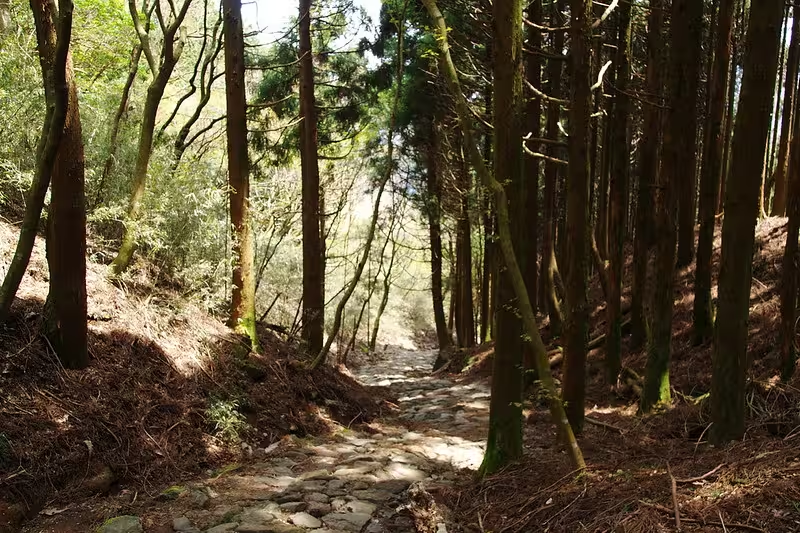
"箱根 旧街道" by hiroshi ataka, CC BY 2.0
Two Men in a Ryokan
In the autumn of 1870, Fukuzawa Yukichi — already known throughout Japan as the founder of Keio University and the author of widely read essays on Western civilisation — came to Hakone to take the waters. He was unwell. He checked into Fukuzumi's inn and, during his stay, began talking with its owner.
The two men were unlikely allies. Fukuzawa was a decade older, a child of the samurai class who had taught himself Dutch and English and thrown himself into the modernising impulse of early Meiji Japan. Masae was a farmer's son shaped by a very different tradition — Ninomiya's ethic of patience and restoration rather than Fukuzawa's ethic of progress and independence. But each recognised in the other something he lacked. Fukuzawa admired Masae's practical record: here was a man who had actually rebuilt a failing community with his own hands. Masae admired Fukuzawa's breadth: here was someone who had seen the world and understood where Japan was heading.
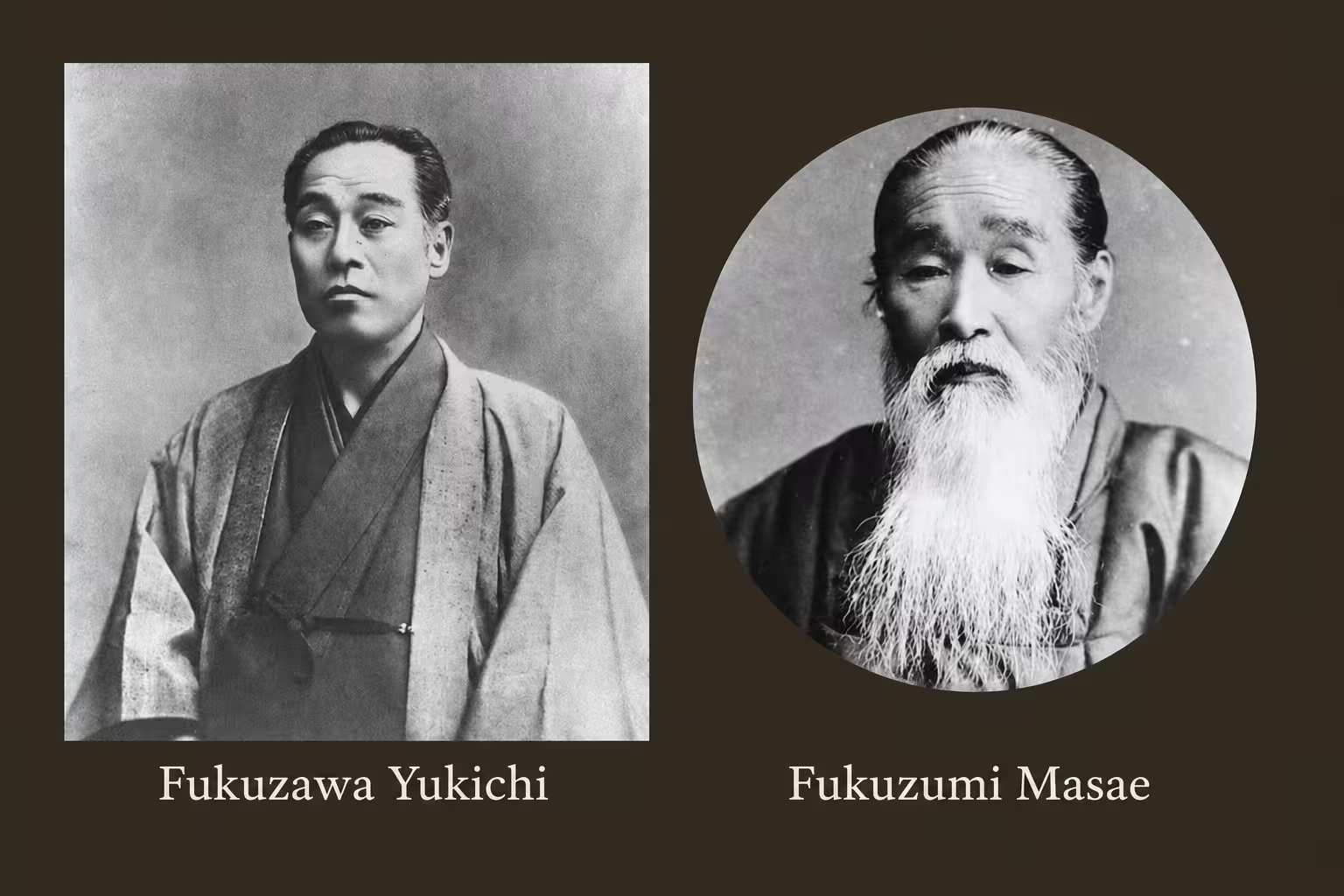
Fukuzawa returned to the inn repeatedly over the years that followed. Each visit included long conversations about what Hakone required. In 1873, Fukuzawa published a piece in a newspaper arguing that the most urgent thing was roads — that connecting the seven hot spring villages of Hakone with a proper carriage road was the precondition for everything else. The article reached the right people. Work began.
Japan's first toll road began here
In July 1875, Masae led a construction effort to widen and level the four kilometres of old road between the nearest town of Itabashi and Yumoto. The approach they found there was a shelf of land jutting into the valley — what the Japanese call a shita-jo-daichi, a tongue of elevated ground that forced the road up and away from the river. They cut through it. They widened the track to nearly five metres. They reduced the gradient. By September it was done.
Carriages and rickshaws could now move where previously only feet and palanquins could go. To recover the construction cost, they charged a toll: one sen per rickshaw, seven rin for a large cart, three rin for a small one. For five years, every vehicle paid to pass. It is recorded as Japan's first toll road. The route is now largely absorbed into National Route 1, but stretches of the original surface remain alongside it, older by a century.
The conversation that became a railway
In 1887, Masae and six other local figures filed a petition with Kanagawa Prefecture for a horse-drawn tram line — a basha tetsudo — running from Kokufu to Yumoto. The route would carry passengers on rails pulled by horses, following the road he had built twelve years earlier. It opened in 1888. The line was converted to electric operation in 1900. By 1919, after a decade of engineering work that required Swiss expertise and entirely new techniques for mountain track-laying, it had become the Hakone Tozan Railway — the steepest standard-gauge mountain railway in Japan.
Masae died in 1892, twenty-seven years before the railway reached its full form. He did not see the switchbacks he had made possible. But the train that carries you from Hakone-Yumoto to Tonosawa today — a four-minute ride, one stop up the mountain — is the direct descendant of a petition he signed.
The inn that stood at the centre of all of this is still there.
What the Building Says
Fukuzumiro occupies a site on the bank of the Hayakawa River in Tonosawa — the first hot spring district above Yumoto, entered through a narrow rock-cut passage called the Kanrei-domon, a tunnel that has defined the threshold of the valley since the Edo period. The inn sits where it has always sat, with the sound of the river below and the forested slope of Yusaka-yama behind.
The building Masae completed in 1879 was a deliberate statement. The exterior adopted what Meiji architects called giyofu style — a hybrid of Western structural forms and Japanese ornamental detail, the kind of building that appeared throughout Japan during the late nineteenth century as the country tried to signal its readiness for modernity without losing the texture of its own tradition. Inside, he chose sukiya-zukuri — the refined residential architecture associated with the tea ceremony aesthetic, characterised by asymmetry, natural materials, and the suppression of ornament in favour of craft.
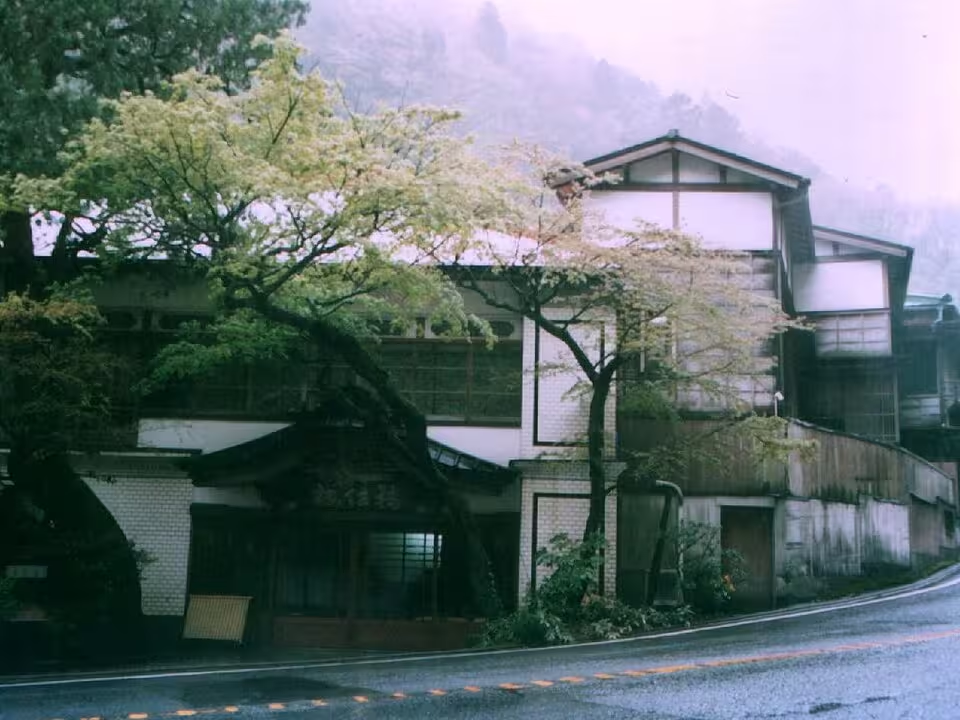
sgico, CC BY-SA 3.0, via Wikimedia Commons
The window you have to sit down to see
The building is now registered as a national cultural property, valued specifically for what it does with bamboo. Every major category of bamboo use in Japanese architecture appears somewhere in its structure — column coverings, ceiling panels, transom grilles, decorative inlays. Some of the techniques used are no longer practised. The craftsmen who made them are gone. What remains is the result.
One detail is worth pausing at. In certain rooms, the windows are positioned so that you cannot see the river from a standing position. You have to sit on the tatami. Lower your posture to the floor, and the Hayakawa opens out in front of you — the slope of the far bank, the movement of the water, the particular quality of light that comes off a mountain river in the morning. The view was designed to require a specific physical relationship with the room. It does not give itself to the standing visitor.
Throughout the building, Masae's family added a second emblem: a stylised bat, rendered in lacquerwork and carved panels wherever you look closely enough to find it. The second proprietor introduced it as a symbol of good fortune — the Chinese character for bat, fu, carries the same sound as the character for prosperity. Once you know to look, the bats are everywhere: above doorframes, in the corners of transoms, pressed into the lacquerware at dinner. The building is watching you.
Seventeen rooms. No two are identical. The inn does not accept walk-in visitors and has never offered day access to its baths. To enter Fukuzumiro, you must stay.
Fukuzumiro — Tonosawa, Hakone
Fukuzumiro operates a best-rate guarantee on direct bookings. Reservations are also available via Trip.com. Rates include dinner and breakfast served in your room. The inn has seventeen rooms, all different in layout and character — rooms facing the Hayakawa River fill earliest. Check-in from 15:00.
Check availability on Trip.com → Also bookable directly at fukuzumi-ro.com — the inn guarantees the lowest rate on its own site.The Bath, the Pine, the River
The bath is cut from a single pine trunk. Not shaped around it, not panelled with it — the vessel itself is the hollowed interior of one large tree. The wood has darkened over decades of use, smooth where hands have touched it, rough at the grain. The water is colourless. It runs directly from the Tonosawa source and comes in too hot, so the inn feeds a line of natural spring water into the basin to bring it down to temperature. The adjustment is not mechanical. It is exactly as it has always been: one hot thing, one cold thing, finding their balance.
The water is an alkaline simple thermal spring — no sulphur, no heavy minerals, clear and nearly tasteless. The effect is cumulative rather than immediate: the skin softens, the joints loosen, the particular tightness that accumulates in the upper back over years of sitting at desks begins, very slowly, to release. This is the type of water that Meiji-era writers came here specifically for — not drama, not spectacle, but the steady application of something gentle.
The baths are available around the clock. There is also a small rock bath — its style Western-influenced, with early-twentieth-century tiles and a full-length shower fixture that belongs to another era — and a private family bath that can be reserved. The main bath, the pine-trunk bath, is shared. You go when you go. Early morning, when the valley has not yet warmed, is the time when the steam rises highest and the green of the hillside reflects most clearly in the water's surface.
The river is forty metres away. You can hear it from the bath.
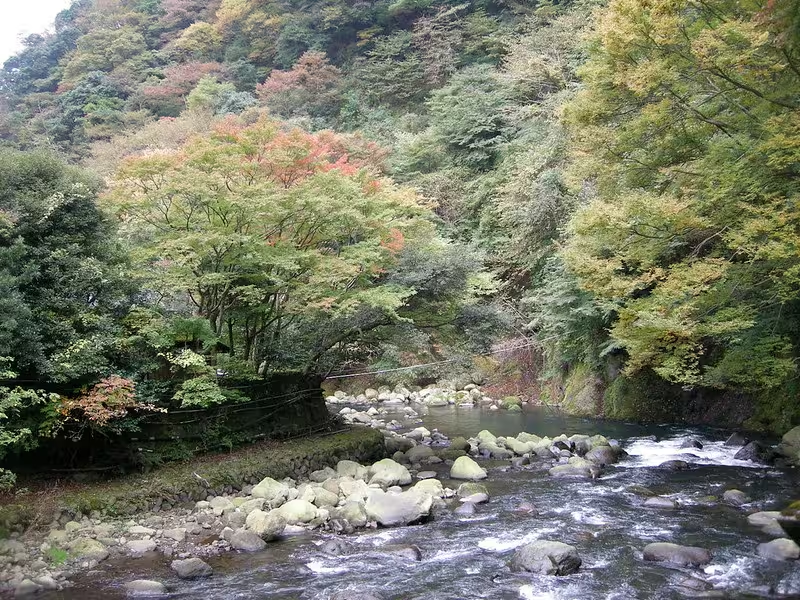
"箱根9 早川" by sawamur, CC BY-SA 2.0
The Room Kawabata Chose
Kawabata Yasunari came here to write. He came more than once, and each time he reserved the same room — a room called Kiri-san, which translates roughly as Pine Three, on the garden side of the building, away from the river. It is an eight-tatami room, quiet in a way that the riverside rooms are not, because the water does not reach it.
This is the detail that stops you, once you hear it. The rooms that face the river are the ones people want — the ones with the sound, the movement, the living quality of the Hayakawa running through your night. Kawabata, who would go on to win the Nobel Prize in Literature and whose prose is characterised above almost everything else by its attention to what is felt but not named, chose the room where the river could not be heard.
He did not choose silence as an absence. He chose it as a surface — something to write against.
The window of the room is designed for the same posture as the others in the building. Standing, you see the garden wall. Sitting, the window frames a hillside — and on the screen of the shoji, cut into the shape of a mountain range, light passes through and falls on the tatami floor in a pattern that shifts through the afternoon. When the sun is at a certain angle, the cut-out mountains throw shadows that look, briefly, like clouds passing over a real ridge.
The room is bookable. Whether it is available depends on when you plan to come. Ask at reservation.
Fukuzawa Yukichi's preferred room faced the water. Kawabata's did not. Two men, two modes of attention, two ways of being in the same building. The inn held both without preference. That is a quality of a certain kind of old Japanese space — the refusal to insist on a single correct experience. The building makes room for what you need, not what it expects you to need.
The Train That Thinks in Switchbacks
The Hakone Tozan Railway is the steepest adhesion railway in Japan — meaning it grips the track by friction alone, without the rack-and-pinion teeth used on true mountain railways elsewhere. The incline at its worst section exceeds eighty millimetres of rise per metre of horizontal distance. The train manages this by reversing direction three times between Hakone-Yumoto and the upper terminus at Gōra, zigzagging up the face of the mountain in a pattern the Japanese call switchback, each reversal requiring the driver and conductor to exchange positions.
To ride it is to understand something about the relationship between patience and arrival that this part of Japan seems to have been working out for a long time. You do not go directly toward your destination. You approach it obliquely, then move away from it, then toward it again. The mountain does not permit a straight line.
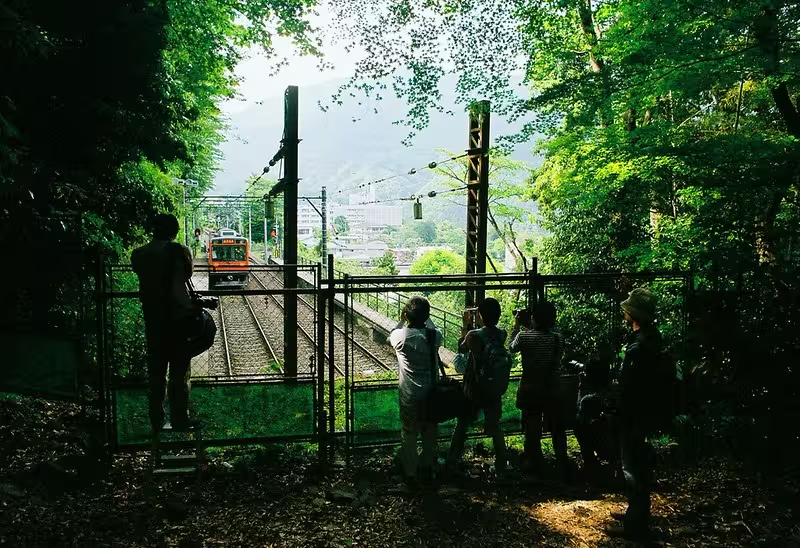
"上大平台信号場" by Ishikawa Ken, CC BY-SA 2.0
One stop from Hakone-Yumoto
Tonosawa is the first stop after Hakone-Yumoto. Four minutes by train, or fifteen minutes on foot along the river road — a walk that passes the Kanrei-domon tunnel cut and the first narrowing of the valley, where the mountains begin to press in on both sides. The station at Tonosawa is small: a single platform, a short flight of stairs, a level crossing over National Route 1. Fukuzumiro is five minutes from the platform on foot, or the inn will send a shuttle to meet you.
From Tokyo, the Odakyu Romancecar — a limited express with panoramic front windows — runs directly to Hakone-Yumoto from Shinjuku in approximately eighty-five minutes. No transfer required. The Hakone Freepass, available through Klook or at Shinjuku station, covers the Romancecar supplement and all local transport within Hakone for two or three days, including the mountain railway, the ropeway, and the lake ferry. If you plan to travel the area beyond the inn, it pays for itself on the first day.
Hakone Freepass — 2 or 3 Day
Covers the Odakyu line from Shinjuku to Hakone-Yumoto (including the Romancecar supplement), the Hakone Tozan Railway, the ropeway, the lake ferry, and local buses. Purchase in advance through Klook or at Shinjuku station. The 3-day pass is worth it if you plan to walk the old Tokaido road to Hatajuku on a separate day from your other sightseeing.
Book the Hakone Freepass via Klook →Hatajuku — What the Traveller Carried Home
When Masae widened the road in 1875, it connected Yumoto to the wider road network but did not extend up into the mountains. The old path — the Tokaido proper, the road that carried daimyo processions and Buddhist pilgrims and merchants and wandering writers from Edo to Kyoto for two and a half centuries — was already there, climbing through the forest above the valley. Sections of it survive intact: stone-paved, narrow, shaded by cedar, worn smooth by feet that have not walked it for a hundred years but worn deeper still by the feet that walked it before that.
The walk from Hakone-Yumoto through the forest to Hatajuku takes about ninety minutes. The path follows the old paving where it remains, diverges onto a dirt track when it doesn't, crosses a stream on a wooden bridge that has been rebuilt several times but stands in the same place it has always stood. At Hatajuku — the post town halfway up the mountain, where travellers rested before the final climb to the checkpoint at Lake Ashi — the village still makes the object that Edo-period travellers carried home in their packs.
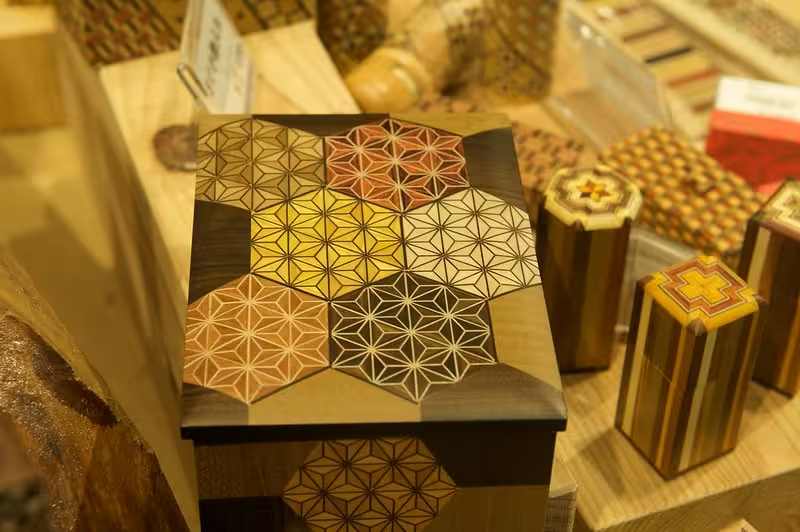
2013 Fall Japan by melanie_ko, CC BY 2.0
Yosegi-zaiku — Hakone marquetry — was invented here in the early nineteenth century by a craftsman named Ishikawa Nihei, who combined techniques he had learned in Shizuoka with the particular range of species that grow on Hakone's slopes: cherry, maple, zelkova, walnut, mulberry, a dozen others, each with its own colour and grain. He shaved them into thin sheets, glued them edge-to-edge in geometric patterns, then shaved the assembled block again across the grain to produce a veneer of interlocking shapes. The patterns have names — Hemp Leaf, Tortoiseshell, Seven Stars — and there are now more than a hundred of them. The technique was noted by the German naturalist Philipp Franz von Siebold in the early nineteenth century, who brought examples back to Europe where they entered museum collections as evidence of a craft tradition that the West had not seen before.
The Hatajuku Yosegi Kaikan at the centre of the village has a small workshop where the process can be watched and a simple coaster can be made under instruction. Several family workshops along the road sell finished pieces. The more complex objects — boxes with hidden compartments that open only when you press a specific sequence of panels in a specific order — require patience to operate and weeks to make. They are not cheap. They are also not decorative in the way that souvenirs are decorative. They are problems, elegantly stated.
Hakone Hachiri — Guided Hike along the Old Tokaido Highway
This full-day guided walk follows the Hakone Hachiri, the 32-kilometre mountain section of the Old Tokaido Highway designated as a Japan Heritage Site. The route passes through Hatajuku — where the yosegi workshops still operate — and stops at the Amazake-jaya teahouse, which has been serving sweet rice drink to travellers for over four hundred years. Starting from Hakone-Yumoto Station, the tour ends at Mishima — the direction all those Edo-period travellers were heading. Led by a certified Japan Mountain Guide, small groups only.
Book the Hakone Hachiri hike via GetYourGuide → Yosegi pieces from Hatajuku are available to ship internationally — ask at the Yosegi Kaikan or at larger workshops along the main road.The return from Hatajuku to Yumoto can be made on foot the way you came, or by local bus — about twenty-five minutes. Either way, you arrive back at Tonosawa in the late afternoon, when the light in the valley has gone amber and the river is audible from the road. Check-in at Fukuzumiro begins at three.
Before You Go
Does Fukuzumiro accept day visitors for the onsen?
No. Fukuzumiro does not offer day-use onsen access or welcome walk-in visitors at any time. Access to the baths, the building, and the grounds is reserved exclusively for overnight guests. This is not unusual for traditional Japanese inns of this calibre — it is part of the experience. To use the baths, you must stay.
Is English spoken at Fukuzumiro? How do guests communicate?
English is not the inn's working language, and while some staff have basic conversational ability, most interactions rely on gesture, patience, and — in practice — smartphone translation apps. This is worth knowing before you arrive, not as a warning but as context. Guests consistently report that the experience of navigating the inn without a shared language adds rather than detracts: it requires a different quality of attention, the kind that Fukuzumiro seems built to encourage. The welcome is warm regardless. Dinner is served in your room and explained course by course; breakfast follows the same rhythm. You will understand what you need to understand.
What is the best time of year to visit?
Autumn — mid-October through late November — is when the valley is at its most visually intense, with the hillsides above Tonosawa turning through yellow and deep red. Early April brings cherry blossom, though the crowds at Hakone are highest during this period. Midsummer is warm and humid, ideal for early-morning baths. Winter, particularly January and February, sees the fewest visitors and the sharpest mountain air — on clear mornings, the steam from the outdoor areas rises high and the quality of light is extraordinary. Avoid Golden Week (late April to early May) and the New Year period unless you have booked well in advance.
How do I get from Tokyo to Fukuzumiro?
Take the Odakyu Romancecar from Shinjuku directly to Hakone-Yumoto — approximately eighty-five minutes, with panoramic windows and reserved seating. From Hakone-Yumoto, the inn is one stop by the Hakone Tozan Railway to Tonosawa (four minutes), then five minutes on foot from the platform. Alternatively, walk the river road from Yumoto in about fifteen minutes. The inn can arrange a shuttle from Yumoto on request. The Hakone Freepass covers all local transport, including the Romancecar supplement, and is worth purchasing if you plan to spend more than a day in the area.
Can I walk the Old Tokaido Road from Hakone-Yumoto to Hatajuku?
Yes, and it is one of the better half-day walks in the region. The route from Yumoto to Hatajuku takes approximately ninety minutes at a moderate pace, following the old stone paving where it survives and a forest track where it doesn't. The path climbs steadily; comfortable walking shoes are sufficient but trail shoes are better in wet conditions. Hatajuku has a small restaurant and the yosegi marquetry hall. The return to Yumoto can be made by bus in about twenty-five minutes. The full Old Tokaido route continues beyond Hatajuku to the lake at Moto-Hakone — another three hours — passing the Amazake-jaya teahouse, which has been serving sweet rice drink to travellers since the early Edo period and continues to do so without apparent modification.
Masae built the road so that people could arrive. The building he made to receive them is still standing. The conversation that started all of it — two men with different ideas about what Japan needed, talking late into the evening over tea — took place in a room you can sleep in tonight.
Fewer things. Truer things.
This article contains affiliate links to Trip.com and Klook. If you book through these links, Untranslated Japan may earn a small commission at no additional cost to you. All recommendations reflect independent editorial judgment.