
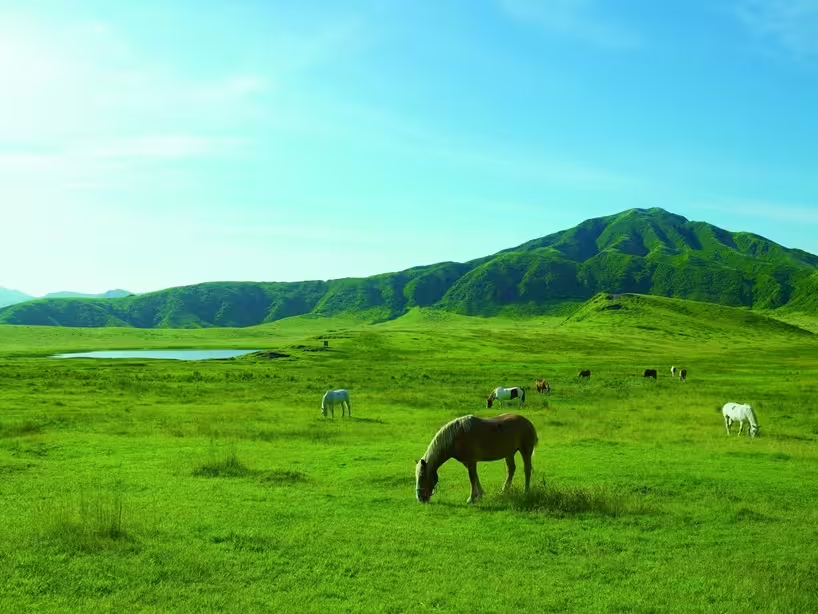
You smell it before you see it — sulfur on the wind, rising from a crater that has been burning for longer than anyone has been counting. Below, the caldera floor stretches flat and green in every direction, one of the largest on earth, and somewhere in the middle of it, rice is growing in fields fed by springs that fell as rain a hundred years ago.
The Crater
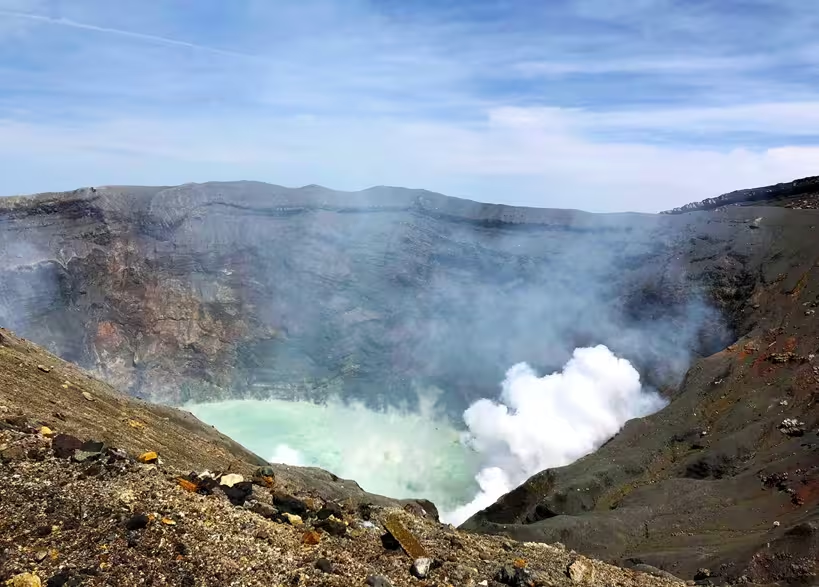
Aso Nakadake · Aso CityPeople have been throwing offerings into this crater for over a thousand years. Every June, a ceremony called the Kakochinji (the crater pacification rite) sees sacred offerings cast into the vent. The ritual has continued, almost without interruption, since the Heian period. A Chinese historical record from the seventh century already described locals responding to the mountain's noise with fire and prayer. For the people who built their lives on this caldera floor, the crater was not a geological event. It was the reason everything else existed.
That is still a useful way to look at it now.
© Kumamoto Prefecture Tourism Federation
What you need to know before you go
Access to the crater observation area depends on the volcanic alert level, which can change without notice. At Level 1, the viewing platform is open. At Level 2 or above, the crater rim is closed. Check the current status before you travel at the Japan Meteorological Agency's volcano map: jma.go.jp.
The ropeway to the crater has been suspended since 2023. A shuttle bus currently runs from the Aso Volcano Museum (草千里ヶ浜) to the crater parking area. Confirm the current operating schedule with the Aso City Tourism Association before your visit, as arrangements are subject to change.
If visibility is a priority, early morning tends to offer the clearest air before wind patterns shift the volcanic plume. Come prepared: the temperature at the crater is markedly colder than the valley floor, and the sulfur concentration can be uncomfortable for anyone with respiratory sensitivities. Masks are available on-site.
The Burning
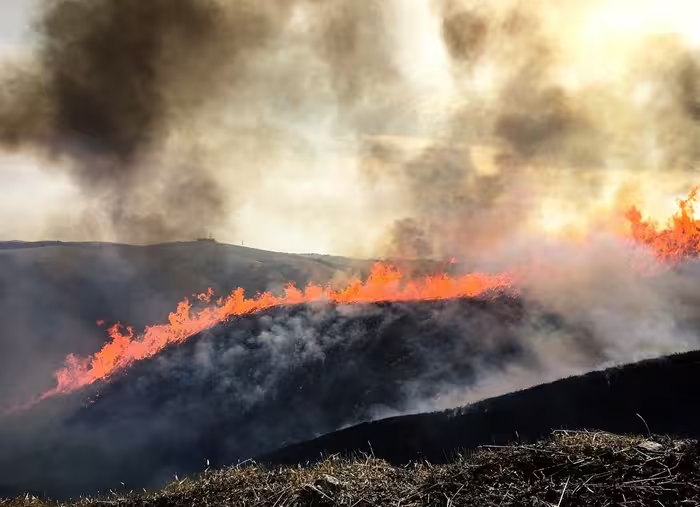
Noyaki · Aso Region · February–MarchThe grasslands of Aso are not wilderness. They are the result of a thousand years of deliberate burning — a landscape kept alive by fire, tended season after season by the people who live inside it. Without the annual burns, the caldera floor would revert to scrub forest within decades. The open grassland that defines the visual character of Aso — that particular quality of space, the sense of a sky that goes all the way to the ground — exists because someone lights it on purpose, every year, in late winter. In 2013, this system of burning, grazing, and hay-cutting was recognised as a Globally Important Agricultural Heritage System by the Food and Agriculture Organization of the United Nations. It is a living heritage: not displayed in a museum, but carried out by hand, this season, as it was a thousand years ago.
© Kumamoto Prefecture Tourism Federation
What visiting during noyaki actually involves
Seeing the burns close-up is harder than it sounds, and worth being realistic about before you plan a trip around it. The burns take place across the Aso region between late February and early March, but exact dates shift with the weather — a single day of strong wind will push the entire schedule back by a week or more. Planning around a specific date often ends in disappointment.
On burn days, major roads are closed during the burn window, typically from around 9am to 3pm. Milk Road, the Yamanami Highway, and the Aso Skyline are all subject to full closure. Roadside stopping is prohibited at likely viewpoints such as the Panorama Line near Komezuka. Even designated parking bays are sometimes restricted when fire approaches. Soot from burning susuki grass carries on the wind much further than expected — keep car windows closed, and contact lens wearers should take particular care.
The fires themselves are managed by local farming cooperatives and volunteers. The public observes from a distance. There is no viewing platform, no scheduled start time you can stand beside, and no guarantee of proximity to the flames.
A more reliable approach
The aftermath is, in some ways, more accessible than the event itself. In the days immediately after burning, the hillsides are black — a stark, almost lunar landscape against the Aso sky. Three to four weeks later, the same ground is vivid green, recovering at a speed that is genuinely surprising. Kusasenrigahama, the broad volcanic plateau near the crater road, is one of the easiest places to watch this sequence. It can be reached by car, and the transformation from char to new growth is visible across the whole basin.
If you want to be involved rather than observe, the Aso Green Stock Foundation (阿蘇グリーンストック) accepts volunteers each year — both for the burns themselves (requiring prior training in February) and for the summer grass-cutting that creates firebreaks beforehand. Contact: asogreenstock.com
For current burn schedules and road closure information during your visit, check the Aso City website (city.aso.kumamoto.jp) or the Japan Road Traffic Information Centre (Kumamoto: 050-3369-6643).
The Ancient Stones
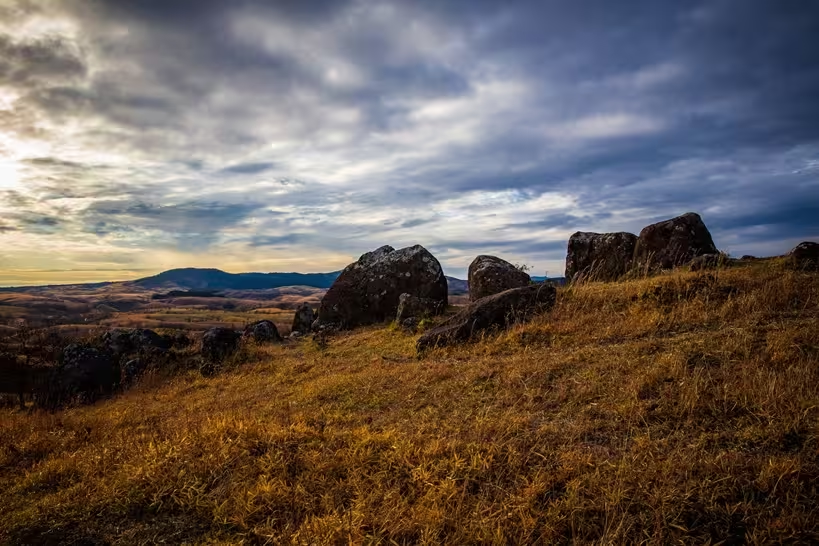
Oshitoishi no Oka · Minamioguni TownWhatever this place was built for, the stones have been arranged with intention. The largest rock, five and a half metres tall, points its apex directly at the North Star. At midsummer, the sun rises through a gap between two standing stones. At midwinter, it sets through the same gap. A compass held close to the central stone will spin. These are not coincidences of geology. Someone put these rocks here, and they understood the sky well enough to align them to it.
© Kumamoto Prefecture Tourism Federation
What you'll find there
The site sits at 845 metres elevation in Minamioguni Town, about forty minutes by car from Aso City. The largest stone, known locally as the central stone, measures 5.5 metres in height and 15.3 metres in circumference. The "scissors stone" (はさみ石) frames the precise point where the sun rises at the summer solstice and sets at the winter solstice.
Rock carvings are visible on several surfaces. Their origin and meaning are debated; the Oshitoishi site is designated a scenic landmark by Minamioguni Town, and the stones are understood to be ancient — the nature of the culture that placed them is less certain. That ambiguity is part of what makes this place worth visiting. It resists easy explanation in a way that few tourist sites do.
Entry is 300 yen for high school students and above; free for younger visitors. Camping is permitted at 500 yen per person. Toilets are on-site. Full details and directions at oshitoishi.net.
Private E-MTB Guided Cycling Around Mt. Aso Volcano & Grasslands
Explore the caldera floor on an electric mountain bike with a local guide — the grasslands, the volcanic landscape, and the scale of the caldera are best understood from inside it, at ground level.
Check availability at Viator →The Water
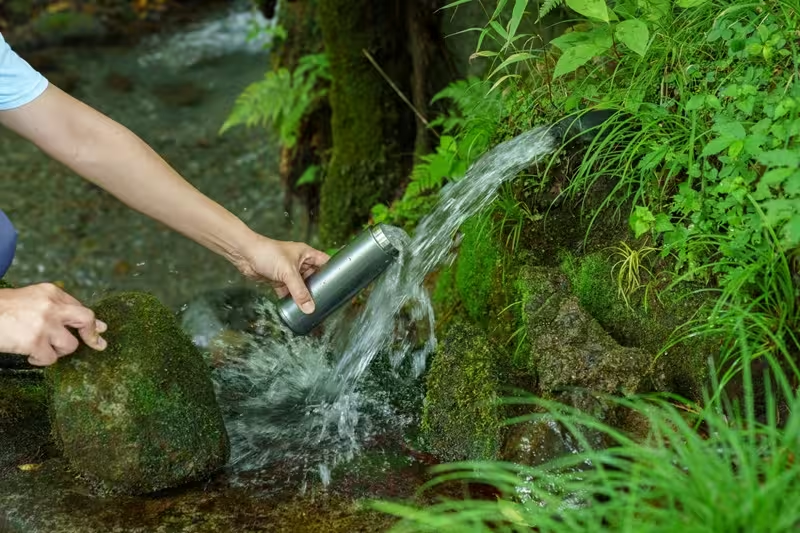
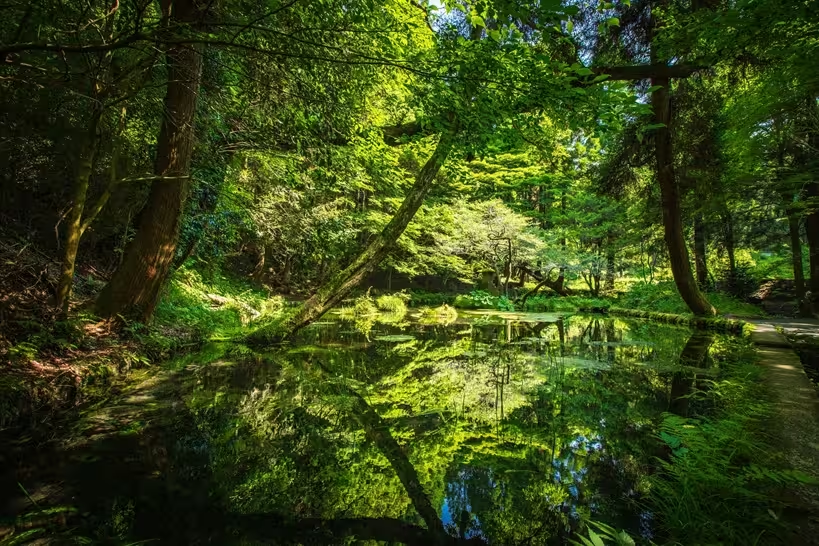
Ikeyama & Yamabuki Springs · Ubuyama Village · Ogi-tanadaUbuyama means "the village where gods were born." The name is old enough that no one knows exactly what it refers to. What remains is this: two springs, rising cold and clear from volcanic rock, that the village has argued about for generations — each side certain that their water tastes better. Both sides are right, in the way that people are always right about the things they love. The difference between the springs is measurable but small. The argument is about something else.
© Kumamoto Prefecture Tourism Federation
© Kumamoto Prefecture Tourism Federation
Two springs, one argument
Ikeyama Water Source (池山水源) is designated one of Japan's Top 100 Spring Waters by the Ministry of the Environment. The water rises at 13.5°C and flows at thirty tonnes per minute — a rate that has not meaningfully changed in recorded memory. The source sits inside a grove of trees that are over two hundred years old. In summer, the area around the stream fills with fireflies from dusk onward.
Yamabuki Water Source (山吹水源) is a short walk from the Ogi-tanada, with a shared car park. Its water is marginally harder than Ikeyama — a difference of a few milligrams per litre, but enough for the palate to register when drinking side by side. Both sources are soft water, in the range of 20 to 50mg/L of calcium and magnesium. Both are suitable for drinking. Both can be collected in containers you bring yourself.
A local coffee shop has run a side-by-side tasting, using each water to brew the same coffee. The consensus: Ikeyama water, being slightly softer, draws out more of the coffee's inherent acidity. Yamabuki water produces a rounder, more muted cup. Whether that makes one better than the other is the question the village has been refusing to settle for years.
The fields above
© Kumamoto Prefecture Tourism Federation
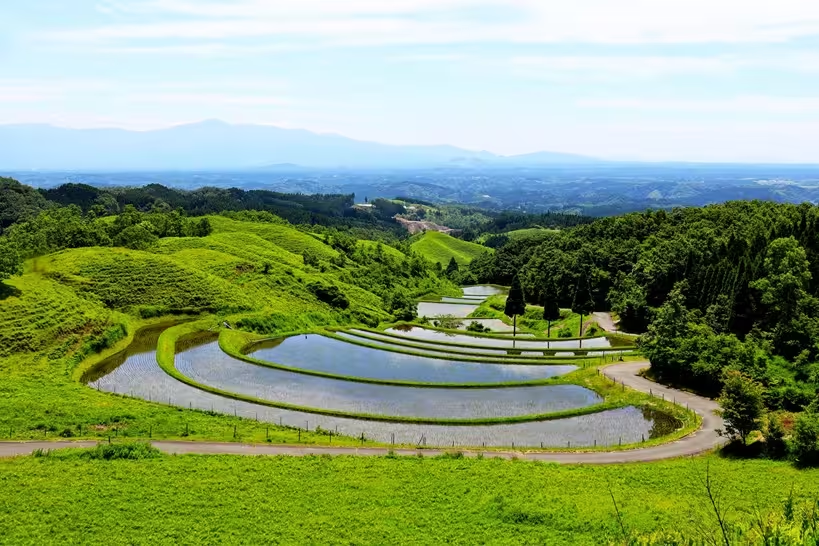
The Ogi-tanada (扇棚田) are recognised on the national registry of preserved terraced farmland and listed among Japan's Top 100 Terraced Fields. They are named for their shape — a fan opening toward the valley, cut into the hillside in narrow horizontal strips that follow the contour of the land. The fields are flooded from late April through May, when the water-filled terraces reflect the sky and the Aso peaks above them. The best view is from a small rise directly adjacent to the fields' own car park, reached by a narrow path worn into the hillside by visitors. The slope is short but steep and the ground can be slippery; shoes with grip are advisable. When the car park is full, the Yamabuki Water Source car park 500 metres away may be used as an overflow, and the toilet facilities there are open to terraced field visitors.
The fields are farmed using water from Yamabuki spring, grown in volcanic ash soil at an elevation that produces the temperature swings — warm days, cold nights — that Japanese rice producers consider ideal for developing sweetness. The rice here is not a product separate from the landscape. It is the landscape, interpreted through the particular combination of fire and water that Aso provides.
Note: drone photography requires permission from Ubuyama Village office. The fields are privately farmed; visitors are welcome to view from the path and designated viewpoints.
The Shrine
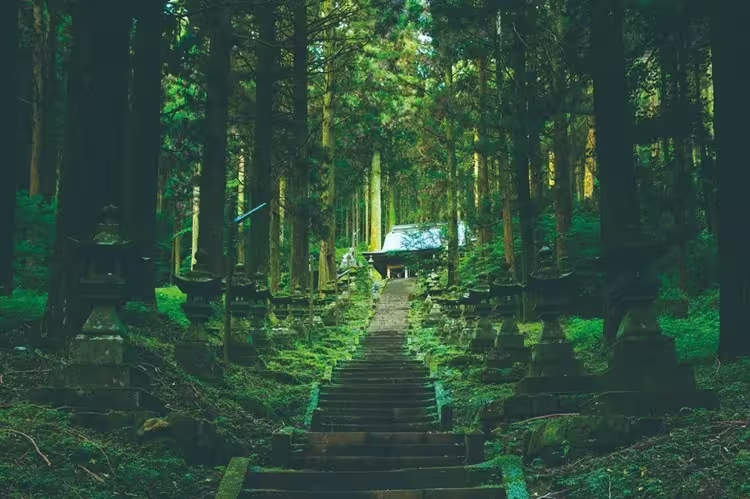
Kamishikimi Kumano Imasu Jinja · Takamori TownThe shrine is old, but the rock behind it is older. Long before anyone built a hall here, people came to this outcrop — a natural arch punched through the mountainside — and understood it as a place where something had happened that ordinary explanation could not reach. The rock is called Ugeto Iwa: a hole ten metres across and ten metres tall, driven through solid stone. According to the mythological record, a demon pursued by the gods of Aso kicked through the mountainside to escape. The rock remembers the kick.
© Kumamoto Prefecture Tourism Federation
The approach
The entrance is directly opposite the Shikimi post office on National Route 265. From the road, the shrine does not announce itself. Cross the road, pass through the first torii gate, and the path begins: ninety-seven stone lanterns standing in two rows up the hillside, covered in moss, spaced evenly along three hundred metres of stone steps. The lanterns were donated by local business families over generations, each one an acknowledgement of the prayers they believed the shrine had answered.
The steps are uneven and steep in places. Footwear with grip is advisable. At the top, the main hall is small and quietly maintained. Follow the path around and behind it, through the cedar forest, and the rock opens in front of you. The transition from the enclosed forest to the space beyond the arch is abrupt — the kind of spatial shift that makes clear why this place was understood as a boundary.
Practical notes
The shrine has no resident priest. Goshuin (御朱印, shrine stamps) are available at the Takamori Tourism Office, a one-minute walk from Takamori Station on the Minami Aso Railway. The sacred tree is nagi (梛), a broadleaf evergreen whose leaves resist tearing — associated with enduring bonds and, by extension, with good fortune in business and relationships.
The shrine gained international attention as the setting of the animated film Hotarubi no Mori e (蛍火の杜へ) by Yuki Midorikawa. Visitors arrive now from across Japan and from overseas specifically for that association, which has given the site a second life in addition to its older one.
Kamishikimi Shrine, Mt. Aso Grasslands & Kurokawa Onsen — Day Tour from Kumamoto or Fukuoka
A single-day itinerary covering Kamishikimi Kumano Imasu Shrine, the Kusasenrigahama grasslands at the crater road, and Kurokawa Onsen — three of the places described in this article, without the logistics of a self-drive. Includes complimentary shuttle to the Aso crater (subject to alert level). Departs from Kumamoto and Fukuoka. Summer season.
Check availability at Klook →The Food
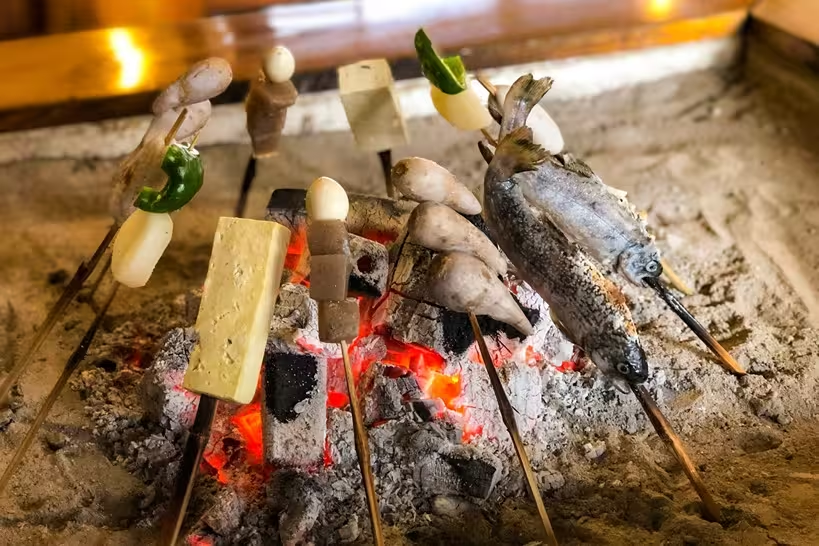
Takamori Dengaku no Sato · Takamori TownAbout 250 years ago, a villager from Takamori returned from travels through Kyoto and Shimane having eaten skewered tofu grilled over charcoal. He replaced the tofu with a local taro root called tsuruno-ko imo — a variety that grows only in the volcanic ash soil of the Aso region, where the ground is too poor in nutrients to produce ordinary taro. The recipe has not changed much since.
© Kumamoto Prefecture Tourism Federation
What dengaku is
Dengaku takes its name from an old agricultural ritual (the dengaku dance, performed to pray for a good harvest). The dish that carries the name is simpler: food on skewers, coated in seasoned miso, grilled slowly over charcoal in an open hearth. At Takamori Dengaku no Sato, the menu includes taro, yamame trout, konnyaku, mountain vegetables, and tofu — each ingredient skewered and arranged around the irori, turning in the smoke, glazed with either sansho-miso or yuzu-miso according to what suits it.
The building is over two hundred years old, thatched, surrounded by woodland. Charcoal smoke settles into the ceiling beams. The smell of miso and wood smoke is present before you reach the door. This is not a restaurant that performs rusticity — it is a space that has simply continued to exist in its original form, and the food fits the space.
What to order
The dengaku set meal (田楽定食) is the anchor of the menu and the reason to come. The tsuruno-ko imo taro is available from mid-October through the winter months only — this variety grows in the Aso region exclusively, and the annual harvest is limited. If you visit in that window, order it. Outside the season, the menu adjusts to what the soil and the river provide.
The adjoining building, Keyakiya, is a Meiji-era farmhouse relocated to the site. It was the birthplace of a sumo wrestler (Sada no Yama, second generation, who reached the rank of komusubi). It now sells local produce and preserved goods. The Kamishikimi Kumano Imasu Jinja shrine is a short drive from here — the two make a natural pairing.
Takamori Dengaku no Sato: dengakunosato.com
The Steam
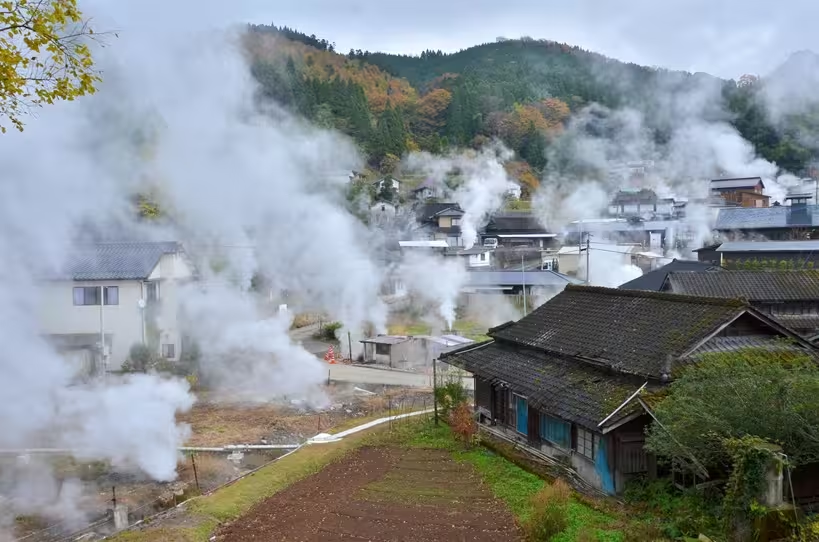
Waita · Kurokawa · Tsuetate · Oguni and Minamioguni TownsThe same volcanic heat that makes Aso dangerous makes this corner of Kumamoto one of the most concentrated hot spring regions in Japan. Three distinct onsen towns sit within twenty minutes of each other, each shaped by the same underground fire, each with a different character. They are not interchangeable. Choosing between them is a matter of what kind of evening you want.
Waita Onsen-go — steam you can cook with
© Kumamoto Prefecture Tourism Federation
Waita Onsen-go sits at the foot of Waitagasan, a dormant volcano the locals call "the Fuji of Oguni." The area comprises six distinct hot spring clusters: Hageno-yu, Takenoya, Yamakawa, Asozuru, Suzugatani, and Jigokudani. Each operates independently, which gives the area a rougher, more functional feel than the curated atmosphere of Kurokawa. The steam here is not incidental — it is infrastructure. Locals have used the volcanic heat for cooking and heating for generations. The local specialty is jigoku-mushi: chicken, vegetables, and eggs placed in perforated containers and set over natural steam vents until cooked. The cooking happens in the same ground that heats the baths.
Coin-operated private baths are a feature specific to this area. Insert a coin, and fresh hot water fills the tub; you have the space to yourself for a set time. The concept is unusual enough to be worth trying once even if you have no particular interest in the mechanics of it.
In 2015, thirty local residents formed a cooperative and opened the Waita Geothermal Power Station, using 130°C steam from the same underground source that heats the baths. The plant generates approximately 2 megawatts — enough to power more than the town's total household count. Oguni Town has been designated an Environmental Model City and an SDGs Future City by the Japanese government. The onsen and the power grid run on the same mountain.
Kurokawa Onsen — the village that designed itself
© Kumamoto Prefecture Tourism Federation
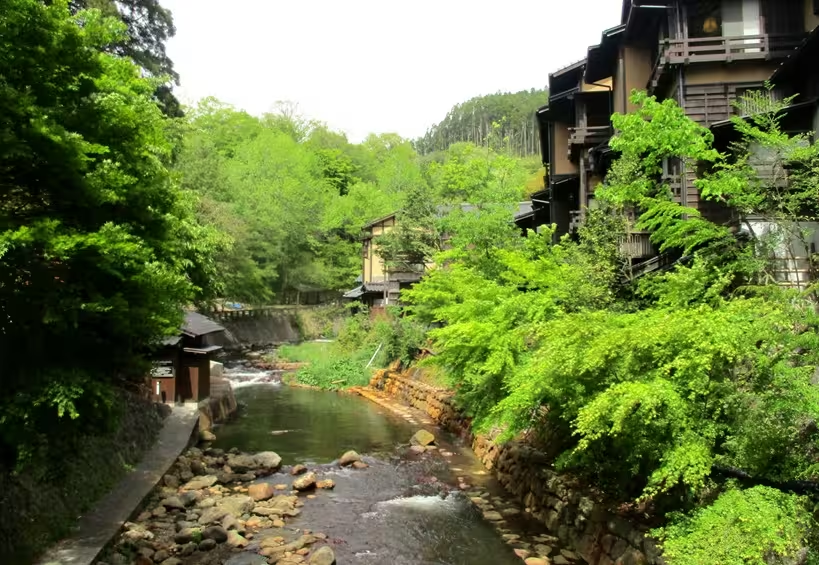
Kurokawa's modern form is a deliberate construction. In the postwar decades the town struggled, overshadowed by larger resort developments elsewhere in Kyushu. In the 1980s, the innkeepers made a decision: they removed all 200 of the roadside signs and advertisement boards, replanted the trees along the river, and agreed to maintain a visual standard across the whole town. No neon. No concrete facades. The result was a settlement that looked like it had always looked that way — a quality that turned out to be exactly what a certain kind of traveller was looking for.
The concept that defined Kurokawa is the nyuto tegata (入湯手形): a wooden token, cut from local cedar or hinoki, that admits the holder to three outdoor baths of their choosing across the participating inns. The token lets a visitor at one inn bathe at the baths of two others, which solved a practical problem — not every inn had space for outdoor baths — and created a reason to walk the town in yukata between sessions. That walk is now the experience Kurokawa is known for.
The springs at Kurokawa vary by inn: some offer iron-rich water that turns the tubs red, others offer acidic waters that cloud milky, others are clear and near-neutral. Picking three baths is a considered decision. A full English-language official website is maintained at kurokawaonsen.or.jp/en.
Tsuetate Onsen — where the water is almost boiling
© Kumamoto Prefecture Tourism Federation
Tsuetate is the oldest of the three. The opening legend traces to the Jingu Empress — the water was said to have been used as a birth bath for the Emperor Ojin, roughly 1,800 years ago. Kukai (the monk known as Kobo Daishi, founder of Shingon Buddhism) is credited with naming the place, in a poem: "Those who come leaning on a crutch, cured by the waters, leave it behind as they go." The town took the poem as its name. Tsuetate means "crutch-standing."
The water comes out of the ground at 98 to 100°C — too hot to enter directly, cooled before use. The source is sodium chloride, containing high concentrations of metasilicic acid, which gives the water a smooth, skin-conditioning quality after bathing. The town has twenty-six separate spring sources. Steam rises from gratings in the road. The streets are narrow, built into a steep river valley, with the buildings stacked against the cliff face above the Tsuetate River.
The town specialises in mushi-yu (steam baths, where the bather lies in a wooden chamber filled with volcanic steam rather than water). The experience is closer to a wet sauna than to conventional bathing, and is regarded as particularly effective for joint pain and fatigue. Most inns have at least one mushi-yu installation.
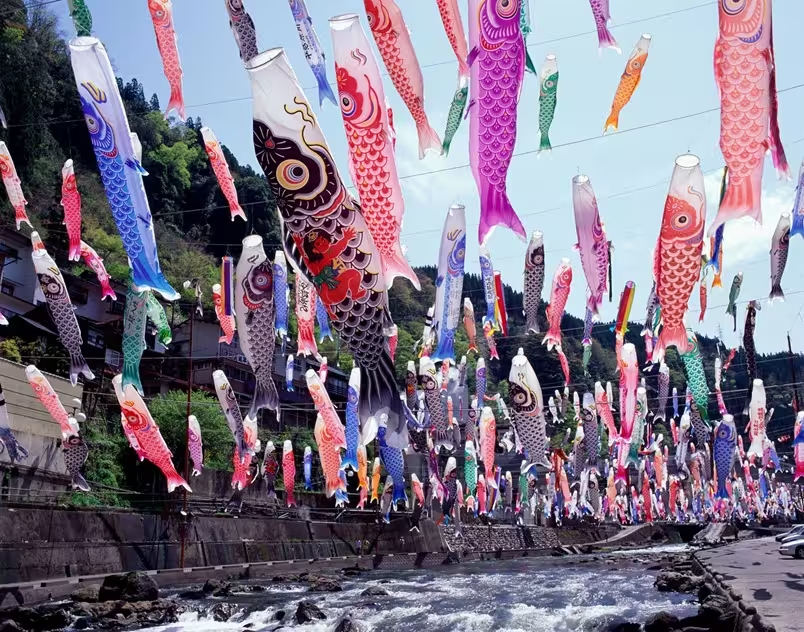
In April, the town suspends around 3,500 koinobori (carp streamers) above the Tsuetate River. The practice began in 1980 with forty streamers. Tsuetate is now regarded as the origin point of river koinobori festivals that have since spread across Japan. The image of carp in hundreds catching wind above a narrow gorge is considerably more striking than a photograph can convey.
Rent a Car from Kumamoto Airport
A car is the most practical way to cover the Aso region. Pick up from Kumamoto Airport and drive at your own pace — the crater road, the springs at Ubuyama, the hot spring towns in the north. Klook searches multiple rental providers in one place.
Search rental cars from Kumamoto Airport →Customized One-Day Chartered Car Tour from Kumamoto
A fully customizable private car tour departing from Kumamoto — plan your own route through the Aso region, the onsen towns, or the shrines and springs described in this article. Suited to those who want the flexibility of a self-drive without the logistics of driving themselves.
Check availability at Klook →Questions
When is the best time to visit the Aso region?
Each season offers something distinct. Late February to early March brings the noyaki grass burns — the most visually dramatic event in the Aso calendar, though smoke and reduced visibility come with it. April is the month for the koinobori festival at Tsuetate Onsen, when carp streamers fill the river gorge. May and June bring the new rice planting season, when the terraced fields at Ogi-tanada fill with water and reflect the sky; the fields are typically flooded from late April through May. June and July are firefly season at Ikeyama Water Source. Autumn mornings produce the best conditions for sea-of-cloud (雲海) views from the outer rim lookouts, particularly Daikanbo. There is no bad season — only different things to come for.
Is the Aso crater always open to visitors?
No. Access is governed by the volcanic alert level, which can change at any time and without notice. At Level 1, the crater observation area is open. At Level 2 or above, it is closed. Check the current level before you travel at the Japan Meteorological Agency's volcano map (jma.go.jp). If the crater is closed on the day you visit, the grasslands, the Aso Volcano Museum, and Kusasenrigahama remain accessible and are worthwhile in themselves.
Can you drink the water at Ikeyama and Yamabuki springs?
Yes — both are drinking water sources and can be collected in containers. Bring your own bottles or containers. Ikeyama is designated one of Japan's Top 100 Spring Waters and flows at 13.5°C year-round. Yamabuki is marginally harder in mineral content. The difference is subtle enough that blind tasting produces divided results even among people who drink the water regularly. Try both — the two sources are close enough to visit in sequence on the same trip.
Do I need a car to get around the Aso region?
A car gives you the most flexibility, particularly for reaching sites like Oshitoishi, the water sources at Ubuyama, and Waita Onsen-go. That said, the region is accessible without one. The JR Hohi Line connects Kumamoto Station to Aso Station in approximately one hour and thirty minutes to two hours. The Minami Aso Railway (南阿蘇鉄道) runs from Tateno to Takamori, serving the southern caldera; on weekends and public holidays between March and November, the sightseeing train also operates on this line.
Local bus networks cover the main tourist areas: the Miyaji Loop Bus in Aso City, the Yurotto in Minami Aso, and the Gurutto Bus in Oguni Town each link hot springs, water sources, historic sites, and visitor centres. The Aso Regular Sightseeing Bus runs twice daily from Aso Station, covering major crater-area sites in a three-hour loop. Electric-assist bicycles can be rented at Aso Station, Miyaji Station, Takamori Station, and the Minami Aso Visitor Centre — a practical option for exploring the flat caldera floor. Guided tours, including E-MTB cycling tours departing from Michi no Eki Aso near JR Aso Station, are available for those who prefer not to plan routes independently.
The caldera is approximately eighteen kilometres across. Everything described here sits within it, or within an hour of its edge. The volcano made the soil that grows the rice, released the heat that warms the baths, and pushed the water up through the rock into the springs. It also, periodically, reminds everyone that this landscape is on loan.
This article contains links to third-party booking and information services. Untranslated Japan may earn a commission on purchases made through some of these links, at no additional cost to you. All recommendations reflect genuine editorial judgement.