
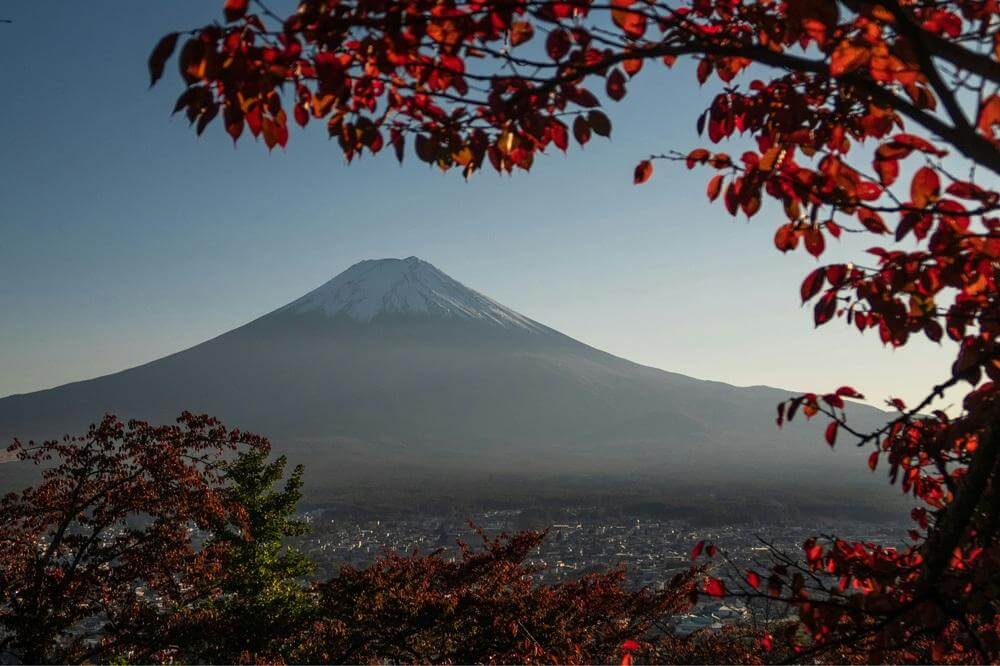
The best ryokan stays near Tokyo are less than two hours from the city and nothing like it.
Choosing the Right Ryokan Near Mt. Fuji
All nine ryokan in this guide lie within easy reach of Mount Fuji and can be reached from Tokyo in around two hours by train. Rather than trying to list every well-known ryokan in the region, we have selected properties that are worth making the journey for, whether you are celebrating a special occasion or simply want to treat yourself to one unforgettable night during your trip to Japan.
Together, they span four neighbouring hot spring regions (Yugawara, Izu Nagaoka, Atami, and Hakone), each offering its own interpretation of a traditional ryokan stay. Some are known for remarkable cuisine, others for historic architecture, private open-air baths, or gardens that change with the seasons. What they share is the feeling that one night is enough to slow the pace of travel and experience a different side of Japan.
If this is your first time staying at a traditional ryokan, it helps to understand what makes a ryokan different from a hotel before choosing one. Every property in this guide has its own character and its own idea of hospitality. The How to Choose section at the end will help you find the one that best matches the kind of experience you are looking for.
Yugawara: A Historic Onsen Retreat Loved by Japan's Great Writers
Yugawara's hot springs have been flowing for well over a thousand years. They are mentioned in the Manyoshu, Japan's oldest surviving poetry anthology, compiled in the eighth century, and for generations the valley has drawn writers, artists, and travellers seeking rest rather than spectacle. Unlike many modern hot spring towns, Yugawara has remained quietly residential, with long-established ryokan, small local shops, and an atmosphere that still feels shaped by daily life rather than tourism. Just ninety minutes from Tokyo on the JR Tokaido Line, it is home to some of the region's most characterful ryokan, each offering its own interpretation of traditional Japanese hospitality.
Oku-YugawaraTsubaki
Tsubaki describes itself as "a restaurant you can sleep in," and dinner is unquestionably the heart of the experience. Served privately in your room, each seasonal kaiseki unfolds course by course on lacquerware chosen to reflect the time of year, using ingredients from Yugawara and the surrounding Izu region. Yet the meal is only one expression of the ryokan's philosophy. Tsubaki believes the finest hospitality is the kind you notice only after you have left, when you realise how completely it allowed you to forget everything beyond the moment.
Twenty-nine rooms are arranged in sukiya style around a koi pond garden, while five occupy the quieter Geihinkan wing. Named after the camellia, a flower deeply woven into Yugawara's landscape, the ryokan carries that same quiet elegance throughout the stay, with every guest room named after a different variety of camellia. A short walk through the grounds leads to a woodland path beside a mountain stream, where camellias, plum blossoms, hydrangeas, autumn maples, and even summer fireflies mark the changing seasons. It is a place designed not to impress at first glance, but to stay with you long after the journey home.
◆ Tsubaki: Explore a celebrated inn deep in the Oku-Yugawara valley and check today's rates on Rakuten Travel.
Kaiseki Ryoan Ashikari
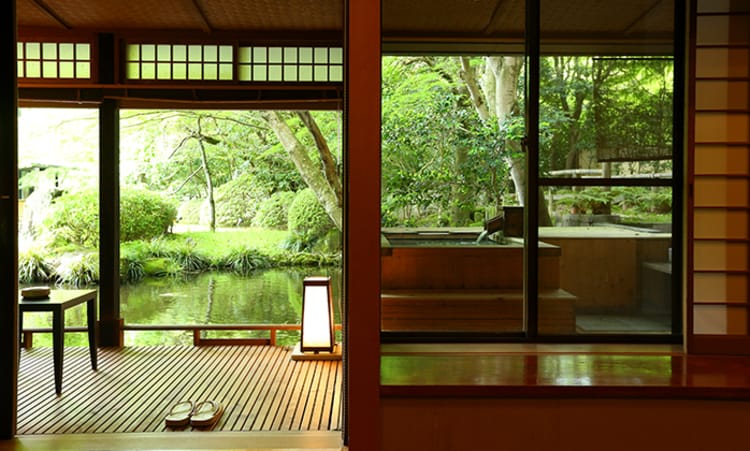
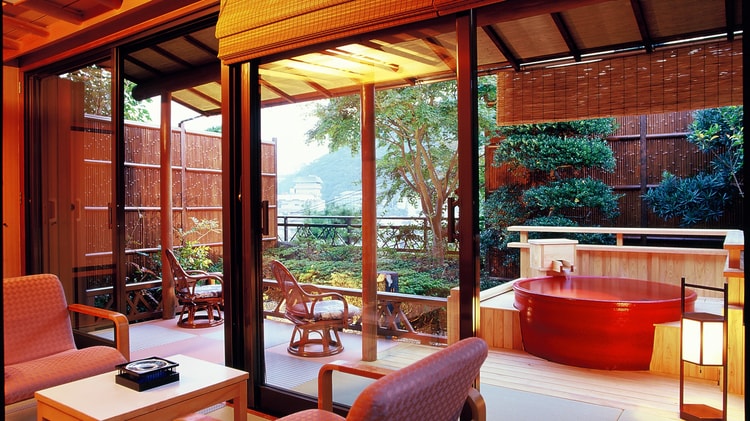
Every one of Ashikari's 17 rooms has its own private open-air bath, allowing you to enjoy the hot spring whenever you wish without sharing the experience with anyone else. Fed directly from the source, each bath is fitted with a motorised roof panel, so even rain rarely interrupts an evening soak. Floor-to-ceiling windows frame the ridges of Hakone's outer mountains, bringing the landscape quietly into the room throughout the seasons.
Ashikari is also one of the few luxury ryokan in the region where families with very young children are welcomed as thoughtfully as couples. In-room dining, cots, baby baths, bottle sterilisers, and staff experienced in caring for infants allow parents to relax without worrying about disturbing other visitors. That commitment has earned the ryokan certification from the Mikihouse Child Research Institute. Dinner is a seasonal kaiseki built around local ingredients, served slowly in the privacy of your room, where the evening belongs entirely to your family.
◆ Kaiseki Ryoan Ashikari: Discover a Michelin-listed ryokan where every room has its own private open-air bath and check today's rates on Rakuten Travel.
Fujiya Ryokan
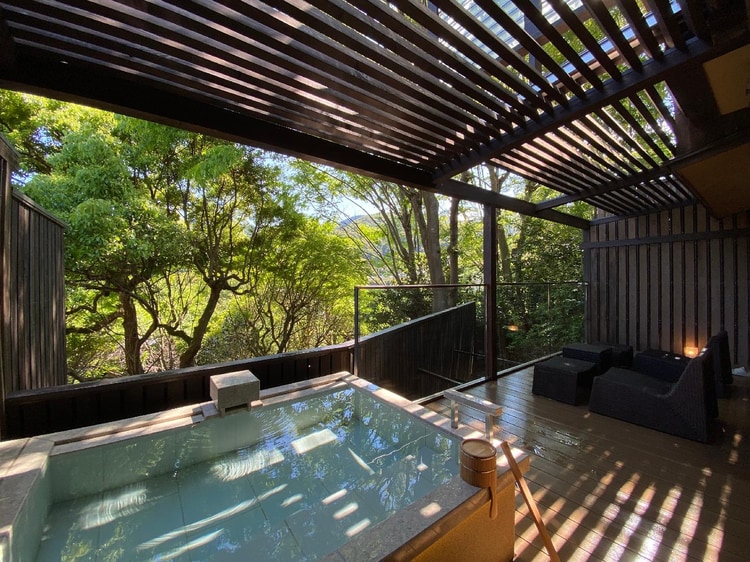
Founded in 1876, Fujiya Ryokan has long been a retreat for writers, artists, and travellers seeking the quiet of Yugawara. Its historic Kyukan wing, built in 1923 and now registered as a Tangible Cultural Property, preserves the atmosphere of a traditional Japanese inn with remarkable fidelity, while rooms in this wing feature their own cypress-wood hot spring baths. Across the garden, the Rakumiso annex was constructed using timber brought from Kyoto specifically for the project, continuing the same commitment to craftsmanship.
The meal is one of the reasons many visitors return. Fujiya's signature charcoal-grilled eel is prepared using the traditional jibayaki method before being served over rice cooked together in an earthenware pot, allowing every grain to absorb the richness of the eel as it finishes over the fire. It has become one of Yugawara's best-known dishes, and for many visitors, reason enough to choose Fujiya in the first place.
◆ Fujiya Ryokan: Explore a historic literary inn founded in 1876, renowned for its charcoal-grilled eel course, and check today's rates on Rakuten Travel.
Izu Nagaoka: Historic Villas, Garden Estates, and Mount Fuji Beyond
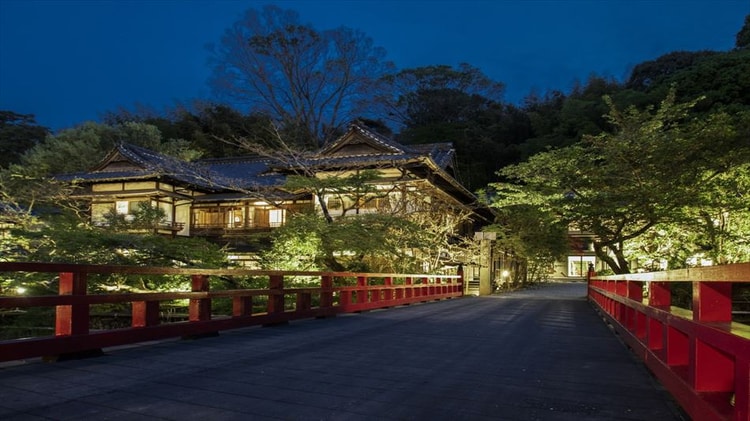
Izu Nagaoka has long been known for its alkaline hot springs, whose gentle waters are said to leave the skin feeling remarkably smooth. Set in a quiet valley where Mount Fuji appears on clear days, it offers a slower pace than nearby Atami or Hakone, with fewer day-trippers and a stronger sense of retreat. From Tokyo, the journey takes around ninety minutes via Mishima Station.
The two ryokan featured here are reasons to visit Izu Nagaoka in themselves. One is centred on a landscape garden assembled over decades from stones collected across Japan; the other preserves the atmosphere of a former Mitsubishi family villa surrounded by one of the region's most celebrated Japanese gardens. Both offer the rare experience of staying somewhere where the architecture and grounds are as memorable as the hot springs.
Izu Nagaoka OnsenIshinoya
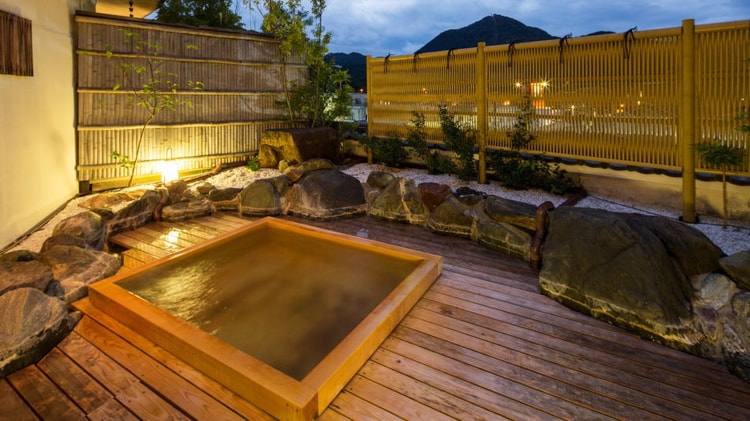
At Ishinoya, the garden is not something you step outside to see. It is the centre of the entire stay. Over decades, stones were gathered from across Japan to create a landscape garden spanning some 6,600 square metres, with all 22 rooms arranged to face it. Ground-floor rooms include private open-air baths in cypress or stone, while those on the upper floors have indoor baths fed directly from the same spring. A foot bath and a small drinking fountain beside the garden invite you to experience the water in quieter ways throughout the day.
The rhythm of the ryokan encourages lingering rather than sightseeing. A book café overlooking the grounds serves complimentary drinks and Japanese sweets, inviting you to settle in with a book between baths. Dinner is a seasonal kaiseki served privately in your room, prepared with ingredients from the Izu Peninsula. At Ishinoya, the greatest luxury is simply having nowhere else you need to be.
◆ Ishinoya: Discover a ryokan built around a stone garden decades in the making and check today's rates on Rakuten Travel.
Sanyo-so
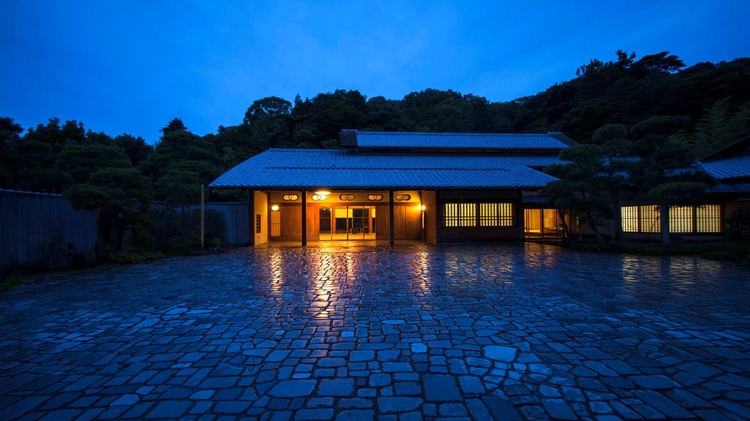
Sanyo-so was built in 1929 as the private villa of Hisaya Iwasaki, eldest son of Mitsubishi founder Yataro Iwasaki, and today remains one of the finest examples of a historic villa converted into a ryokan. Registered as a Tangible Cultural Property, the estate is set within a Japanese garden of some 9,900 square metres designed by the renowned Kyoto landscape architect Jihei Ogawa, where the scenery changes quietly with the seasons. Rather than simply staying in a ryokan, you experience the atmosphere of a country estate once created for one of Japan's most influential families.
The accommodation is divided between the historic Main Building and a newer sukiya-style wing designed by one of Japan's most celebrated twentieth-century architects, Togo Murano, with rooms overlooking private courtyard gardens or the estate's expansive landscape. For those wanting to experience Japanese culture beyond the onsen, the ryokan can also arrange private geisha performances, while seasonal kaiseki showcases ingredients from both the Izu coast and the surrounding mountains. In the early morning, many visitors wander the gardens or join the birdwatching walks through the wooded hills behind the estate before breakfast.
◆ Sanyo-so: Explore a former Mitsubishi family villa, now a registered cultural property, and check today's rates on Rakuten Travel.
Atami: Sea Views, Forest Retreats, and Centuries of Hot Spring Culture
For more than a thousand years, Atami has been one of Japan's best-known hot spring towns, where the mountains meet Sagami Bay and volcanic springs rise naturally along the coast. Just fifty minutes from Tokyo by shinkansen, it is the easiest destination in this guide to reach, yet it offers remarkably different ways to experience a ryokan stay.
The two ryokan featured here reveal those contrasting sides of Atami. One looks out across the bay from a historic hillside overlooking the city, while the other turns towards the quiet of a forested valley, where the sound of a mountain stream replaces the bustle of the resort town. Together, they show why Atami has remained one of Japan's most enduring onsen destinations.
Atami OnsenFufu Atami
Fufu Atami offers only suites, each with its own terrace overlooking a forested valley where a clear stream runs below. Although Atami is best known for its coastline, the ryokan turns instead towards the quiet of the surrounding hills, creating the feeling of a secluded mountain retreat just minutes from the city. The communal bathing area includes both a Finnish löyly sauna and a steam sauna alongside the hot spring baths, allowing you to experience totonou, the Japanese ritual of moving between heat, cool water, and rest until both body and mind settle into calm.
Dinner is equally personal. Rather than following a single dining style, you choose between seasonal kaiseki, a teppanyaki counter where each course is prepared before your eyes, or a sushi and kappo counter where the chef serves each piece directly across the counter. Together, they offer three distinct ways to experience Japanese cuisine without ever leaving the ryokan.
◆ Fufu Atami: Discover an all-suite ryokan with forest views, sauna, and three dining options in the hills above Atami and check today's rates on Rakuten Travel.
Shin-Kadoya
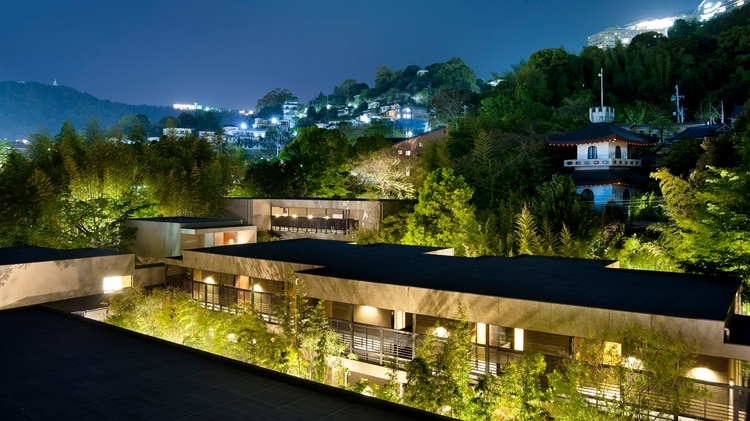
Shin-Kadoya has been operating from the same hillside above Atami since 1892, its position high enough to look out over the city rooftops and the bay beyond. Built in the refined sukiya style, the ryokan has just 18 individually designed rooms, 13 of which feature a private open-air bath fed by its own hot spring, Hirando no Yu. Every room also opens onto a moon-viewing terrace, inviting you to slow down as the lights of Atami begin to appear below.
The evening is the defining experience. Dinner and breakfast are both served privately in your room, while the rooftop open-air bath, Tenkuu no Yu, commands an uninterrupted view across Atami Bay. During the city's famous fireworks festival, you can watch the display from the bath or your own terrace, turning what is already one of Japan's most celebrated fireworks events into an experience that feels remarkably personal.
◆ Shin-Kadoya: Explore a historic hillside inn with its own spring and a rooftop bath overlooking Atami Bay and check today's rates on Rakuten Travel.
Hakone: Volcanic Springs and Two Very Different Ryokan Experiences
Hakone's volcanic landscape has shaped one of Japan's richest hot spring regions, where dozens of natural springs emerge across mountains, valleys, and river gorges. Just seventy to eighty minutes from Tokyo by the Odakyu Romancecar, it is one of the country's most accessible onsen destinations, yet it still offers remarkable variety in both its waters and its ryokan.
The two properties featured here capture that diversity in very different ways. One is a historic riverside retreat where the sound of the Hayakawa River accompanies every stage of the stay; the other is an intimate modern ryokan built around Sengokuhara's distinctive milky spring water. Together, they show that even within Hakone, no two ryokan offer quite the same experience.
Hakone-Yumoto, Tonosawa OnsenShiunso
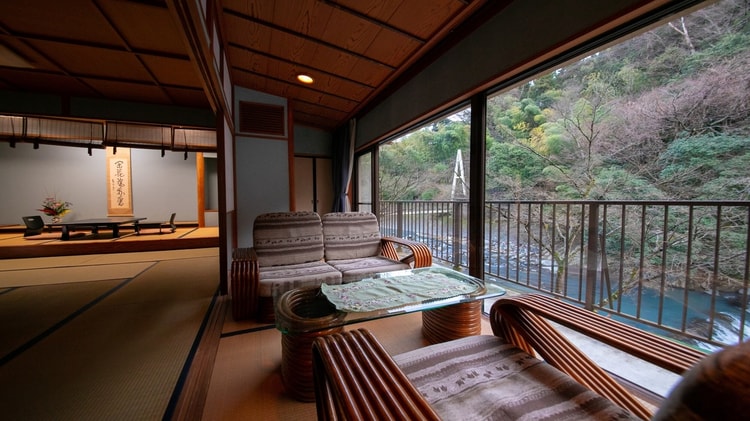
The arrival at Shiunso is unlike any other ryokan in this guide. You pass through a tunnel carved directly into Shoryuzan, the towering rock formation that has watched over Tonosawa for centuries, before emerging to the sound of the Hayakawa River flowing below. In just a few moments, the noise of the outside world gives way to rushing water, setting the tone for the rest of the stay.
The ryokan occupies the former riverside estate of Baron Okura and spreads across 13,000 square metres of woodland beside the Hayakawa. Bamboo groves, a suspension bridge, and open-air baths along the river encourage you to spend as much time outdoors as in your room. Dinner is served privately in your room, while the kitchen is known for creative kaiseki prepared with its own spring water and hand-rolled buckwheat soba made fresh on site. At Shiunso, the river is never far away, becoming part of the experience from arrival until departure.
◆ Shiunso: Explore a historic riverside inn on the former estate of a Meiji-era baron and check today's rates on Rakuten Travel.
Centurion Hakone Bettei
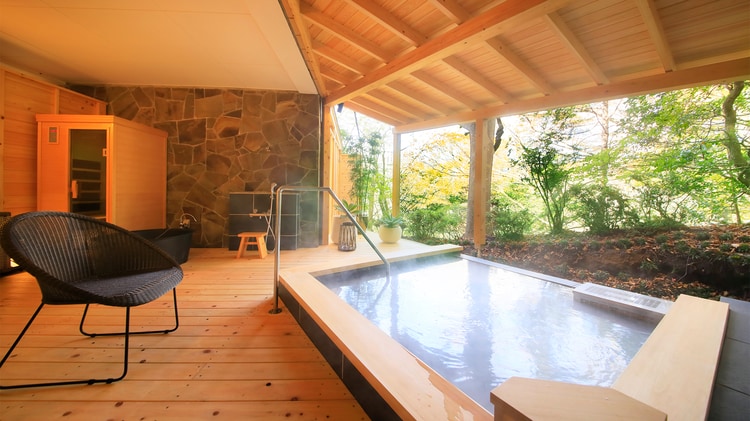
With just thirteen rooms, Centurion Hakone Bettei feels more like a private retreat than a conventional ryokan. Every room has its own semi-open-air bath, while the large communal bath and selected rooms are supplied directly from Sengokuhara Onsen, one of Hakone's rare natural springs known for its milky, sulphate-rich water. Flowing straight from the source without recirculation, it offers a bathing experience found in only a handful of ryokan in the area.
The interiors balance contemporary comfort with traditional craftsmanship. Natural wood, soft light, and carefully chosen ceramics and artworks create a calm, understated atmosphere that feels more like a private residence than a hotel. Dinner follows the same philosophy, with a choice between seasonal kaiseki, shabu-shabu, or sukiyaki, each thoughtfully presented on tableware selected to complement the meal.
◆ Centurion Hakone Bettei: Explore an intimate thirteen-room ryokan with private semi-open-air baths and milky Sengokuhara spring water and check today's rates on Rakuten Travel.
How to Choose
Every ryokan in this guide is worth staying at, which makes the choice genuinely difficult. The most useful question to ask is not which ryokan is best, but what you most want to remember from this trip, and which ryokan has built its entire experience around exactly that.
If sharing dinner together matters most
Some ryokan still preserve one of the oldest traditions of ryokan culture: a multi-course dinner served privately in your room. At Tsubaki, Shiunso and Shin-Kadoya, the evening unfolds at your own pace, without leaving the room or dining around other guests. It creates the kind of uninterrupted family time that has become increasingly rare in modern travel.
If a private open-air bath is non-negotiable
Not every room with a bath is truly open to the sky. Ashikari and Centurion Hakone Bettei remove the uncertainty by offering a private open-air bath with every room, so you never need to compromise when booking. Whether travelling as a couple or simply wanting complete privacy, both are built around bathing whenever the moment feels right.
If you want to stay somewhere with a story
Some ryokan are memorable not because of what they offer, but because of the buildings themselves. Fujiya Ryokan preserves one of Yugawara's historic literary inns, Sanyo-so remains a former Mitsubishi family villa designated as a cultural property, and Ishinoya is built around a stone garden assembled over decades. These are places where the architecture becomes part of the experience.
If the meal is the destination
For some ryokan, the evening meal is reason enough to make the journey. Tsubaki has built its reputation around seasonal kaiseki, served privately in your room on tableware chosen to reflect the time of year. Fujiya Ryokan is equally memorable for its charcoal-grilled eel, a speciality that has become synonymous with the inn itself. Fufu Atami offers a different kind of culinary experience, allowing guests to choose between kaiseki, teppanyaki, or a sushi and kappo counter. If exceptional food is at the heart of your ideal ryokan stay, these three properties each offer a compelling reason to book.
Frequently Asked Questions
Is a day trip enough, or should I stay the night?
A day trip misses the two most important parts of staying at any ryokan: the evening kaiseki dinner served in your room and the long, unhurried morning that follows. One night is enough to experience both; two nights simply give you more time between them.
How far in advance should I book a room with a private open-air bath?
Rooms with private baths sell out fastest, particularly on weekends and around the Atami fireworks dates in summer. For popular dates, booking two to three months ahead is a reasonable minimum. At smaller properties like Umi no Hana and Centurion Hakone Bettei, with ten and thirteen rooms respectively, availability disappears well before that on peak weekends.
Which of these ryokan is best suited to an anniversary or milestone trip?
Ashikari is unusual in explicitly welcoming milestone celebrations of all kinds, including longevity milestones and maternity stays. Sanyo-so suits anniversaries well given its historic villa setting. Shin-Kadoya works particularly well for couples, with its small room count, in-room dining, and the rooftop bath overlooking the bay.
Which area is easiest to reach by train from Tokyo?
Atami is the fastest, at around fifty minutes from Tokyo Station by Tokaido Shinkansen. Hakone is next, reachable in seventy minutes or so via the Odakyu Romancecar from Shinjuku. Yugawara and Izu Nagaoka take roughly ninety minutes to two hours, depending on the connection used.
Can children stay at these ryokan?
Policies vary by property and room type. Some rooms at Ishinoya are not available to children under school age. Ashikari is among the most accommodating of families with young children. If you are travelling with children, it is worth confirming the policy with the ryokan directly before booking.
Continue Reading

Untranslated Japan may earn a commission from bookings made through the links in this article, at no additional cost to you. Availability, pricing, and policies are subject to change; please confirm directly with each ryokan before booking.