
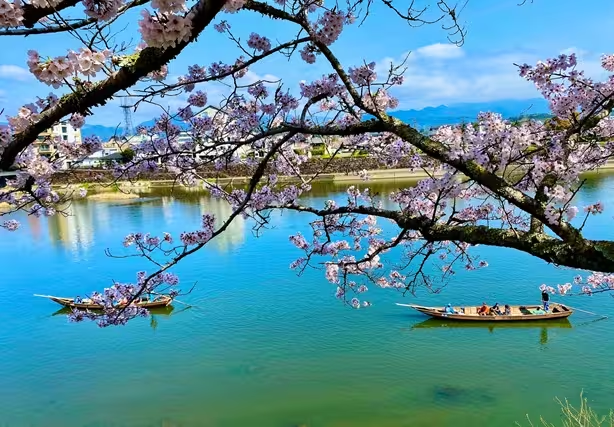
The road south from Kumamoto City narrows before it opens. That narrowing is the point.
Into the Basin
Drive south from Kumamoto City and the landscape changes register. The wide coastal plain gives way to hills, the hills fold into ridges, and the ridges close in until the road is following a river through a gorge that opens, unexpectedly, into a wide green bowl. This is the Kuma Basin: Hitoyoshi at its floor, nine mountain ranges on every side, and a river that carries the weight of all of them.
The Kuma River runs through it. The Japanese count it among the three most violent rivers in the country. Not violent in the way of floods, though it has caused those too, but violent in the way of speed and drop, a river that does not pause for anything. What the mountains did geographically, they also did culturally. For roughly 700 years, from the early Kamakura period in the twelfth century to the Meiji Restoration in 1868, the Sagara clan governed this basin without interruption. In feudal Japan, where domains changed hands through war and political calculation, this kind of continuity was almost without parallel.
The valley, sealed from the outside world, became thoroughly itself. The architecture developed its own style. The rice grew into its own character. And the spirit that the rice became, Kuma shochu, is today one of the most geographically protected spirits in the world. This drive is into that enclosed place. Give it two days, at minimum.
Hitoyoshi — The Castle Town on the River
Hitoyoshi sits at the confluence of the Kuma and Mune rivers, at the floor of the basin. It was a castle town where the Sagara ruled for seven centuries, and that history is still legible in the streets, the shrines, and the way the old district holds its shape around the river. The castle ruins, the shrine, and the old town centre are all within walking distance of each other. Park the car and take the morning on foot before heading further into the valley.
The castle ruins stand on a low bluff at the confluence. The buildings are long gone, but the stone walls remain. Among them are sections built using the hanedashi technique, a Western fortification method absorbed via the Sagara's trade routes with Southeast Asia and the continent. Ideas moved with goods. The adjacent Hitoyoshi Castle History Museum provides context; the ruins are open without charge.
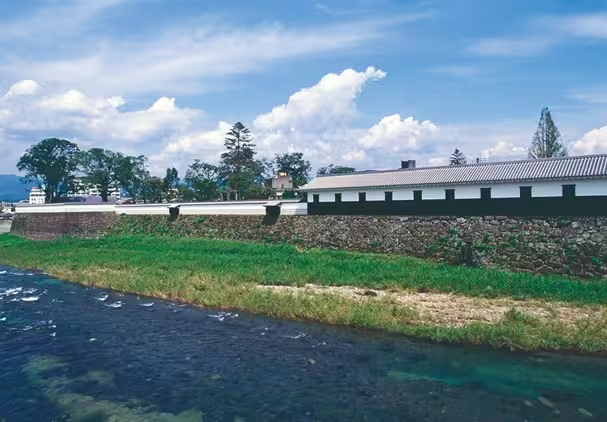
Photo: Kumamoto Prefecture Tourism Federation
National Treasure
Aoi Aso Shrine — Architecture That Belongs Only Here
Five minutes from the castle, the Aoi Aso Shrine. Founded in 806, rebuilt under Sagara patronage between 1610 and 1613, and designated Kumamoto Prefecture's first National Treasure in 2008. The five main structures represent something that developed in isolation and stayed that way. The steep thatched roofs carry the weight of mountain tradition. The carved details and lacquerwork announce the decorative confidence of the Momoyama period. Red meets black. The result is neither austere nor showy. It is, instead, precise.
In front of the main gate, a lotus pond. Crossing it is the Misogi-bashi, a three-span concrete arch bridge built in 1921 and the oldest surviving concrete bridge in Kumamoto Prefecture, painted red. In June and July, lotus blooms around it. At any other time of year, the composition holds: bridge, pond, thatched gate, and the mountains behind.
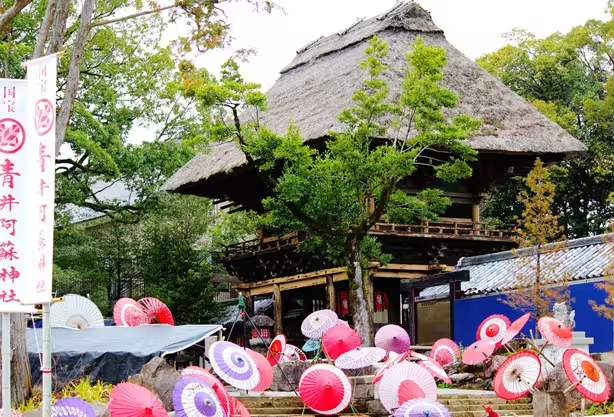
Photo: Kumamoto Prefecture Tourism Federation
The Sagara built this shrine and held this valley for seven centuries. The buildings remain. The clan does not. The shrine outlasted everything that protected it.
Yoshino Ryokan — National Registered Tangible Cultural Property
Founded in 1909 on the former grounds of the Sagara clan's personal physician, Yoshino Ryokan has been receiving guests for over a century. The timber-framed building holds national registered cultural property status, a designation earned, not sought. The 2020 floods reached the inn; it closed, restored, and reopened. Private hot spring baths, kaiseki cuisine rooted in the ryokan's origins as a traditional restaurant, and rooms whose proportions have not changed since the Taisho era.
Check availability at Rakuten Travel →Kaname-no-Taki — Three Falls, Two Characters
Twenty minutes by car from Hitoyoshi, the Kaname River splits into three falls here, each with its own name and character. The falls appear on Japan's list of the 100 finest waterfalls and are registered as a cultural heritage site by the Agency for Cultural Affairs.
The uppermost, Hirataki, is a wide sheet of water moving over layered flat rock. Below it, the Odaki: 36 metres of drop, the main flow compressed into a single column of white. The third, the Medaki, sits on a tributary. Where the Odaki is forceful, the Medaki is composed. They are described locally as male and female, and the difference is real. The path to the Medaki crosses a small wooden bridge that puts you inside the sound of the water before you see it. Wear shoes with grip.
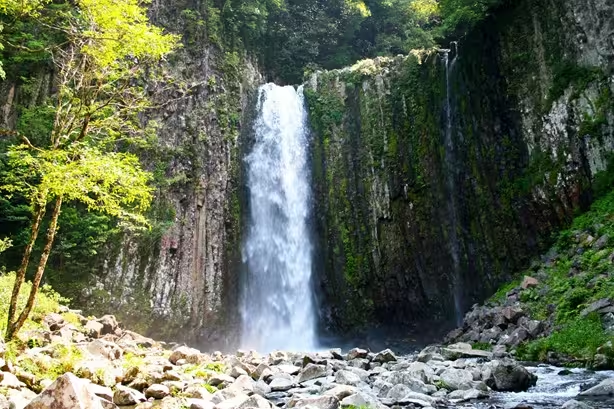
Photo: Kumamoto Prefecture Tourism Federation
Spirits
Kuma Shochu — What the Basin Made
The climate of the Kuma Basin was never suited to sake. So the people of this valley made shochu instead, from rice this basin produced in abundance, using mountain water and techniques that arrived via the Sagara's trade routes with Southeast Asia. Kuma shochu is now the only rice shochu in Japan to hold a Geographical Indication under the WTO treaty, the same international protection as Scotch whisky and Cognac. Twenty-seven distilleries currently produce it, across roughly 200 labels. The traditional way to drink it is warmed, in a ceramic flask called a gara, poured into a small-mouthed cup found only in this valley. The drinking culture runs deep enough to have produced its own vessels, its own rituals, and its own vocabulary. For the full story, the official Kuma Shochu website is the place to start.
Kuma Shochu Specialty Store — Ichigoya, Hitoyoshi
Near Hitoyoshi's Okamiya Shrine, Ichigoya carries products from all 27 distilleries, staffed by certified Kuma Shochu guides who can walk you through the differences between labels. Walking distance from Aoi Aso Shrine.
On the River — Two Ways to Travel
The Kuma River can be entered as well as observed. Two very different experiences are available from the same stretch of water, suited to different kinds of traveller.
For All SeasonsKuma River Boat Journey — The Slower Way Down
The Kumagawa Kudari has been running for over a century. It began in the Edo period as a freight route carrying rice, goods, and people downriver. When the railway arrived in 1909 and took over the transport role, the boats stayed on as something else: a way to be on the river without fighting it. Two skilled boatmen, one at the bow and one at the stern, navigate a handmade cedar vessel through approximately 4.5 kilometres of current. There is no engine. The river provides the momentum; the boatmen provide the direction.
The journey takes around 50 minutes. From the boat, you see the Hitoyoshi castle ruins from the water side, the wooded ridges above the town, and the surface of a river that the Sagara crossed for seven centuries before anyone thought to make it a leisure activity. In winter, the boats run as kotatsu vessels, with a heated table and blanket installed on deck. It is, somehow, both very Japanese and entirely logical.
Departures at 11:00, 13:00, and 15:00. Year-round operation. No special physical ability required. You will not get wet. Check the official site for current schedules and booking →
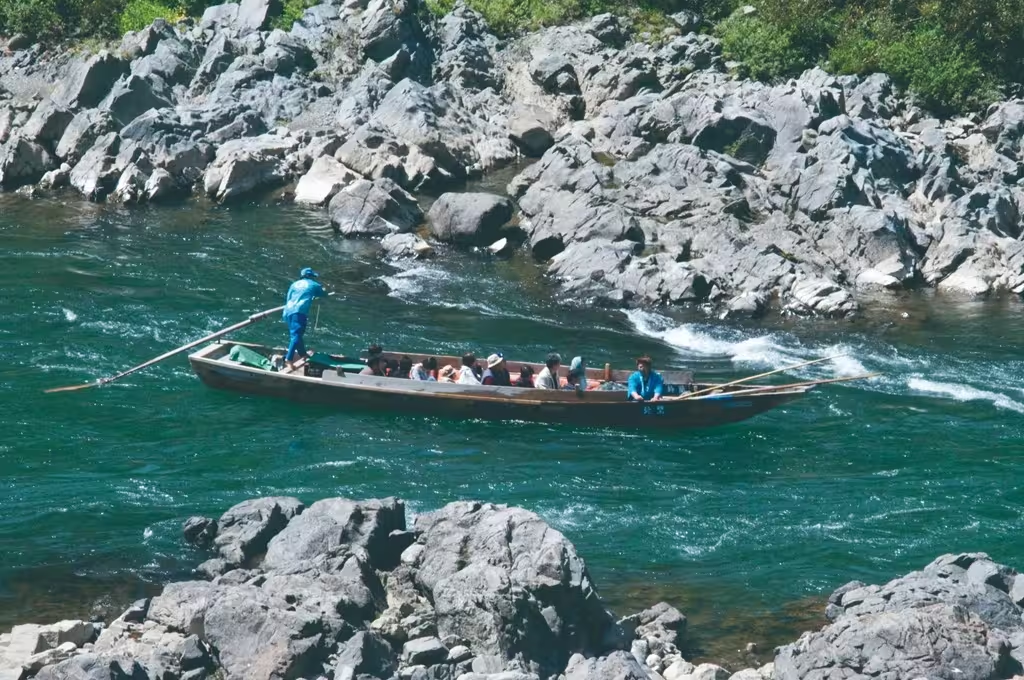
Photo: Kumamoto Prefecture Tourism Federation
For the Willing
White-Water Rafting — The Faster Way
For those who want to feel the Kuma River rather than observe it, white-water rafting runs through Hitoyoshi on the same stretch of water. The current is real and the course demanding. This is one of Japan's three great rapids, and the rafting tours do not flatten that fact. Local operators who have worked this water for decades run morning and afternoon sessions, with GoPro footage included. A different river from the one you see from the boat, and from the one you see from the bank.
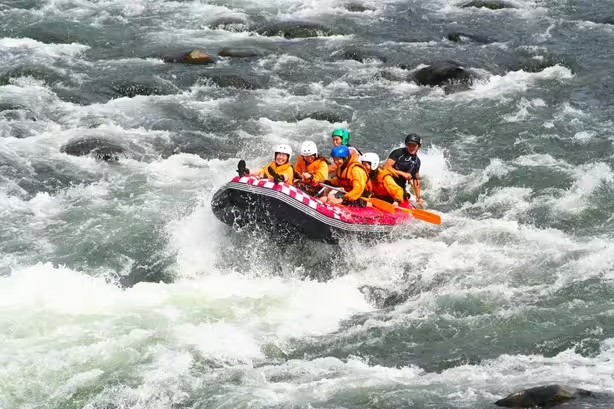
Photo: Kumamoto Prefecture Tourism Federation
Kuma River White-Water Rafting with GoPro — Hitoyoshi
AM and PM departures. All equipment provided. GoPro footage included. Suitable for those without prior rafting experience, though physical fitness is required. Seasonal operation (spring to autumn).
Check availability at Rakuten Travel Experiences → Rakuten Travel Experiences is Japan's largest local tour platform, with hundreds of regional activities that don't appear on international booking sites. This course is bookable in English, operated by local guides who know this river.Further Into the Valley
Beyond Hitoyoshi, the roads follow the river into narrower country. The valley walls close in, the settlements thin out, and the places described below require a car and a willingness to go further than most visitors do.
UndergroundKyusendo Cave — Three Hundred Million Years Below
Discovered in 1973, Kyusendo is the largest cave in Kyushu, at 4.8 kilometres in total length. It was formed from a limestone seabed that sat on the ocean floor approximately 300 million years ago and has been rising, slowly, ever since. The cave is still being shaped: water continues to move through the rock, dissolving and depositing, and the formations visible today are at an intermediate point in a process that has no end in sight. A distinct ecosystem of cave-adapted organisms lives inside it, in conditions that have not changed since long before the first human being arrived in this valley. Open year-round.
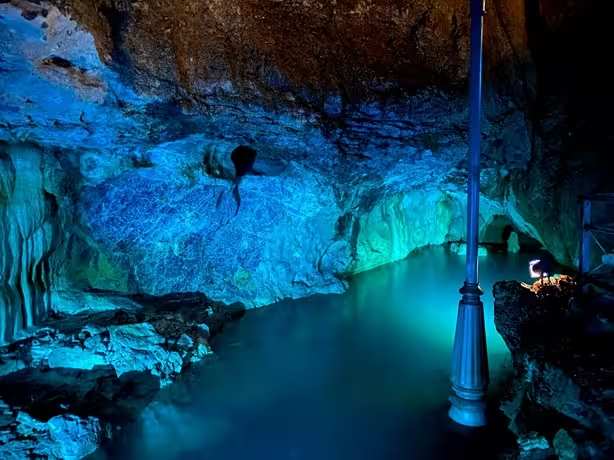
Photo: Kumamoto Prefecture Tourism Federation
Sacred Mountain
Ichifusa-yama — The Path Through Old Growth
On the southern edge of the basin, Mount Ichifusa rises to 1,720 metres, the second highest peak in Kumamoto Prefecture and one of the few mountains in Kyushu to exceed 1,700 metres. It has been a mountain of faith since the medieval period: the Ichifusa Shrine at the fourth station of the approach has drawn pilgrims for centuries, and the Sagara lords were among its most devoted patrons.
You do not need to reach the summit to understand why. The approach to the shrine runs for approximately one kilometre through a corridor of ancient cedar, trees estimated at between 700 and 1,000 years old, with trunk circumferences that exceed six metres. They were never cut because the mountain was sacred. That is the only reason they are still here. Walk among them and the age of the place becomes physical rather than historical. The full ascent to the summit takes three to four hours from the third station car park and requires proper hiking preparation. The cedar walk to the shrine takes twenty minutes and requires only the willingness to look up.
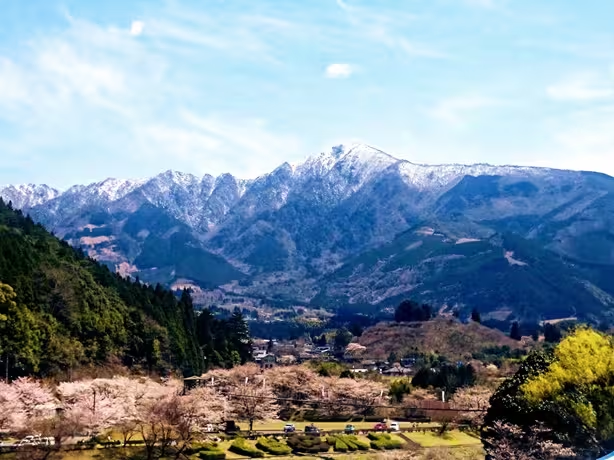
Photo: Kumamoto Prefecture Tourism Federation
Minshuku Kawahara — At the Foot of the Sacred Mountain
The family who runs Minshuku Kawahara has managed this land for generations. Their ancestors once administered the local checkpoint that controlled passage through these mountains. The annex is still named Bansho, after that old post. Forty years ago, the family opened their home as a minshuku. They grow their own tea, vegetables, and rice. The mountain has always provided; the guest simply arrives. Situated in Yuyama, Mizukami village, at the base of Ichifusa-yama.
Check availability at Trip.com →Hitoyoshi Craft Park — Where the Skills Are Kept
On the edge of Hitoyoshi, the Craft Park brings together nine workshops dedicated to the traditional crafts of the Hitoyoshi-Kuma region: ceramics, ironwork, glassblowing, woodwork, and a dedicated shochu pavilion, among others. The workshops are working facilities, not museum displays. The people inside them are practising their crafts, and visitors can participate. A 25-metre observation tower gives a view over the park and out across the basin. Combined with the Kuma shochu specialist store in town, the Craft Park offers a morning or afternoon that moves between making, tasting, and understanding how a place produces what it produces.
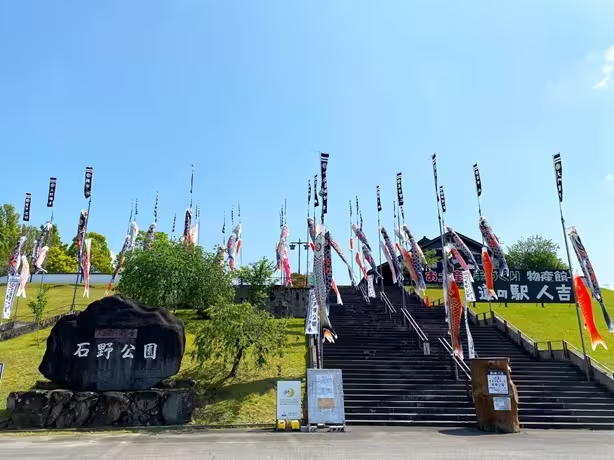
Photo: Kumamoto Prefecture Tourism Federation
Shinjou no Yado — Built from the Forest
Set within the Hitoyoshi Shinjou Cultural Forest, a short drive from the Craft Park, Shinjou no Yado is built almost entirely from timber: Yakusugi cedar from Yakushima and Ichifusa cedar from the mountains you have just walked through. The wood is naturally dried rather than kiln-treated, and the difference is present in the smell the moment you arrive. Guest rooms have private open-air baths. The adjacent hot spring runs on 100% natural flowing water from the source.
Check availability at Rakuten Travel → Also available via Trip.com →Plan Your Drive
From Kumamoto City, take the Kyushu Expressway south to Hitoyoshi IC (approximately one hour). From Fukuoka, allow two to two and a half hours. A rental car is essential. The basin's most interesting points are not served by public transport on any practical schedule.
Two full days for Hitoyoshi and the surrounding valley. One day covers the town; a second reaches the cave, the mountain, and the Craft Park. Add a third if you want to include rafting and move at a slower pace.
Spring for comfortable temperatures and the cedar walk at its most atmospheric. Summer for rafting and river swimming, though the basin floor is hot. Autumn for foliage across the mountain ridges. Winter for the kotatsu boat and an empty valley.
The 2020 floods caused significant damage to roads throughout the Kuma region. Most primary routes have been restored, but check current conditions before departure, particularly for rural roads toward Kyusendo and Ichifusa-yama.
This article is the first in a three-part series on driving Kumamoto Prefecture. The second covers Kumamoto City: the castle currently being rebuilt stone by stone, the craftsmen's quarter at Kawajiri, and the city beyond the main streets. The third covers Aso and Kurokawa: the grasslands that require fire to survive, and the onsen town that rebuilt itself around restraint.
Questions
Is the Kuma Valley accessible after the 2020 floods?
The July 2020 floods caused widespread damage throughout the Kuma region, including to roads, bridges, and the Kumagawa Kudari boat service. As of 2026, the main access routes have been substantially restored and the boat service has resumed. Some rural roads remain under repair. Check current conditions before departure, particularly for routes toward Kyusendo and Ichifusa-yama via minor roads.
What is Kuma shochu and how does it differ from other Japanese spirits?
Kuma shochu is a distilled rice spirit produced exclusively in the Hitoyoshi-Kuma area, protected by a WTO Geographical Indication, the same international framework as Scotch whisky and Cognac. It differs from sake in being distilled rather than fermented, and from other shochu in using only rice as its base. The result ranges from light and clean to richly textured depending on the distillery. Twenty-seven producers currently operate in the basin, across roughly 200 labels.
What is the difference between the Kumagawa Kudari boat journey and rafting?
The Kumagawa Kudari is a traditional wooden boat journey run by two skilled boatmen, operating year-round including a kotatsu (heated table) version in winter. It takes around 50 minutes, requires no physical ability, and you will not get wet. Rafting is an active, physically demanding experience on inflatable boats through the same rapid sections of the river, operating seasonally from spring through autumn. Both use the same stretch of the Kuma River but offer fundamentally different relationships with it.
The basin held one family for seven centuries. It held a language, a spirit, a way of drinking, and a mountain no one cut down because it was too sacred to touch. Drive south until the road narrows. Then keep going.
This article contains affiliate links. If you book or purchase through these links, Untranslated Japan may earn a small commission at no additional cost to you. We link only to experiences and properties we consider genuinely worth your time. All editorial opinions are our own.