
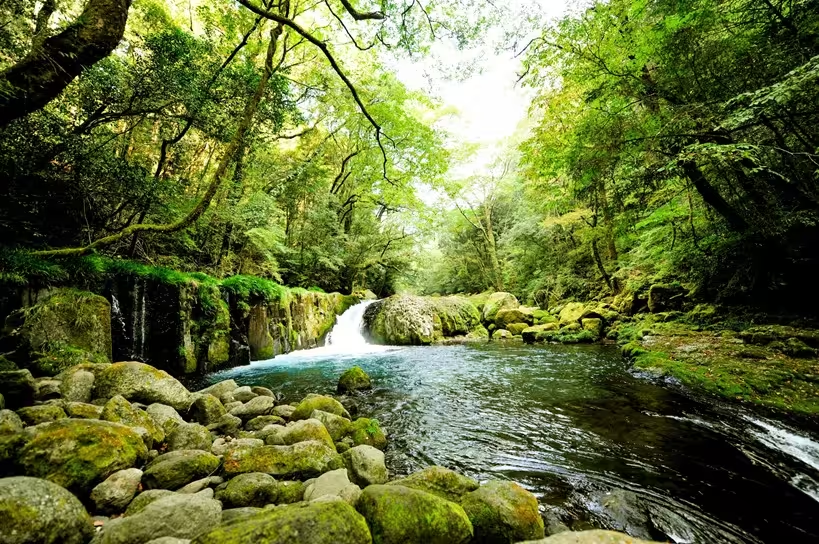
Beyond Kumamoto Castle, the English-language travel record goes quiet. The places in this article have barely been written about — which is, in part, why they are worth visiting.
Kumamoto Castle
Kumamoto Castle is not optional. Not because it is famous, but because what has been happening here since the 2016 earthquake cannot be seen anywhere else in Japan.
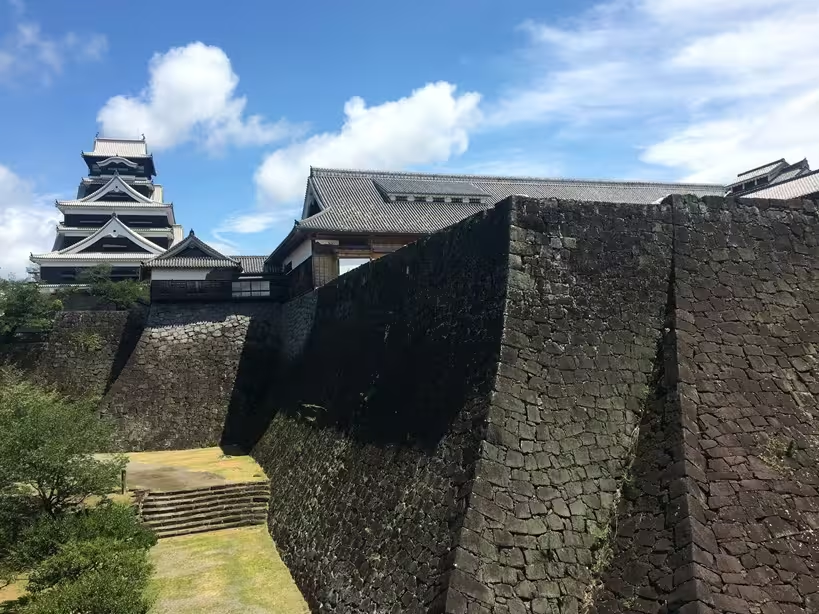
Kumamoto Castle. © Kumamoto Prefecture Tourism Federation
Known affectionately as Ginnan-jō, the Castle of Silver Leaves, for the ancient ginkgo tree that still stands in the grounds, Kumamoto Castle was devastated by the 2016 earthquake. Stone walls that had stood for four centuries collapsed overnight. The main tower was cracked through. Some turrets fell entirely.
The reconstruction is expected to take until 2037. What makes this unusual is what the city chose to do with the wait: they opened the gates and let visitors watch.
You walk through the active restoration zone on raised timber walkways built above the rubble. Beside you, stonemasons sort and number fallen blocks: each stone recorded, each position documented, each piece destined to return to its original place. The scaffolding is not an obstacle. It is the exhibit.
This is not the castle as monument. It is the castle as process. Kumamoto has understood that the reconstruction is the story, and made it visible.
The main tower reopened in 2021 and is now fully accessible. The climb through its interior takes you past timber structural joints, exhibition floors explaining the original construction methods, and finally to the top level, where the city spreads below and Aso's caldera rim rises to the east on clear days.
Before entering the castle grounds, start at Wakuwakuza, the Kumamoto Castle Museum in the Johsaien complex beside the south gate. The name is informal (it means, roughly, "the place where excitement happens"), but the content is serious: projection-mapping reconstructions of the earthquake damage, scale models of the original castle complex, and an exhibition on the stonemason tradition that built Kumamoto's distinctive curved stone walls, called musha-gaeshi: walls designed to curve outward at the base, making them nearly impossible to climb. Wakuwakuza reopened in April 2026 after a full renovation. Allow 45 minutes here before entering the castle grounds.
Castle grounds: 9:00–17:00 (last entry 16:00)
Wakuwakuza: 9:00–17:30 (last entry 17:00)
Castle: ¥800 adults / ¥300 children
Combined ticket (castle + Wakuwakuza): ¥850 adults — recommended
Half day (3–4 hours including Wakuwakuza)
Closed 29–31 December. Occasional event closures — check the official site before visiting.
Kumamoto Half-Day Private Tour with Licensed Guide
A nationally licensed guide provides context that signage alone cannot. Particularly valuable for the castle's earthquake history and the stonemason traditions behind its reconstruction.
Check availability at Viator → Also available via GetYourGuide. Compare dates and group sizes before booking.Traditional Kimono and Yukata Dressing, Kumamoto
Exploring Kumamoto Castle in kimono or yukata makes for a memorable start to the trip. Dressing experiences in Kumamoto city are available through Klook — plan to finish your castle visit before the 17:00 return time.
Check availability at Klook →Higo Minka-mura
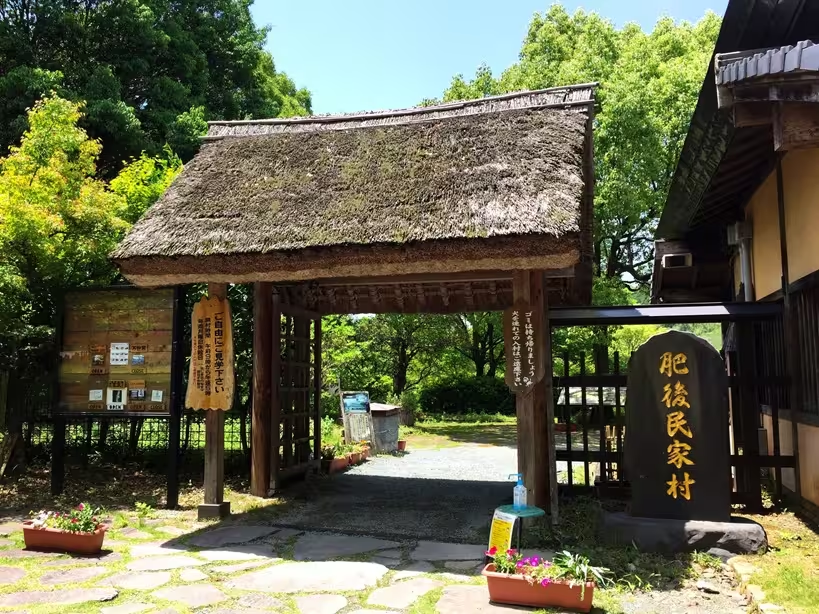
Higo Minka-mura. © Kumamoto Prefecture Tourism Federation
Forty minutes north of the castle, in the town of Nagomi, you turn off the main road and find yourself in a different century.
Higo Minka-mura is an open-air village of traditional farmhouses (minka) gathered from across Kumamoto Prefecture and relocated here beginning in 1976. The impulse behind it was conservation, but the execution goes further. The houses are not sealed behind glass. They are occupied: by woodworkers, potters, leatherworkers, printmakers, a ceramics workshop, a studio selling hand-carved wooden toys. The buildings are tools, not exhibits.
Among them is the Former Sakai House, a farmhouse designated as an Important Cultural Property of Japan, and one of the rare cases where a building of national significance sits open to the public with no barrier between you and the timber. You walk the same boards as the family who lived here. The proportions of the rooms, the relationship between the earthen floor entrance and the raised living space, the single ceiling beam spanning the full width of the house: these are things a photograph cannot carry.
The grounds are bordered by the Edo-period burial mounds of the Eta Funayama Ancient Tomb Park, one of the most significant ancient tomb sites in Kyushu, where a fifth-century iron sword inscription provided early evidence of the reach of Yamato court authority. The village and the tombs share a hillside. If you have time, walk between both.
Entry is free. The workshops vary in hours; some require advance contact for hands-on experiences.
Tuesday–Sunday, 9:00–17:00
Closed Mondays
Free. Individual workshops charge separately for craft experiences.
1.5–2 hours
Nagomi-machi, Tamana-gun. Approx. 40 min north of Kumamoto Castle by car.
Yachiyoza Theatre, Yamaga
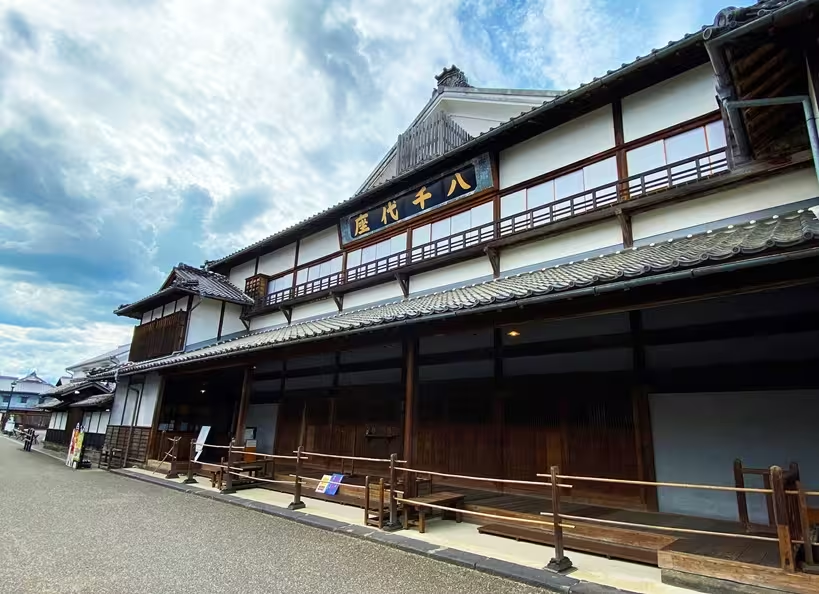
Yachiyoza Theatre, Yamaga. © Kumamoto Prefecture Tourism Federation
Continue north to Yamaga. The town was a post station on the Edo-period road between Kumamoto and the northern provinces, and at its peak it was wealthy enough to build a theatre that is, by any standard, extraordinary.
Yachiyoza opened in 1911, funded by a consortium of local merchants (the dannashū, the proprietors who formed the commercial backbone of the town). It is a two-storey wooden structure built in the style of an Edo-period kabuki theatre: masuseki box seating on the ground floor, gallery seating above, a revolving stage, a trapdoor at the front of the hanamichi (the raised runway extending from the stage through the audience), and a full mechanism for raising and lowering sets from below.
What you do not expect is the ceiling.
Look up when you enter and you will see the entire ceiling surface covered in commercial advertisements, painted in vivid colour and preserved from the Meiji and Taisho eras. Rice merchants, sake brewers, dry goods stores, a barber. The businesses are long gone; the advertisements remain, suspended overhead like a market that stopped in mid-afternoon and never resumed. A large brass chandelier — originally gas-lit — hangs at the centre.
The theatre is still in use. Kabuki performers including some of Japan's most prominent names have staged productions here in recent decades. Between performances, the building is open for self-guided visits: you move through the auditorium, the backstage corridors, the naraku (the under-stage mechanism room) and out onto the hanamichi itself at your own pace. Staff commentary is available in Japanese approximately once an hour for those who want it — the theatre speaks clearly without words.
9:00–18:00 (last entry 17:30)
Closed second Wednesday of each month and 29 Dec–1 Jan
¥530 adults / ¥270 children. Self-guided visits. Staff commentary available approximately every hour (around :30). If a performance is in progress and the main hall is unavailable, reduced rate applies: ¥220 adults / ¥110 children (archive museum only).
1–1.5 hours
On performance days, the main hall may be closed to visitors; the archive museum remains open at a reduced admission. Check the performance calendar before arriving.
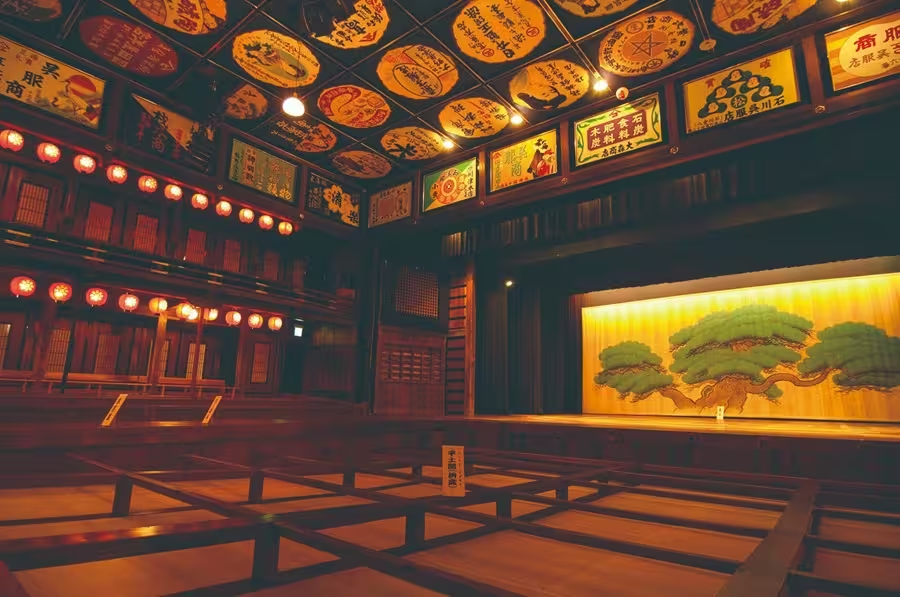
Yachiyoza Theatre, Yamaga. © Kumamoto Prefecture Tourism Federation
Nichirinji Temple and Buddhist Vegetarian Cuisine
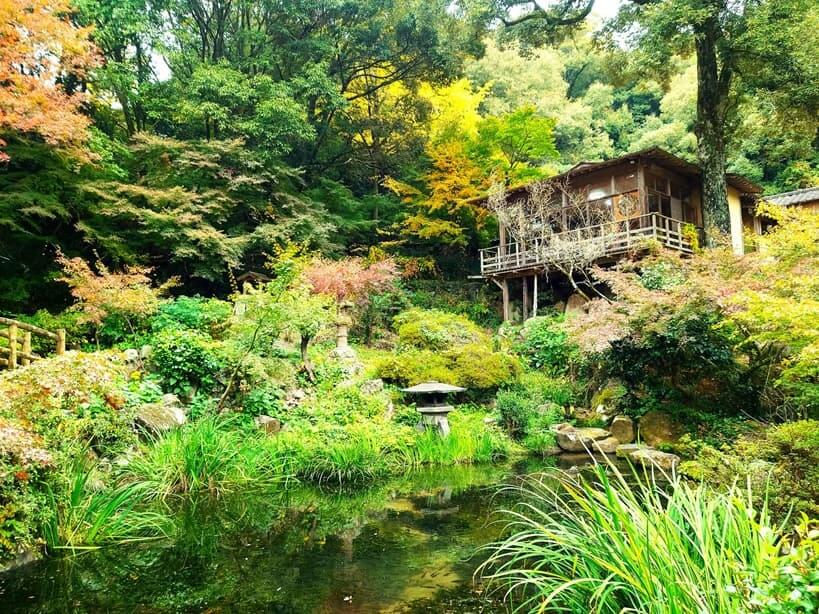
Nichirinji Temple, Yamaga. © Kumamoto Prefecture Tourism Federation
Nichirinji sits above Yamaga on a forested hillside, reached by a stone-flagged approach through cedar. The temple was founded in the Heian period (794–1185), rebuilt under the Kikuchi clan in the Kamakura period (1185–1333), and now belongs to the Soto school of Zen. It is known locally for its wisteria and azaleas, and for a garden with a spring-fed pond where the reflections of the trees shift through the year.
It is also known, to those who know to look for it, for a small Buddhist vegetarian restaurant inside the temple grounds.
The restaurant serves shojin ryori — Zen temple cuisine — using mountain vegetables gathered by the head priest himself, sesame tofu made from scratch, and seasonal ingredients from the temple's own garden. No meat, no fish, no garlic or leeks. The skill lies in two directions: letting ingredients speak at full volume without rich sauces to mask them, and in the centuries-old craft of transforming plant matter into textures and forms that bear no resemblance to their origins. A dish that looks nothing like a vegetable and tastes like nothing you expected.
The dining room is in a separate building set back from the main hall, with a view through shoji screens to the garden. The meal is served on lacquerware. Conversation is permitted; urgency is not.
Reservations are essential and must be made in advance by telephone. This is not a walk-in restaurant. It rewards those who plan for it.
Lunch: 12:00–15:00. Dinner: 17:00–21:00 (by arrangement — call ahead). Irregular holidays.
Tel: 0968-44-4383
Shojin bento ¥2,500 / Namu-zen ¥3,500 / Bashō-zen ¥4,500 / Gishi-zen ¥5,500 / Nichirin-zen ¥6,500 (all tax included). The Nichirin-zen includes sesame tofu and konnyaku to take home.
Yamaga City, Sugi 1607. Approx. 20 min from Kikusuі IC by car.
Reservations required at least 2 days in advance. The temple grounds are freely accessible. Allow time to walk the grounds before or after your meal.
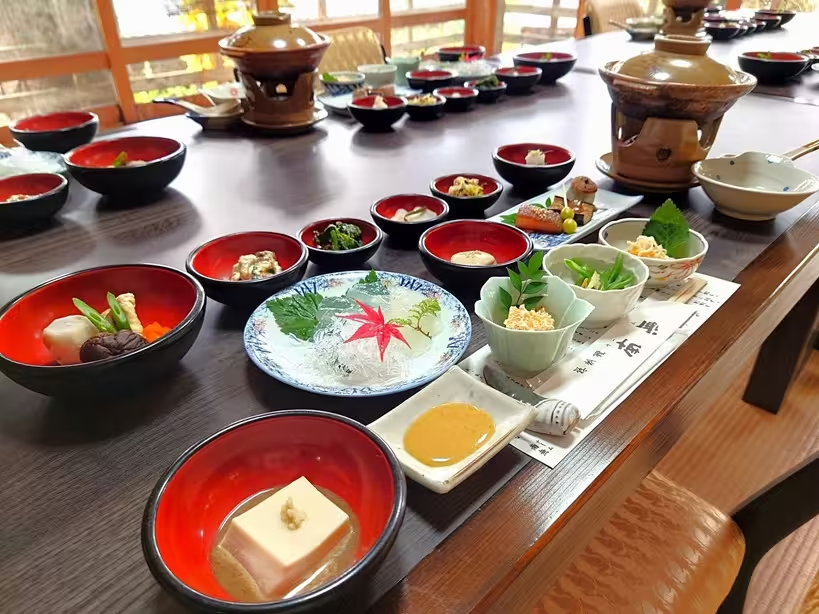
Nichirinji Temple, Yamaga. © Kumamoto Prefecture Tourism Federation
Hirayama Onsen, Yamaga
Twenty minutes from Nichirinji, Hirayama Onsen is one of Kumamoto's lesser-known hot spring areas — ranked in Japan's top five "hidden gem" onsen destinations by Jalan in 2026. The water is an alkaline simple spring, exceptionally smooth against the skin and known locally as bihada no yu, the beauty skin water.
Two options at different price points:
Ryokan Zenya — Renovated in 2018, fully accessible, kaiseki cuisine. Check availability at Trip.com →
Ryokan Kadoya — Thirteen rooms, family-run, home-style cooking, semi-open-air bath available. Check availability at Trip.com →
Into Kikuchi: Melon Country and Warrior History
From Yamaga, the road east carries you into Kikuchi — a different landscape and a different register of history. The terrain opens into wide agricultural plains before the land begins to climb toward the outer rim of the Aso caldera. This is where the drive changes character.
Shichijo Melon Dome
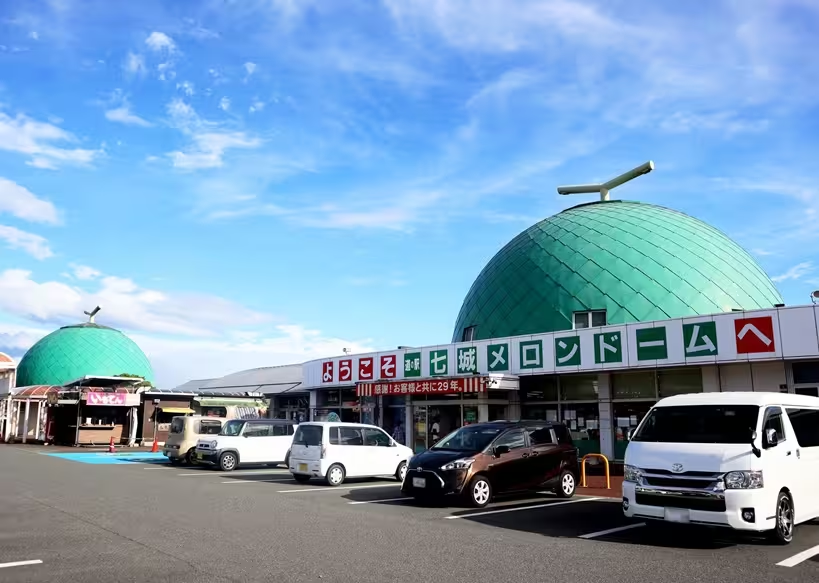
Shichijo Melon Dome, Kikuchi. © Kumamoto Prefecture Tourism Federation
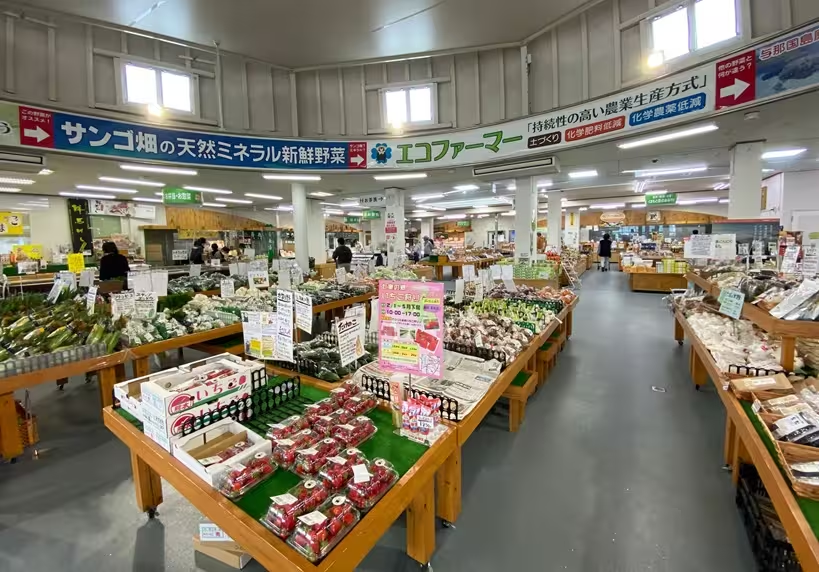
Stop first at the Shichijo Melon Dome, a roadside market that has become, entirely on its own merits, one of the most visited spots in Kumamoto Prefecture. The building is unmistakable — three enormous melon-shaped domes visible from the national highway, painted the specific green of a musk melon.
The Shichijo district has been growing musk melons for decades, and the market sells them directly from the producers who bring them in each morning. The quality standard is specific: a light-refraction sugar sensor filters every melon, and only those reading above 14 degrees Brix reach the shelves. Between late April and December, the range includes Earl's musk melon, Higo Green, and Homerun melon, a Kumamoto cultivar bred for sweetness. The stalls inside sell melon 100% juice, melon soft cream, and melon bread baked on the premises — all of them genuinely popular with locals and visitors alike, not as novelty items but because the melon itself is that good. The prepared side dishes made from local produce are equally worth seeking out, and travel well as a car-friendly lunch on the road ahead.
A word on the concept: the michi no eki, or roadside station, is a Japanese institution with no direct equivalent elsewhere. It is part rest stop, part farmers' market, part regional showcase — typically located on a national highway, publicly registered, and required to maintain specific standards of regional produce. The Melon Dome draws over a million visitors annually. This is not incidental. It is a serious agricultural market that happens to be enjoyable.
Market: 9:00–18:00
Restaurant: 10:00–15:30
Open daily except 1–3 January
Late April–December. Peak variety: July–August (Earl's musk melon).
Shichijo Melon Dome, Kikuchi. © Kumamoto Prefecture Tourism Federation
Kikuchi Shrine
Kikuchi Shrine. © Kumamoto Prefecture Tourism Federation
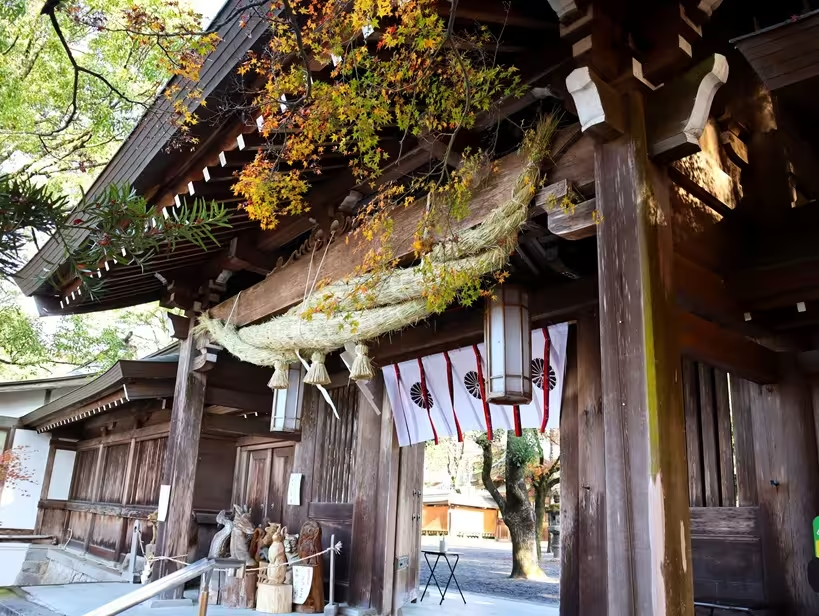
on the site of the Kikuchi clan's original castle — on a ridge above the town, approached through a 200-metre avenue of cherry trees that, in spring, closes the sky.
The Kikuchi were a warrior clan who controlled this region from the late Heian period through to the Muromachi period (1336–1573) — roughly 500 years. Their significance in Japanese history derives from a particular moment of loyalty. When the country split between the Northern Court of the Ashikaga shogunate and the Southern Court of Emperor Go-Daigo, the Kikuchi chose the Southern Court and held to that choice through decades of military defeat. The 12th, 13th, and 15th heads of the clan — Taketoki, Takeshige, and Takemitsu — are enshrined here.
The Meiji government, which drew its legitimacy from the imperial line, recognised the Kikuchi's loyalty as a founding virtue of the new order. The shrine was established in 1870 on the castle site by imperial command. Kikuchi Shrine is one of the Kenmu Restoration Fifteen — a group of shrines dedicated to warriors who fought for imperial restoration.
What this means in practice: the grounds carry a weight that newer shrines do not. The main hall sits above the valley on the castle's original earthworks. From the precinct, Kikuchi city spreads below, and the Aso rim rises in the east. The Kikuchi History Museum on the grounds holds the clan's artefacts, including a thousand-spear formation weapon associated with the clan's battles, as well as a copy of the illustrated scroll depicting the Mongol invasions in which an earlier generation of Kikuchi warriors fought.
Shrine grounds: always open
History Museum: 9:00–17:00
Shrine: free
History Museum: ¥300 adults / ¥200 high school / ¥100 children
1–1.5 hours
Parking available near the main hall. The approach from the lower torii involves steep steps; an alternative road leads to upper parking for those who prefer to avoid the climb.
Kikuchi Kumamoto: Samurai Experience with Armor Dressing
Dressing in samurai armour at the site of the Kikuchi clan's original castle makes for an unusually grounded experience in this warrior country with a 500-year history. Small group, one hour, from $55.
Check availability at GetYourGuide →Kikuchi Kumamoto: Zazen Meditation at a Historic Temple
A short distance from the shrine, a local temple offers seated Zen meditation guided by the resident priest. The temple bell dates back over 500 years. A rare opportunity to practise zazen in a working temple — not a tourist facility — in a town few foreign visitors reach.
Check availability at GetYourGuide →Kikuchi Gorge
Kikuchi Gorge. © Kumamoto Prefecture Tourism Federation
Seventeen kilometres east of the city, the road climbs into the outer rim of the Aso caldera. The forest thickens. The air temperature drops.
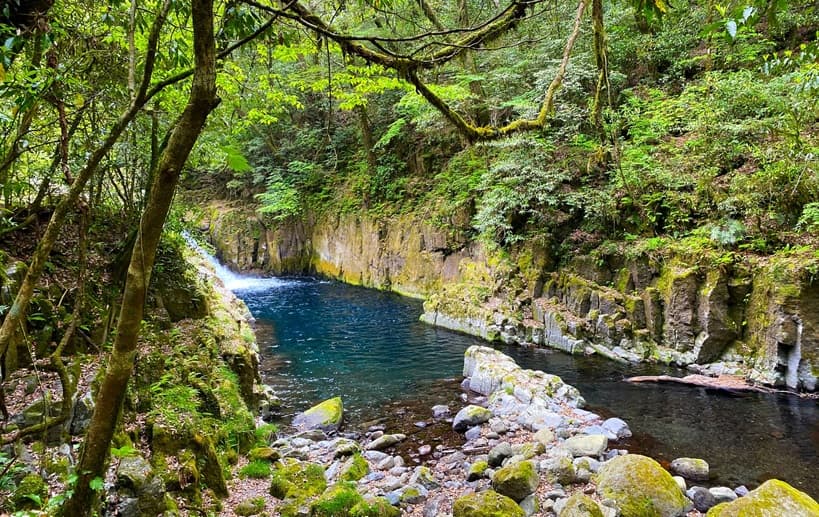
Kikuchi Gorge is fed by the underground water of Aso — the same aquifer system that appears throughout this region, surfacing in different forms in different places. Here it emerges through 1,193 hectares of natural broadleaf forest at an elevation between 500 and 800 metres, and runs over ancient stone in a series of pools, rapids, and falls. The water is cobalt blue in direct light. The average water temperature year-round is 13 degrees Celsius. In summer, when the rest of Kyushu is at 35 degrees, the gorge functions as a natural air conditioner.
A walking trail follows the river upstream through the forest for approximately two kilometres. The path is graded and maintained, though sections involve uneven stone and log bridges over the water. Along the route: Yonjūsanman-no-taki (Forty-Three-Million Falls), selected for the national list of Japan's 100 Finest Waterfalls and named for the 430,000 votes it received in a regional landscape survey; Ryūga-buchi, a cobalt-blue pool where legend places a river dragon; Reimei-no-taki (Dawn Mist Falls), named for the morning-haze quality of its spray; Hōgantsuki (Stone Embraced by Roots), where a volcanic ejection stone from Aso's ancient eruptions has been captured in the roots of a living tree and raised above the soil surface; and Hirogawara, the gorge's most photographed viewpoint, where morning light in summer occasionally produces visible rays through the canopy above the water.
Swimming is prohibited. The current is fast and the riverbed drops quickly. The signs are clear on this point.
A visitor centre at the entrance, fully enclosed in glass on the gorge-facing side, provides rest, light food, and regional information.
Open April–November (closed December–March for maintenance). 2026 mountain-opening ceremony: 17 April.
¥500 per person (high school and above). Parking: free (2026 onwards).
Half course: approx. 1 km, 40 minutes. Full course: approx. 2 km, 1 hour 20 minutes. Comfortable walking shoes essential.
Early morning in summer for light rays. October for autumn colour. Avoid peak Golden Week and August weekends — the trail narrows and the car park fills.
Kikuchi Onsen
Between the shrine and the gorge, Kikuchi Onsen offers a logical base for the second night. The hot spring district is small, quieter than Yamaga's onsen area, with a handful of ryokan and hotel options clustered around the spring source. The water is a sodium bicarbonate type, smooth rather than sulphurous, and the area has none of the tourist-town density of larger onsen resorts.
Staying here positions you perfectly: the gorge is 20 minutes by car, the shrine is within walking distance, and the Melon Dome is on the road west. An early start from Kikuchi Onsen gets you to the gorge before the day-trippers arrive from Kumamoto city.
Ryokan Seiryuso
Set slightly apart from the main onsen district, among trees and alongside a stream. The open-air bath, Hotaru-no-yu (Firefly Bath), is hand-built and overlooks the water below. Source spring water, undiluted and unheated. A quiet, unhurried ryokan with an informal atmosphere.
Check availability at Trip.com →Ryokan Shiroyama-So
Set within Kikuchi Park, surrounded by cherry trees, with views over the town. The open-air bath overlooks the park grounds. The hot spring water is drawn from 270 metres depth — colourless, odourless, alkaline, at 48 degrees at source. Online reservations available directly in English.
Book directly at Shiroyama-So →Planning Your Drive
A car is necessary
This route does not work by public transport. The distances between stops are manageable by car but impractical by bus — particularly the Melon Dome, Nichirinji, and Kikuchi Gorge, which have limited or no bus connections. Plan around a rental car from Kumamoto city or Kumamoto Airport.
Rental Car from Kumamoto Airport (KMJ)
Pick up from Kumamoto Airport and return at the same location. Book in advance for summer and holiday periods — vehicles at this airport sell out.
Prefer a driver? A full-day chartered vehicle with driver is also available through Klook.
Route and timing
Day One: Begin at Kumamoto Castle (allow a half-day including Wakuwakuza). Drive north to Higo Minka-mura in Nagomi (40 minutes). Continue to Yamaga for Yachiyoza Theatre in the afternoon. Dinner at Nichirinji — book the shojin meal well in advance. Overnight in Yamaga or continue to Kikuchi Onsen (30 minutes east).
Day Two: Drive to the Shichijo Melon Dome first (best produce arrives early). Continue to Kikuchi Shrine mid-morning. Head east to Kikuchi Gorge for the afternoon. Allow yourself time here — the trail rewards a slow pace, and the light changes through the afternoon.
Frequently Asked Questions
Do I need a car for this route?
Yes. Public transport connections between these stops are limited or non-existent. Rental cars are available at Kumamoto Airport and from several locations in Kumamoto city. If you prefer not to drive, a full-day chartered vehicle with driver is available through Klook — a practical option for the Kikuchi and Yamaga sections.
How long does Kumamoto Castle take?
Allow a half-day — approximately 3 to 4 hours if you include Wakuwakuza. The museum takes around 45 minutes and provides useful context before you enter the castle grounds. The grounds and tower take a further 1.5 to 2 hours depending on pace. If your time is limited, the reconstruction walkways and the tower are the priorities.
Is Yachiyoza open when there is no performance?
Yes. The building is open for self-guided visits whenever performances are not scheduled. You can explore the auditorium, backstage corridors, the under-stage mechanism room, and the gallery seating freely. Staff commentary is available approximately once an hour (around the half-hour mark) for those who want it. On performance days, the main hall may be unavailable, though the archive museum remains open at a reduced rate. Check the performance calendar on the official site before arriving.
When is the best season to visit Kikuchi Gorge?
The gorge is at its most dramatic in summer (July to September), when the temperature contrast between the forest and the surrounding lowlands is most pronounced and early morning light occasionally produces rays through the canopy above the water. Autumn (mid-October to early November) brings intense foliage colour and is the most visually striking period, though weekends can be crowded. The gorge is closed from December through March for safety and maintenance works. Confirm the opening date each spring before planning — in 2026, the mountain-opening ceremony was held on 17 April.
Is this route suitable for a day trip from Kumamoto city?
Not comfortably. The full route — castle, Higo Minka-mura, Yachiyoza, Nichirinji, Melon Dome, shrine, and gorge — requires two days to experience at a pace that justifies the drive. A focused one-day itinerary is possible if you limit to two or three stops: the castle plus the Yamaga section (Yachiyoza and Nichirinji) makes a coherent single day, as does the Kikuchi section (Melon Dome, shrine, gorge) alone.
The north of Kumamoto does not announce itself. The farmhouses, the theatre, the gorge — none of them are on the standard itinerary. That is precisely what makes them worth the drive: places that have not been shaped by the expectation of visitors tend to remain more fully themselves.
This article contains affiliate links to Viator, GetYourGuide, Rakuten Travel, Trip.com, and Klook. If you book through these links, Untranslated Japan may earn a small commission at no additional cost to you. All recommendations are made on editorial merit. Prices and availability are subject to change — always verify directly with the provider before booking.