
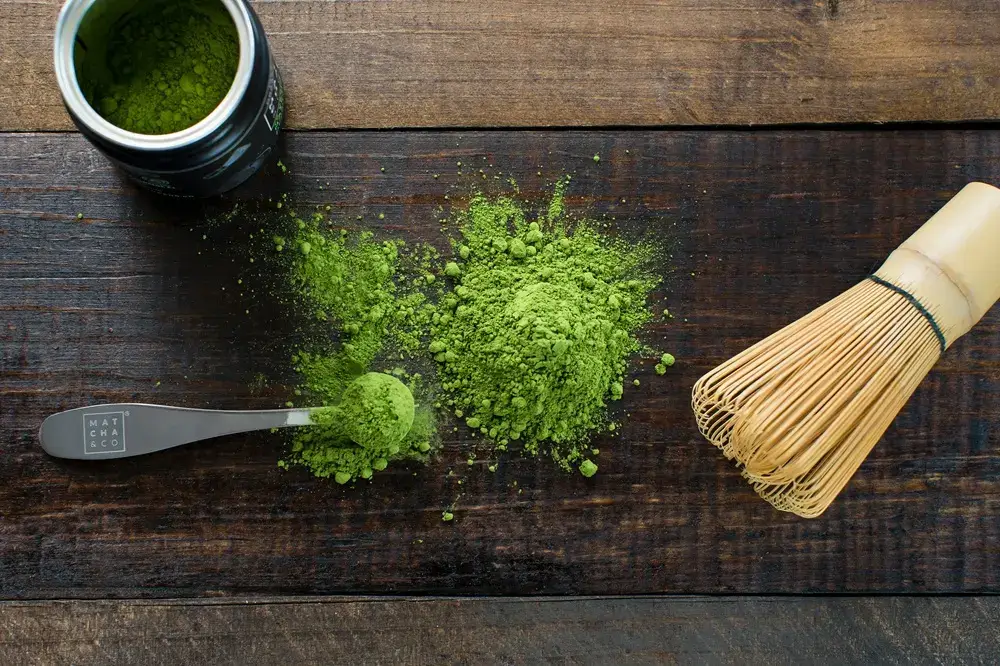
My First Encounter With Matcha
Matcha seems to be everywhere lately. Cafés serve matcha lattes as a matter of course. Supermarket shelves carry matcha-flavored everything. Social media is full of bright green desserts, photographed at just the right angle to catch the light.
I'll admit I used to watch all of this with a slightly puzzled feeling.
I grew up in Kumamoto, surrounded by tea farms. Tea was part of daily life for as long as I can remember. But what we actually drank at home, every day, was ordinary green tea steeped in a kyusu. Not matcha. Matcha belonged somewhere else, to tea ceremony rooms and celebrations, to occasions set slightly apart from the everyday. It never once occurred to me as something to drink on a Tuesday afternoon.
That picture shifted the last time I went back to Japan.
A small matcha café had opened near my parents' house. Choose your own bowl, whisk your own tea. It wasn't the kind of place built for tourists passing through. It felt more like somewhere designed for the act itself, for the time it takes.
A little embarrassingly, that was the first time in my life I whisked matcha with my own hands. A staff member showed me the motion, and as the bamboo whisk moved back and forth, a fine foam began to rise across the surface. The moment it appeared, I felt an odd little rush of satisfaction I hadn't expected.
I took a sip. A grassy, clean scent came first, followed by a quiet sweetness and a bitterness that felt oddly pleasant rather than sharp.
Matcha actually tastes like this, I remember thinking.
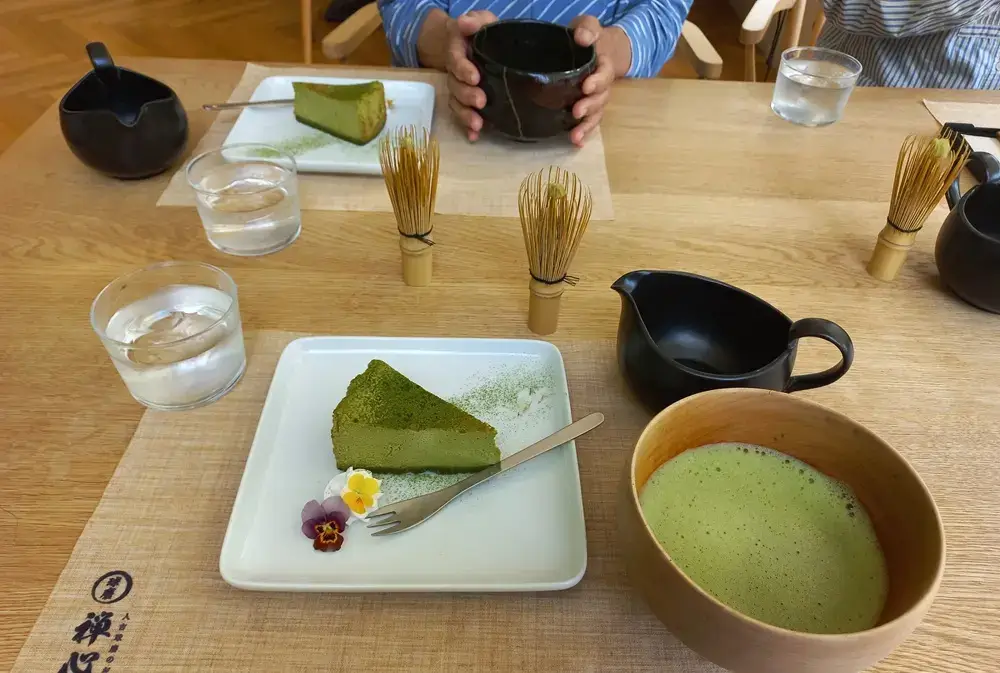
A cafe in Kumamoto. Photo by Untranslated Japan.
Even so, it didn't occur to me to make it at home. I flew back to Australia without buying a whisk or a bowl, despite standing right there in Japan. Making matcha for myself, on a regular day, in my own kitchen, felt like something that simply wasn't going to happen.
Then, over the following months, I kept noticing people online, on the other side of the world, whisking their own matcha at home. Setting aside real time for it. Choosing to go through the trouble on purpose.
It tastes good, I thought.
But why would anyone actually do this, gather the tools, carve out a piece of their day for it, when a spoonful of powder and a splash of hot water would technically do the same job?
I had a feeling I was missing something.
That question is where this small investigation began. What follows is the record of what I found, one question leading quietly into the next.
Why Is Matcha So Popular Compared to Regular Green Tea?
That was the first thing I wanted to understand.
Ordinary green tea, steeped in a kyusu, is what I grew up drinking. But abroad, it was matcha that took off.
My first guess was simple. Matcha just looks good. That bright green photographs well, and it works easily into lattes and desserts. But the more I looked into it, the more I realized that wasn't the real answer.
The bigger difference turned out to be nutritional.
When you steep green tea leaves in hot water, you only drink what dissolves. The leaves themselves are strained out and discarded, taking with them the fiber, vitamin E, and beta-carotene that never made it into the water. Matcha skips that step entirely. The leaves are ground into an extremely fine powder on a stone mill, then whisked directly into the water. You drink the whole leaf.
There's also the way the tea is grown. The leaves used for matcha, called tencha, spend several weeks before harvest shaded from direct sunlight. That shading changes the chemistry of the leaf. Theanine, the compound behind tea's sweetness and umami, builds up, while the compounds responsible for sharp bitterness stay suppressed. What comes out the other end is a tea with a depth and roundness green tea doesn't have.
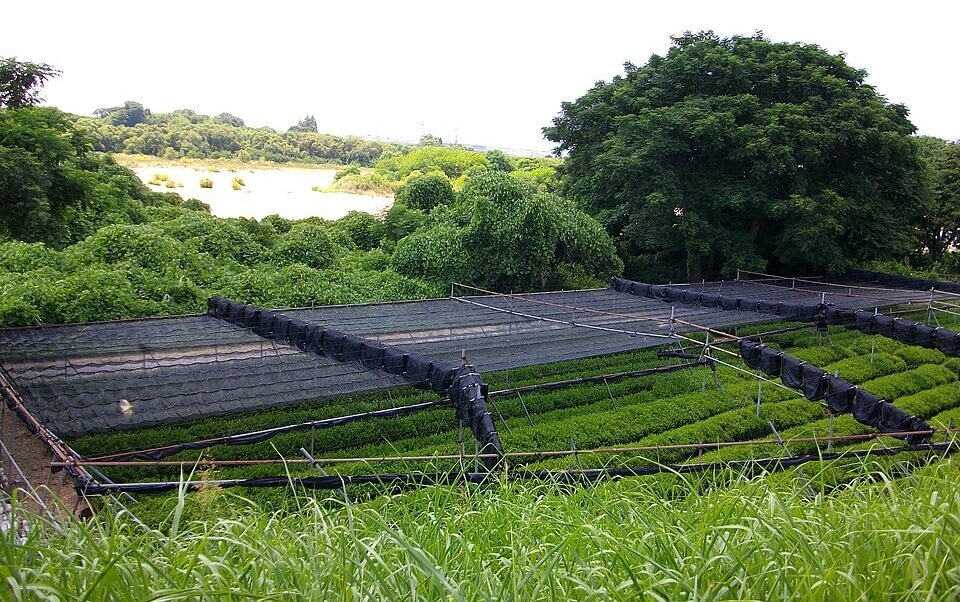
Photo by おいでやす千年の都, CC0, via Wikimedia Commons
So that was it, I thought. Matcha hadn't become popular because it was green tea dressed up for Instagram. People were drawn to something real: a different set of nutrients, a genuinely different flavor.
But that answer only opened up another question.
If matcha is just powdered tea, why not simply stir it into hot water with a spoon?
Why Whisk Matcha with a Bamboo Whisk?
The moment I remember most from my first bowl of matcha wasn't actually the taste.
It was watching the fine layer of foam slowly appear as I moved the bamboo whisk through the tea. Looking back, though, it seemed like a strange thing to do. If the goal is simply to drink the tea, wouldn't stirring it with a spoon be enough? Why go to the trouble of whisking it at all?
So I started looking into it.
What I found was that whisking isn't simply about creating foam. It serves three practical purposes: it evenly disperses the fine matcha powder, improves the texture, and makes the tea taste less bitter.
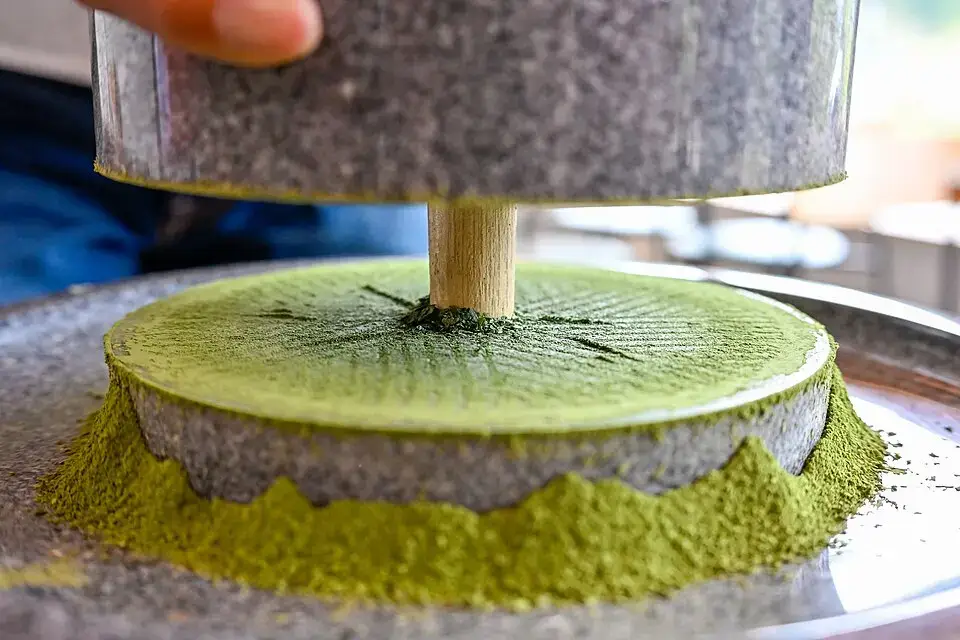
Photo by Derjochenmeyer, CC BY-SA 4.0, via Wikimedia Commons
Unlike ordinary green tea, matcha isn't something that dissolves in water. It is simply whole tea leaves that have been ground into an incredibly fine powder using a traditional stone mill. Those tiny particles remain suspended in the water rather than dissolving into it. Whisking helps distribute those particles evenly throughout the bowl, allowing the tea and water to come together into a much smoother drink.
The foam itself also plays an important role. By incorporating air, it softens the first impression on your tongue, making the bitterness feel gentler while allowing more of the natural sweetness and umami to come through. At the same time, it gives the tea a creamier texture and a much smoother finish.
That all made sense. But then my lazy side started asking another question. If the important thing is simply mixing the powder thoroughly, why not just use an electric milk frother? Surely that would be quicker.
As it turns out, that isn't quite the same thing.
The biggest difference is the quality of the foam. A milk frother or blender introduces air by spinning at high speed. It tends to create larger, coarser bubbles that collapse quickly and can leave the tea with a slightly rough texture. A bamboo whisk works in a completely different way. Its eighty to one hundred delicate tines slice through the water rather than simply spinning it, producing an exceptionally fine, velvety foam that feels remarkably smooth in the mouth.
It also mixes the powder more thoroughly. Because matcha particles are so incredibly fine, they can easily form tiny clumps. A bamboo whisk reaches all the way to the bottom of the bowl, gently breaking those apart and distributing the powder evenly throughout the tea.
There is another practical reason as well. Matcha bowls are usually made from ceramic or porcelain. Using a metal frother inside them carries a small but real risk of scratching the surface, or even chipping or cracking a delicate handmade bowl if the spinning head hits the side. A bamboo whisk is soft and flexible. It can reach the bottom of the bowl without damaging it, which is one reason it has remained the preferred tool for centuries.
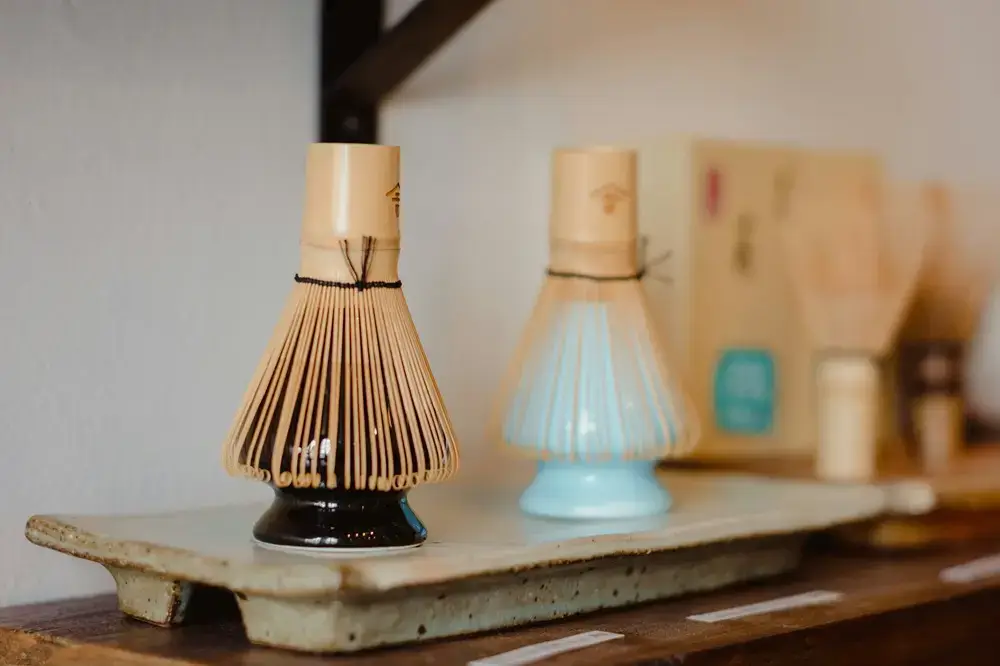
Photo by Jason Leung on Unsplash
By this point, I felt I finally understood why people still choose a bamboo whisk. Not because it is traditional. Because, after hundreds of years of refinement, it is still one of the best tools for making matcha taste the way it is meant to taste.
But that only led to another question.
If making matcha really is this much work, why do so many people choose to do it regularly at home?
Why Do People Make Matcha at Home?
There was still one question I couldn't answer. Why did so many people make matcha at home?
Making matcha properly takes real effort. Boil the water, warm the bowl, sift the powder, whisk it by hand. Then wash and dry the whisk afterward. It takes far longer than making a cup of coffee. And yet more people seem to be doing it every year, not fewer.
So I went looking for the answer in a different place this time. I read through videos and posts by people outside Japan who make matcha at home, trying to understand what kept them coming back to it.
What I found surprised me a little. Almost nobody framed it around health. A few mentioned it in passing, but the reason that came up again and again was simpler than that. They liked the time it took.
The closer comparison, it turned out, wasn't to drinking coffee. It was to grinding the beans yourself. What people seemed to want wasn't speed. It was the opposite of speed.
Part of it is how completely the process pulls attention away from everything else. The sound of water coming to a boil. The gentle sound of matcha being sifted into the bowl. The soft shh of the whisk against the bowl, and the grassy scent that rises with it. For those few moments, nothing else seems to ask for your attention.
Part of it is what the ritual does to an ordinary day. Slipping something this unhurried into the middle of work or errands forces the pace of the day to slow down, if only for a few minutes. Choosing a favorite bowl. Setting out a small seasonal sweet alongside it. None of that changes how the tea tastes, but it changes how the moment feels. Many describe it as creating a small, peaceful space in the middle of an ordinary day.
They weren't making matcha simply for its health benefits. They were doing it for the particular kind of stillness that only shows up once you've made something take longer than it needed to.
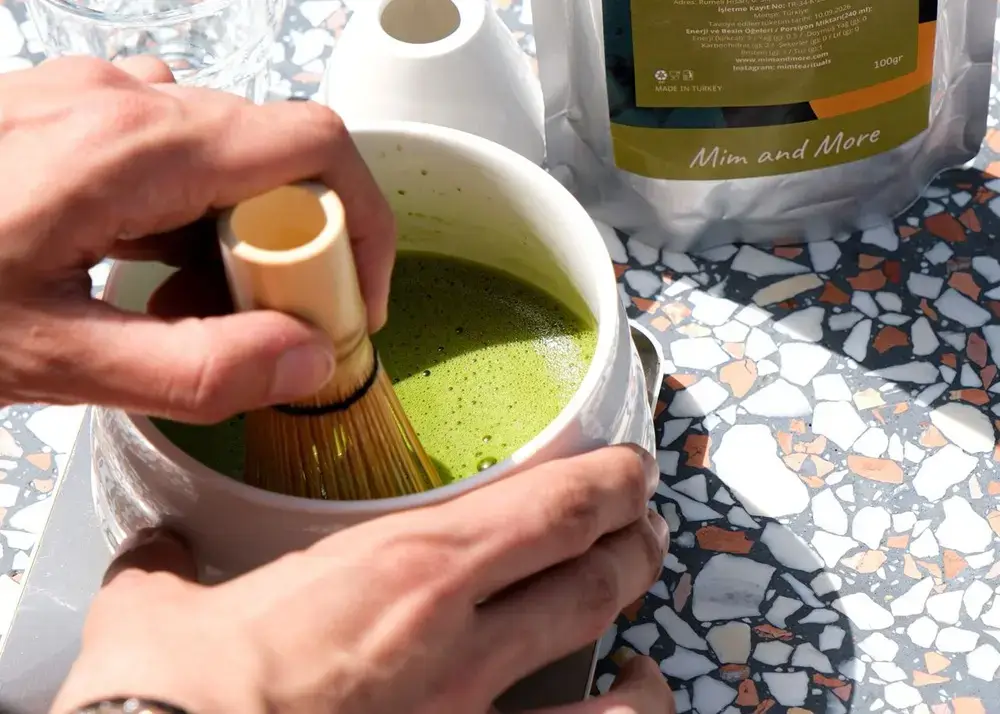
Photo by Samet Burak Dağlıoğlu, via Pexels
That answered why other people did it. But it left me with a much more practical question.
If I actually wanted to start making matcha at home, what would I even need? And picking the right matcha, I was starting to suspect, might turn out to be its own small skill.
Matcha Grades and Quality: Ceremonial vs. Culinary Matcha
For a long time, I assumed matcha was matcha. One tin looked much like another.
The more I looked into it, the more that turned out to be wrong. It's closer to coffee, where a dark-roast espresso bean and a light-roast pour-over bean come from the same plant but serve completely different purposes.
Matcha splits broadly into two categories. Ceremonial grade and culinary grade.
Ceremonial grade comes from the first harvest of spring, using only the youngest, most tender leaves. The bitterness is minimal, replaced by a deep umami closer to good dashi than to ordinary tea, with a natural sweetness underneath. Culinary grade comes from later harvests, picked in summer or after, often from leaves grown with less shading. It's built to hold up against the sugar and fat in baked goods and ice cream, which means the bitterness and astringency are much stronger by design. Whisk a bowl of culinary grade the way you would ceremonial grade, and the result is unpleasantly harsh.
Even within ceremonial grade, there's a wide range. The higher the tier, the more fragrant and rounded the tea tends to be, with a smoother texture and more depth. Lower tiers taste brighter and simpler, with a touch more bitterness at the edge. Neither is objectively better. Taste is personal, closer to wine or specialty coffee than to a fixed hierarchy, and part of the enjoyment is trying a few and finding what actually suits you.
Color offers another clue. The best matcha tends to be a vivid, almost luminous green, a result of the extra chlorophyll the leaves develop under shade before harvest. Some of the highest grades are often shaded using honzu, a traditional technique from Uji that uses reed screens layered with straw. The color shows it. Prices span a wide range too, from tins costing a few tens of dollars to the kind used in formal tea ceremony, which can run many times that.
So if I were making matcha at home for the first time, what should I actually be looking for?
The honest answer, for me, was simpler than the grading systems suggested. I wanted something made in Japan, by a Japanese company, using Japanese-grown tea. Living in Australia, I wasn't sure how realistic that actually was.
Choosing an Authentic Japanese Matcha Brand
So I started researching Japan's long-standing tea and matcha makers, hoping, a little wistfully, that one of them might turn out to be easy to find in Australia. Site after site, the same handful of names kept turning up.
Marukyu Koyamaen
The name that kept coming up, almost everywhere I looked, was Marukyu Koyamaen. Founded in Uji, Kyoto, over 300 years ago, it's one of the names most closely tied to formal tea ceremony. Tea practitioners, cafés, serious matcha drinkers all seemed to mention it in the same quiet, respectful tone. If someone asked me which company represents the traditional heart of Japanese matcha, this is probably the name I'd mention first. It also happens to be the company behind the honzu shading method I mentioned earlier.
Ippodo Tea
Ippodo felt different. Rather than centering everything around tea ceremony, it seems built around helping ordinary people make good tea at home. The packaging is elegant, the brewing guides are unusually clear, and the whole brand carries a calm, approachable feel. It's easy to see why so many people find their way into Japanese tea through Ippodo first.
Yamamasa Koyamaen
Yamamasa Koyamaen has a reputation for matcha with unusual depth and richness. Alongside tea ceremony use, it's become popular among people making matcha lattes and desserts, since the flavor holds up even once milk is added.
AIYA
AIYA stood apart for a different reason. While the others stayed rooted in Japan, AIYA has spent decades introducing Japanese matcha abroad. Its organic certification and international reach make it one of the easier Japanese brands to find outside the country.
If you live in the United States, it turns out you're in luck. Marukyu Koyamaen, Ippodo, and AIYA are all available through Amazon US.
Australia wasn't so simple. Most of the brands I wanted were either unavailable entirely or listed only a handful of products. So I kept looking, certain there had to be another way to get genuine Japanese matcha without importing directly from Japan.
Then I found WAKOEN.
WAKOEN
WAKOEN turned out to be one of Japan's larger tea producers, based in Shibushi, in Kagoshima Prefecture. It operates as the sales and brand arm of Kagoshima Horiguchi Seicha, its parent company, which handles everything from growing to processing under one roof.
Kagoshima. I felt a small, unreasonable jolt of recognition reading that. I grew up in the prefecture right next door.
WAKOEN has been in business since 1948, and its tea fields, spread across hundreds of hectares between its own land and its affiliated growers, are large enough to make the image of a small family plot in Uji feel like a different world entirely.
The reviews on Amazon were consistently good, and somewhere around there, I stopped feeling like I needed to keep looking.
Where My Curiosity Led Next
With the matcha finally chosen, I realised the tea itself was only the beginning. There was still a bamboo whisk to choose, a bowl to understand, and plenty more to learn. As I kept digging, I discovered that these simple-looking tools had stories of their own.
That became my next little investigation: learning how to choose a bamboo whisk, find a matcha bowl, and make better matcha at home.
Frequently Asked Questions
Do I really need a bamboo whisk (chasen) to make matcha at home?
You can technically mix matcha with a spoon or an electric frother, but a bamboo whisk does something neither can. Its eighty to a hundred fine tines slice through the water rather than just stirring it, breaking down the tiniest clumps and producing a fine, velvety foam that softens the bitterness and lets the natural sweetness and umami come through.
What is the difference between ceremonial grade and culinary grade matcha?
Ceremonial grade comes from the youngest leaves of the first spring harvest and is meant to be whisked with water and enjoyed on its own, smooth and naturally sweet. Culinary grade comes from later harvests and has a bolder, more astringent flavor built to hold up against milk and sugar in lattes, smoothies, and baking.
Does matcha contain caffeine, and how is it different from coffee?
Yes. A typical serving contains somewhere around 30 to 70mg of caffeine, depending on the grade and how much powder is used. What makes it feel different from coffee is L-theanine, an amino acid in tea that slows how quickly the caffeine reaches the bloodstream. The result tends to be steadier, calmer energy rather than a sharp jolt followed by a crash.
Why does my homemade matcha taste too bitter?
Bitterness usually comes down to one of three things: water that's too hot, culinary grade powder used for drinking rather than baking, or too much powder for the amount of water. Ceremonial grade matcha and water cooled to around 70 to 80°C (160 to 175°F) make the biggest difference. Boiling water scorches the delicate leaf and brings out a harshness that properly prepared matcha shouldn't have.
Where should I buy authentic Japanese matcha?
Look for matcha grown, processed, and packaged in Japan, ideally from established tea regions like Uji in Kyoto or Kagoshima. Producers such as Marukyu Koyamaen, Ippodo Tea, AIYA, and WAKOEN are long-established names known for careful shading, traditional stone-milling, and consistent freshness.
Continue Reading
This article contains affiliate links. If you purchase through them, Untranslated Japan may earn a small commission at no extra cost to you.