
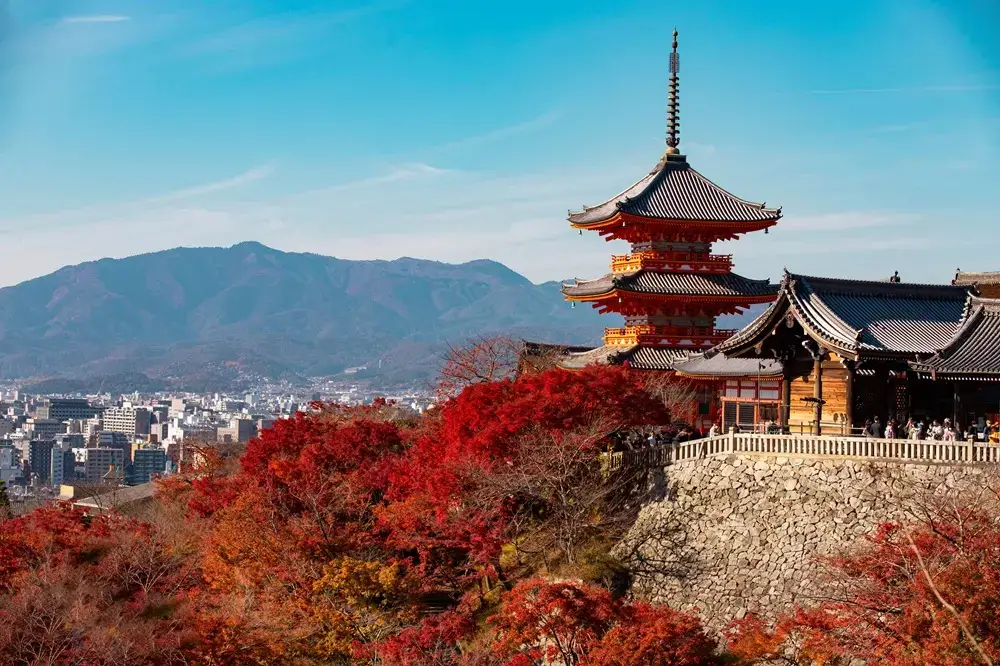
You want to travel through Japan at your own pace. Not sitting on a bus full of strangers, moving from one scheduled stop to the next, but turning down a street that catches your eye, stopping at a café when you are tired, and changing the plan when you feel like it.
So you start planning. And somehow, without quite noticing, your screen fills up with tabs: hotels, train seat reservations, and timed-entry tickets for popular attractions.
How many nights in Tokyo? Can you really drag a large suitcase into the countryside? What time does a ryokan serving dinner actually expect you to arrive?
The trip that was supposed to be free slowly turns into a project of logistics and bookings.
This is where a self-guided tour earns its place.
A multi-city self-guided tour will typically have your accommodation, main transport between destinations, and the overall shape of your itinerary already worked out. But nobody expects you to travel with a guide or a group. Where you eat lunch, how you spend the afternoon, whether you change your mind halfway through the day — that's still yours to decide.
So is it worth paying for, if this is your first trip to Japan?
What Is a Self-Guided Tour in Japan?
In Japan, a self-guided tour isn't just an audio walk through a neighbourhood with a guidebook in hand.
Some self-guided tours cover an entire multi-city journey designed in advance by a tour operator. Your accommodation and main intercity transport are arranged, but you travel without a guide or group.
What's included depends on the product. Beyond lodging and the main transport links, some packages add airport transfers, transit passes, pocket Wi-Fi, travel documents, luggage forwarding, even a few hours with a local guide.
The word "tour" is misleading. Nobody is gathering every morning behind a flag-waving guide.
What the operator gives you is the basic shape of the journey. Once you're on the ground, where you walk, what you eat, and how long you linger somewhere are still up to you.
Self-Guided Tours vs Guided Tours vs Independent Travel
On a fully independent trip, you decide everything yourself, from the destinations down to every hotel, train, and activity. It gives you the most freedom and the greatest control over your budget — at the cost of making every decision alone.
A guided tour hands most of that over to the operator. You travel with a guide or group, so the route, timing, and daily logistics are largely taken care of. But mornings have a meeting time, and days have a shape someone else chose. Changing your own plans becomes harder.
A self-guided tour sits between the two.
Accommodation and intercity transport are arranged. Once you land, you're on your own. A morning at a temple can turn into an afternoon at a museum if it rains. Lunch can be quick, or you can linger for hours at a small restaurant you happen to like.
Handing off the planning isn't the same as handing off the trip itself.
Why Planning Your First Japan Itinerary Is Harder Than It Looks
Japan is relatively easy to travel independently. Public transport in the major cities is reliable, English signage is widespread, and most hotels and transport can be booked online.
But being able to move around Japan and being able to plan a first trip that does not leave you exhausted are two different things.
If Tokyo, Kyoto, and Osaka are all you want to visit, arranging the trip yourself is entirely manageable. The harder decisions are how many nights to spend in each place, where to stay, and how much travel to fit into a single day.
Take a question like how many nights to spend in Tokyo. There's no single right answer.
You might picture sightseeing from the afternoon of your arrival, but after a long flight, getting to the hotel and finding dinner can be the whole day. A day trip to Nikko or Kamakura needs its own day, too.
Kyoto works the same way. Count the temples and set your nights by that number alone, and the trip can turn into little more than moving between them.
How many nights a town deserves isn't only about how many places you want to see — it's arrival time, transit time, packing, and how much energy you'll actually have left.
Looking Beyond Train Timetables
"A hotel in Tokyo" means something different depending on whether it's near Tokyo Station, Shinjuku, Ueno, or Asakusa.
Around Tokyo Station, the Shinkansen is close at hand — but if evening dining and the kind of neighbourhood walk you picture when you think of Tokyo matter more to you, a different area might suit you better. Shinjuku is convenient for trains heading west, though some travellers find walking through such a large station every day tiring. Ueno makes onward travel to Tohoku easy; Asakusa has more neighbourhood character, though the trains you use there can mean more transfers.
Near Kyoto Station, the Shinkansen and buses are within reach. Around Gion, you can walk the old streets at dawn or dusk — but reaching Kyoto Station on the day you leave will take more time and planning.
Same town, different hotel location, different day.
Wanting to fit Tokyo, Kyoto, and Osaka all into one first trip is natural. But string the big cities too close together, and what stays with you isn't the difference between the places — it's the crowds, the stations, the packing, the endless check-ins.
That might mean spending a night in a hot spring town after Tokyo, adding a small town between Kyoto and Hiroshima, or simply cutting one city and staying longer somewhere else.
Japan's trains are remarkably punctual. Whether the itinerary itself leaves you exhausted is something the timetable cannot tell you.
How a Self-Guided Tour Makes Planning a Japan Itinerary Easier
Once you've decided on the overall shape of your trip, another challenge begins: turning that plan into something that actually works in real life.
On a map, drawing a line from Tokyo to Kyoto and adding Hiroshima or Kanazawa afterwards feels straightforward enough. But once you begin making reservations, that simple line quickly fills with small decisions.
Which rail pass should you buy? Which side of the station is the hotel on? What time do you need to arrive at a ryokan for dinner? Will that ten-minute transfer still feel manageable when you're carrying a suitcase?
What makes a self-guided tour easier isn't that someone accompanies you throughout the journey.
It's that many of those decisions have already been worked out before you even leave home.
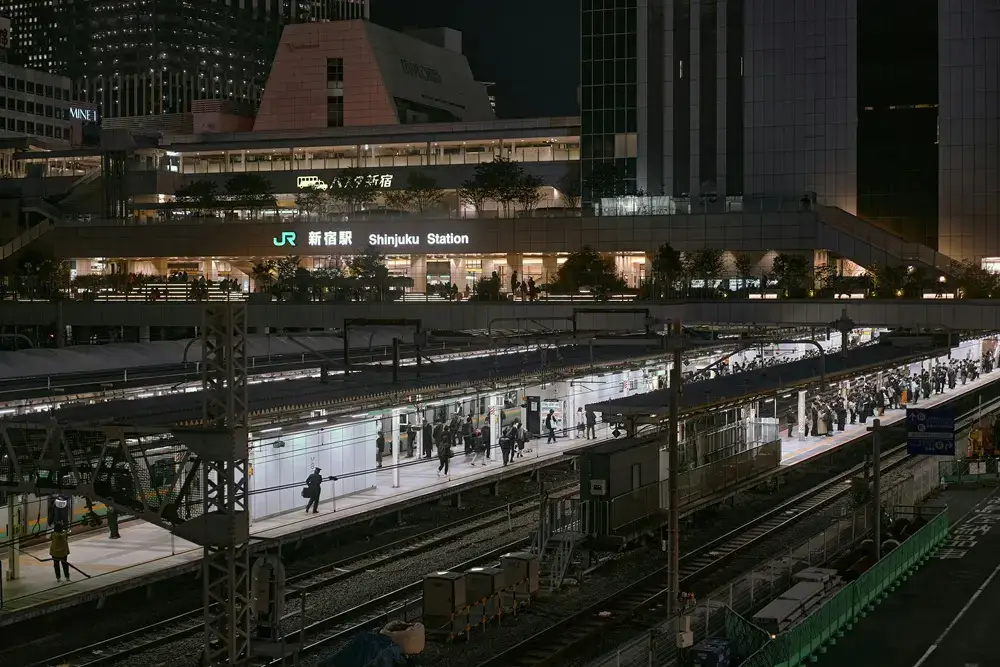
Photo by Johan Eriksson on Unsplash
Connecting Multiple Destinations Without Starting from Scratch
One evening, you sit in front of your laptop trying to arrange Tokyo, Hakone, Kyoto, Hiroshima, and Kanazawa into a sensible route.
Tokyo to Hakone seems straightforward enough. But should you continue to Kyoto afterwards, or travel to Kanazawa first? Which sections are best covered by a rail pass? Would a regional pass make more sense than a nationwide one?
Each answer leads to another browser tab. Soon you're comparing journey times, transfer points, rail passes, hotel locations, and arrival times, trying to work out whether the itinerary you've imagined will actually work.
A self-guided tour doesn't remove the experience of travelling independently. You'll still read the station signs, find the correct platform, and board the trains yourself.
What it removes is the need to build the entire route from nothing.
The overall journey, the sequence of destinations, and the main transport arrangements have already been planned.
What becomes easier isn't navigating a station.
It's no longer having to spend days wondering whether the journey you've imagined will actually work.
Travelling Light Without Working Out the Logistics Yourself
A large suitcase rarely feels like a problem while you're sitting on the Shinkansen.
The difficult part comes before and after.
A station with only stairs. A crowded local bus. A cobbled street leading to a ryokan. A short transfer between trains. Walking through the rain while pulling heavy luggage behind you.
On a multi-city trip, planning your route also means planning your luggage.
Should you send it ahead? Which hotel should receive it? What do you need to keep with you for the next two nights? Will the next hotel accept luggage deliveries?
Some self-guided tours build luggage forwarding into the itinerary itself.
Your suitcase travels ahead to a later hotel, while you continue with just a small overnight bag through hot spring towns or quieter regional destinations. The timing, destination, and practical details have already been considered as part of the journey.
That's more than an extra service.
It's a sign that the itinerary was designed around the realities of travelling, not simply around train schedules.
Accommodation Planned Around the Journey, Not Just the Destination
You arrive at the station at 5:50 p.m.
Dinner at the ryokan begins at six.
On paper, it looks as though you've made it.
In reality, you still need the shuttle from the station, check in, settle into your room, and perhaps take a moment to breathe before dinner. If there's time, you might even hope for a quick soak in the onsen first.
A ryokan isn't simply somewhere to sleep.
Dinner, the bath, and breakfast are all part of the experience.
When planning independently, it's easy to feel satisfied once you've secured the reservation, only to realise later that you'll need to cut your sightseeing short in order to arrive on time.
A self-guided tour considers the accommodation as part of the day's journey, not as a separate booking.
That means you spend less time working backwards from dinner times, transfer schedules, and check-in deadlines to work out when you should leave the previous destination.
Everything You Need Is Organised Before You Arrive
After a long international flight, you finally step into the arrivals hall.
At that moment, you're probably not looking for sightseeing recommendations.
You're trying to work out how to reach your hotel. Where to collect your Wi-Fi. Whether you need a transport card. When your rail pass becomes valid. Which email contains today's booking confirmation.
On an independently planned trip, that information is often scattered across hotel confirmations, railway websites, ticket PDFs, booking emails, and travel apps.
With a self-guided tour, much of it is brought together into one itinerary and one set of travel documents.
Instead of searching through half a dozen apps and confirmation emails, you already have the information you need organised in the order you'll actually use it.
Some tours also include a support contact should something unexpected happen during your trip.
The value of a self-guided tour isn't that every decision is made for you.
You still choose which street to wander down, which café to stop at, and how long to stay somewhere you unexpectedly fall in love with.
What changes is that the hardest part of planning has already been done before your journey begins.
Self-Guided Tour vs Independent Travel: Which Is Right for You?
Understanding what a self-guided tour actually solves is one thing. Deciding whether you need one is another.
A self-guided tour isn't something every first-time visitor to Japan needs.
If your whole trip is a week in Tokyo, booking one hotel and deciding what to do each day after you arrive is probably enough. If researching an itinerary is something you actually enjoy, doing it yourself might be more satisfying than handing it to an operator.
The right choice depends on which parts of planning you enjoy and which parts begin to feel like a burden.
Who a Self-Guided Tour May Suit
- You are visiting Japan for the first time.
- You want to avoid a group tour but do not have time to build an itinerary from scratch.
- You are planning a ten-day to three-week trip across several cities.
- You want to add a region beyond Tokyo and Kyoto.
- You are travelling with children or older parents.
- You feel unsure about ryokan stays or regional transport.
- You prefer a package that includes someone to contact if something goes wrong.
- You have researched so many options that making a decision has become harder, not easier.
You may not need a guide beside you all day. You may simply need someone to organise the essential parts of the trip so you can explore confidently on your own.
Fully Independent Travel May Be Better If…
Fully independent travel suits people who genuinely enjoy comparing hotels, checking train routes and fares, and building an itinerary themselves.
Travellers who have visited Japan before, are staying in only one or two cities, or want to change plans at short notice may find a pre-designed itinerary too restrictive.
Individual bookings also give you more flexibility if you want to use hotel points, loyalty benefits, or search for the lowest possible combination of accommodation and transport.
When a Guided Tour Makes More Sense
Choosing a self-guided tour doesn't rule out adding a guide for part of the trip.
A local guide can add valuable context when you are walking through a historic town, visiting a workshop, or reaching places that public transport does not serve well.
A food tour can also open the door to small restaurants that may be difficult to find or enter without local knowledge.
It isn't a choice between a fully guided trip and a fully independent one. On a two-week trip, it is entirely possible to spend one or two days with a guide and explore independently for the rest.
How Much Does a Self-Guided Tour in Japan Cost?
Booking the same route independently may cost less than buying a package.
But a fair price comparison needs to include more than accommodation. You also need to account for intercity transport, connectivity, travel documents, local support, and any pre-booked experiences.
And there's the time it takes to build the itinerary yourself.
A few hours of research can be enjoyable rather than a burden. But if weeks of comparing hotels, checking connections, and trying to satisfy everyone in your group have already worn you out, handing over the planning has value in itself.
What you are paying for is not a guide at your side all day. You are paying for an itinerary that fits together, the bookings that support it, and, where included, someone to contact if something goes wrong.
Choosing the Best Self-Guided Japan Itinerary for a First Trip
Three Self-Guided Japan Itineraries for a First Trip
Once you've decided that a self-guided tour suits the way you like to travel, the next step is choosing an itinerary that matches the kind of journey you want.
For many first-time visitors, Tokyo, Hakone or the Mount Fuji area, and Kyoto form a manageable starting point. Tokyo introduces the scale and energy of modern Japan. A night in a hot spring town brings a slower rhythm and the experience of staying in a ryokan. Kyoto offers historic streets, temples, gardens, and neighbourhoods that are best explored without rushing.
From there, the choice depends on how much time you have and what you want the journey to reveal. Osaka adds food, nightlife, and a more informal urban atmosphere. Hiroshima and Miyajima bring modern history, coastal scenery, and a different pace. Kanazawa and Takayama take the route towards traditional towns and the Japanese Alps, while Okayama and Kurashiki offer a quieter pause between the larger cities.
Japan Experience offers several versions of this kind of first trip. "Highlights of Japan" combines the classic route with Kanazawa and Takayama in the Japanese Alps. "Classic Japan" follows a more familiar journey through Tokyo, the Mount Fuji area, Osaka, Hiroshima, Miyajima, and Kyoto. "Slow Travel Japan" covers several of the same regions over a longer period, with fewer hurried transfers and more time in each place.
These routes are not simply longer or shorter versions of the same trip. Each creates a different balance between large cities, historic towns, rural landscapes, hotel changes, and unplanned time.
Highlights of Japan
Japan Experience's most complete first-trip route: 15 days from Tokyo to Hakone, Kyoto, Nara, Hiroshima, Miyajima, Kanazawa, and Takayama, with 3-star hotel and ryokan stays, luggage transfer, and a Japan Rail Pass included.
View at Japan Experience → 15 days · Tokyo, Hakone, Kyoto, Hiroshima, Kanazawa, Takayama
Classic Japan
A well-rounded first-trip route through Tokyo, Hakone, Osaka, Hiroshima, Miyajima, and Kyoto, with a guided evening walk through Kyoto's Gion district included.
View at Japan Experience → 14 days · Tokyo, Hakone, Osaka, Hiroshima, Miyajima, Kyoto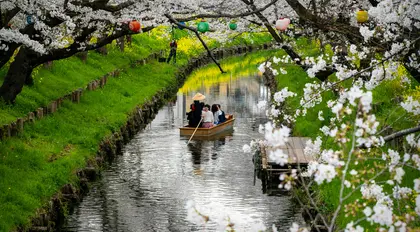
Slow Travel Japan
A 21-day route built around fewer transfers and longer stays: Tokyo, Hakone, Kyoto, Osaka, Okayama and Kurashiki, and Miyajima, with a ryokan night in Hakone and a day trip to the tea fields of Uji included.
View at Japan Experience → 21 days · Tokyo, Hakone, Kyoto, Osaka, Okayama, MiyajimaWhen comparing them, look beyond the number of famous destinations. Check how many nights are spent in each place, how much of a travel day remains after changing cities, and whether the ryokan stay allows time to settle in rather than simply arrive, eat, and leave again.
Adding another region should change the experience of the journey, not simply increase the number of places on the itinerary. The best route is usually the one that gives each destination enough time to feel distinct.
Can You Visit Rural Japan Without a Car?
Japan Experience also offers regional self-guided tours covering Tohoku, Kyushu, Chugoku, the Japanese Alps, and Hokkaido. Some combine the main cities with regions that are relatively easy to explore by rail, while others include or recommend a rental car for more remote areas.
But being able to reach a region without a car isn't the same as being able to reach anywhere within it.
Regional cities and major hot spring towns connected by rail tend to fit easily into a self-guided trip. Mountain hamlets, farms, remote workshops, small coastal villages — these often still need a local bus, a hotel shuttle, a taxi, or a local tour.
Don't choose by the phrase "rural Japan" alone. Check, for each stop on the itinerary, how you'll actually get from the station to the accommodation or the experience itself.
Tohoku: Traditional Japan
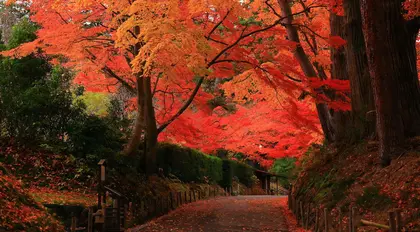
A 15-day route through Tokyo and the lesser-visited Tohoku region — Nikko, Sendai, Matsushima Bay, Aomori, Akita, and the mountain temple of Yamadera. Closed from mid-November to mid-March due to regional road conditions.
View at Japan Experience → 15 days · Tokyo, Nikko, Sendai, Aomori, Akita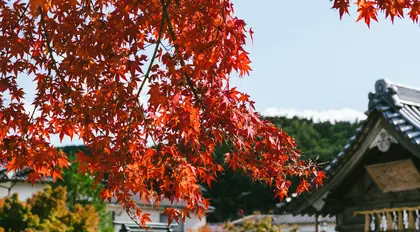
Kyushu: The Southern Route
A 20-day journey tracing a line south from Tokyo through Kyoto and Miyajima to Fukuoka, Nagasaki, and the volcanic landscapes, spa towns, and hot springs of Kumamoto, Hita, Yufuin, and Beppu, before an overnight ferry crossing to Osaka.
View at Japan Experience → 20 days · Tokyo, Kyoto, Miyajima, Fukuoka, Nagasaki, Kumamoto, Beppu, OsakaChoosing a Self-Guided Tour by Travel Style
Being a first-time visitor doesn't mean everyone should take the same route.
Someone who wants to spend the trip in gardens, someone drawn to food culture, someone chasing architecture and art, someone who wants to hike — the right itinerary looks different for each.
Japan Experience also offers themed tours built around food, gardens, art and architecture, wellness, hiking, and slow travel.
Rather than judging by the product name alone, these questions help narrow it down:
- How many nights can you stay in one place?
- Is there too much movement between cities?
- How much free time is actually built in?
- Is there real time to experience the theme itself?
- Are the destinations easy to move around without a guide?
- Which day in the itinerary is the busiest?
- Does that pace suit you and whoever you're travelling with?

Japanese Zen & Wellness
A 15-day route from Tokyo to Kyoto via Mount Fuji, Matsumoto, Kanazawa, and the spa town of Awara, built around moments of stillness — a zazen meditation session and an ikebana lesson in Kyoto, and a night in a Buddhist temple lodging on Mount Koya.
View at Japan Experience → 15 days · Tokyo, Mount Fuji, Matsumoto, Kanazawa, Awara Onsen, Osaka, Koya-san, Kyoto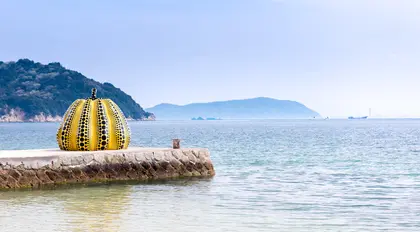
Japan Art and Architecture Tour
A 14-day route through Tokyo and Osaka continuing by rental car to Awaji Island and Shikoku, tracing the work of architect Tadao Ando — the Church of Light near Osaka, the Awaji Yumebutai hotel, and the art island of Naoshima, reached from a base in Takamatsu, before a final stop in the canal town of Kurashiki on the way to Kyoto.
View at Japan Experience → 14 days · Tokyo, Osaka, Awaji Island, Takamatsu, Naoshima, Kurashiki, Kyoto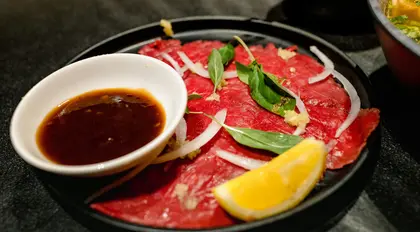
Japan Culinary Tour
A 13-day route through Tokyo, Osaka, Kobe, and Miyajima Island, ending with five nights in Kyoto — a Tokyo street-food walk, Osaka's night markets, a Kobe wagyu detour, a guided tea excursion to Uji, and a bento-making workshop.
View at Japan Experience → 13 days · Tokyo, Osaka, Kobe, Miyajima, KyotoA theme can help narrow your choices, but the pace, route, and amount of free time will have a much greater impact on how the trip actually feels.
When a Custom Japan Itinerary Is a Better Choice
For many travellers, a pre-designed self-guided tour offers the right balance between freedom and convenience.
But not every traveller fits an existing itinerary. You may want food to shape the route, hope to visit a particular craft region, need to reduce stairs and frequent transfers for children or older parents, or have already seen Tokyo and Kyoto and want to spend more time elsewhere.
Sometimes an existing tour is close to what you want, but not quite right. Perhaps the route works, but the pace feels too fast. Perhaps you want an extra night in Kyoto, a ryokan stay in a smaller town, or fewer hotel changes along the way.
In situations like these, a tailor-made tour may be a better fit.
How a Tailor-Made Japan Itinerary Works
A tailor-made journey begins with the kind of trip you want rather than with a fixed route.
With Japan Experience, you can work with a travel consultant to adjust a pre-designed tour or create a new itinerary around your available time, interests, preferred pace, mobility needs, and budget. Accommodation, transport, activities, and the number of nights spent in each destination can all be shaped around the journey you have in mind.
The process begins with an online request form, followed by a conversation with a travel consultant. Rather than adapting your plans to fit an existing tour, the itinerary is built around the way you want to travel.
The advantage is that the itinerary and the practical arrangements are designed together.
You are not simply given a list of places to visit. The accommodation, transport, and experiences are selected to fit the route, while a personalised travel book brings together the itinerary, hotel addresses, and local recommendations before departure. During the trip, Japan Experience also provides local assistance from its teams based in Japan.
Create Your Own Japan Itinerary
Work with a Japan Experience travel consultant to design a personalised trip around your preferred route, pace, accommodation, transport, and activities.
Request a Custom Tour Quote → Personalised itinerary · Accommodation · Transport · Activities · Local supportBut tailor-made does not automatically mean better. It works best when you explain not only what you want to see, but also how you want to travel.
Instead of simply saying, "I want to see Kyoto's temples," explain how you want the day to feel: "I'd like to walk early in the morning and keep my afternoons relaxed."
Instead of saying, "I want to visit rural Japan," explain the pace you prefer: "I'd rather stay longer in fewer places than change hotels every day."
The more clearly you describe the rhythm of the trip, the easier it becomes to design an itinerary that feels like yours rather than a standard route with a few destinations changed.
What to Check Before Booking a Japan Tour
Whether you are choosing a self-guided tour or a tailor-made travel service, look beyond the price and check exactly what is included.
- Are international flights included?
- Can you confirm the accommodation in advance, and can it be changed or upgraded?
- How much of the intercity transport is included?
- When and how do you receive your transport tickets?
- How do you get from the airport to your first accommodation?
- If luggage forwarding is included, which legs does it cover?
- Who do you contact during the trip, and during what hours?
- How much free time do you actually have each day?
- Can dietary requirements or mobility needs be accommodated?
- What are the terms for changing dates or cancelling?
- If a guided activity is added, who actually runs it?
And when you look at an itinerary, look past the number of landmarks to the blank space.
Is there an afternoon with nothing booked? Are travel days packed right up to the evening? Is there time to rest after arriving at a ryokan, before dinner? Is there room to change your mind if you want to?
A good itinerary does not fill every day completely. It leaves room to choose a different street, stay longer in a park, or change your mind altogether.
The itinerary may already be waiting for you.
What you notice along the way is still entirely your own.
Frequently Asked Questions
What is a self-guided tour in Japan?
A multi-city self-guided tour is typically a pre-planned trip in which accommodation, main transport between destinations, and the overall itinerary are arranged in advance by a tour operator. You then travel without a guide or group and decide how to spend your free time.
Is Japan easy to visit without a tour guide?
Major cities are relatively easy to navigate independently, thanks to extensive English signage and reliable public transport. Regional travel, ryokan stays, and multi-city itineraries require more planning, which is where a self-guided tour can help.
Are self-guided tours in Japan worth the extra cost?
It depends on what you value. Booking everything yourself may cost less, but a self-guided tour can save hours of research into train connections, luggage forwarding, and ryokan check-in times. Some packages also include local support during the trip.
What is usually included in a self-guided Japan tour?
Inclusions vary by operator and itinerary. Multi-city packages commonly include accommodation, main transport between destinations, and travel documents. Some also include airport transfers, transit passes, pocket Wi-Fi, luggage forwarding, or selected guided activities.
Can first-time visitors travel around Japan independently?
Yes, especially if the trip stays within the main cities. Planning becomes more complicated when you add several regions, rural transport, or ryokan stays, which is where a self-guided tour or tailor-made itinerary can help.
Can you visit rural Japan without a car?
Regional cities and major hot spring towns connected by rail are generally accessible without a car. More remote areas, such as mountain hamlets or small coastal villages, often require a local bus, hotel shuttle, taxi, or local tour.
How many days do you need for a first trip to Japan?
A 10-to-14-day trip works well for a classic route through Tokyo, Hakone or the Mount Fuji area, and Kyoto. If you also want to include a regional destination, having two to three weeks allows for a more comfortable pace.
Continue Reading

This article contains affiliate links. If you book through one of them, Untranslated Japan may earn a small commission at no extra cost to you. We only recommend tours and services we believe genuinely serve first-time visitors.