
Perhaps you've wondered: Will everyone stare? Will I be the only foreigner? Should I cover myself with the towel? If you've ever had those thoughts before visiting a Japanese onsen, you're far from alone.
Why Bathing Naked with Strangers Feels So Daunting
A moment many travellers recognise
You have been looking forward to the onsen for weeks. You have seen the photographs: mist rising over dark water, pine trees at the edge of a garden, the particular stillness of a Japanese bath. You have read that this is one of the things Japan does unlike anywhere else in the world.
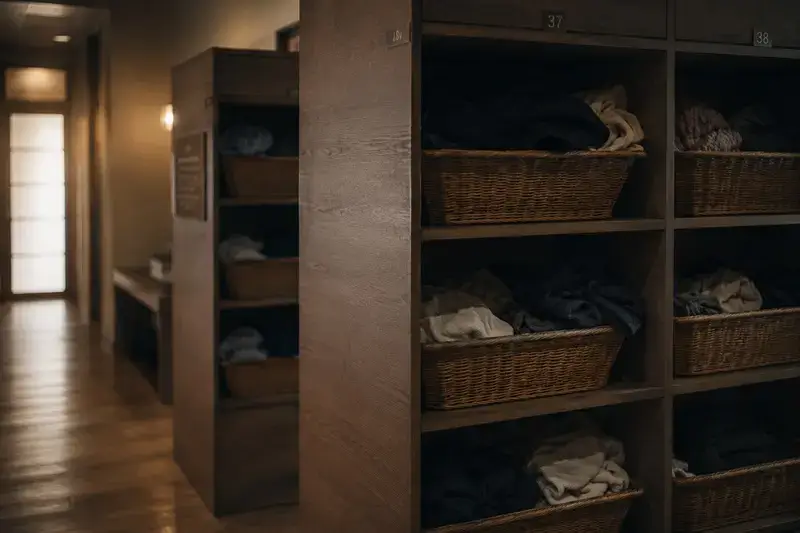
Then you arrive at the changing room. There is a basket for your clothes. A row of small towels. And the quiet, unavoidable fact that you are expected to remove everything before you go any further.
For many first-time visitors, this is where the anticipation turns into something more complicated. Not quite dread, but something close to it. A sudden awareness of the body you have been carrying around your whole life without much thought. The question arrives before you have time to stop it: What if people look?
If you have felt this, you are in good company. Journalists, long-term residents, and seasoned Japan travellers have described the same pause at the threshold of a Japanese bath. The hesitation is not a sign of weakness, and it is not a failure to embrace other cultures. It is simply the feeling of encountering a social situation for which nothing in your upbringing has prepared you.
That anxiety is completely understandable
In much of the Western world, nakedness outside the home exists in very specific, bounded contexts: the doctor's surgery, a changing room with a curtain, a locked bathroom door. Even communal spaces like swimming pools, spas, and gyms tend to involve swimwear, towels, or at minimum, a private cubicle. Public nudity, unplanned and undivided among strangers, is not something most people in these cultures encounter as a normal part of daily life.
More than that: in many cultural frameworks, nakedness carries meaning. It belongs to intimacy, to vulnerability, to contexts that are private and chosen. Removing your clothes in front of someone you do not know can feel like a kind of exposure that goes beyond the physical.
So when a first-time visitor stands at the threshold of a Japanese bath, they are not simply deciding whether to take their clothes off. They are navigating a collision between the rules they grew up with and a set of completely different ones. The anxiety makes sense.
Then why do Japanese people seem so at ease?
Watch the other bathers for a moment. Nobody is performing confidence. Nobody seems particularly aware that they are undressed. People sit in the water, look out at the garden, pour water over their shoulders. The atmosphere is closer to a library than a locker room.
This raises a question that is more interesting than it first appears. Are Japanese people simply less modest? Do they not feel the same self-consciousness about their bodies?
The answer, as it turns out, is no. They do. But something about the onsen changes the equation. The question is what.
Japanese People Feel It Too
In daily life, the Japanese cover a lot
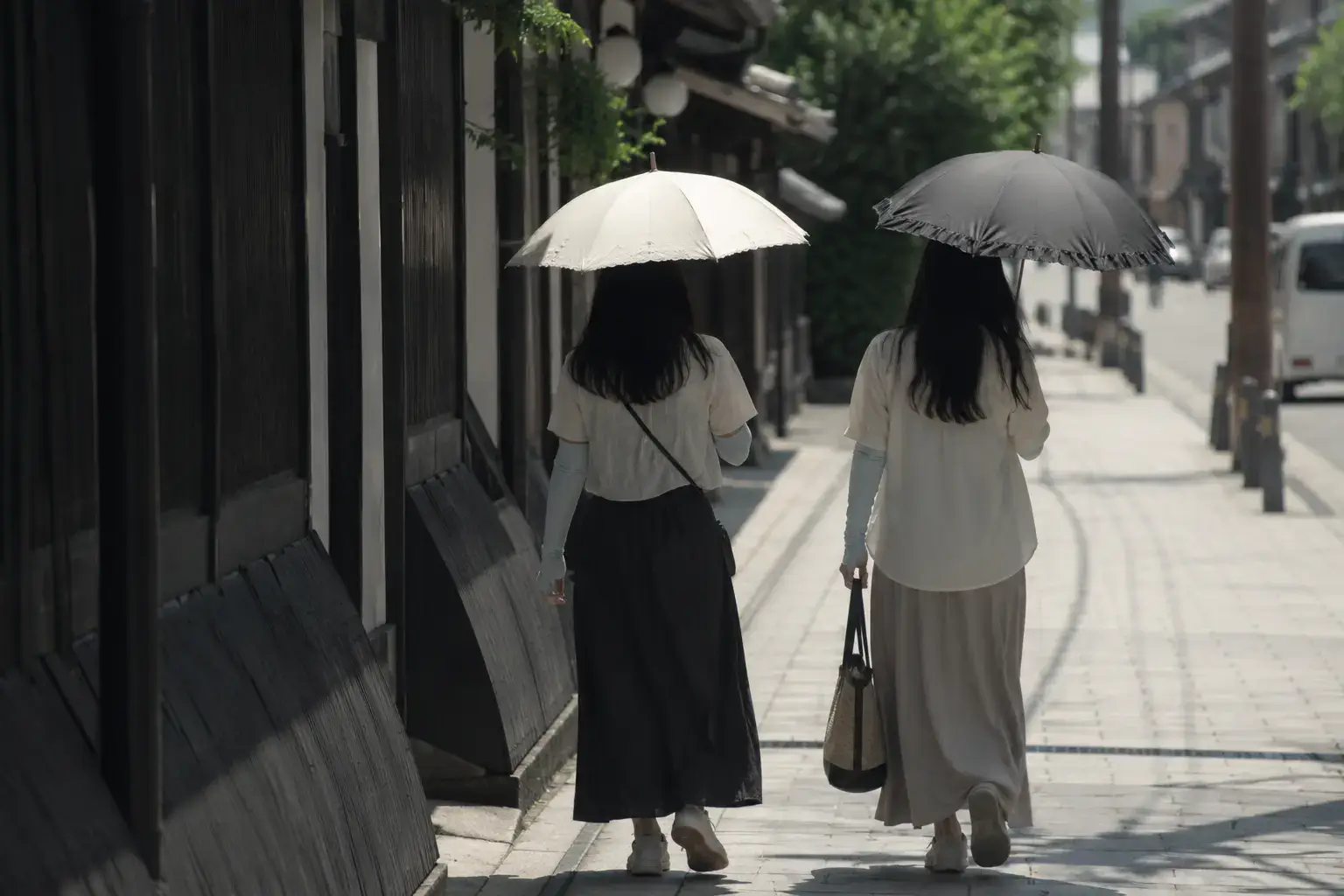
In everyday life, Japanese people, and Japanese women in particular, cover considerably more skin than their counterparts in many Western countries. On a hot summer day, long sleeves, arm covers, and parasols are standard. At the beach or public pool, rash guards that cover the arms and legs are common, worn not just for sun protection but out of genuine preference for coverage.
Body image concerns exist here as they do everywhere. Japanese women, in particular, often pay close attention to their appearance, though they tend to do so in subtle ways that visitors may not immediately notice. The idea that the Japanese are simply unbothered by how they look does not match what you actually see.
The question then is not why Japanese people lack body consciousness. It is why that consciousness seems to recede at the edge of the bath.
Not Everyone Is Comfortable. And That Is Worth Saying.
Younger Japanese people, particularly teenagers, often find communal bathing genuinely uncomfortable. People with body image concerns sometimes choose private baths, or go at quieter times. There are Japanese people who have never liked public onsen and avoid them entirely.
The small towel that bathers carry is partly practical, partly a concession to modesty: something to hold in front of you as you move from the changing area to the water. That detail alone suggests that the discomfort is not completely absent; it is simply managed differently.
Japanese people are not shameless. They are human. What differs is not their psychology but the social framework the onsen provides for that psychology.
Something changes once you are in the water
Ask someone who was nervous before their first onsen and they will usually describe the same thing: the anxiety was highest in the changing room. By the time they were in the water, it had already begun to dissolve.
This is not bravado after the fact. It reflects something real about how the onsen works. Understanding what that something is requires looking not at the bathers, but at where their eyes go.
In an Onsen, Nobody Is Looking at You
An invisible agreement between strangers
There is no posted rule against staring in an onsen. There does not need to be. The understanding is so deeply embedded in how Japanese people navigate shared space that it functions as architecture. Invisible, but structural.
In the changing room, eyes go to the floor, to the locker, to the mirror directly in front of the person using it. In the bath, they go to the water, to the garden beyond the window, to the steam rising from a stone channel. People move through the space in a kind of practiced unawareness of one another that, once you see it, looks less like indifference and more like a form of courtesy.
Nobody is examining your body. Nobody is comparing. Nobody is going to say anything afterward. The social contract of the onsen is built on a single, unspoken promise: we are all here for the same reason, and none of us is the subject of anyone else's attention.
The problem was never nakedness. It was judgment.
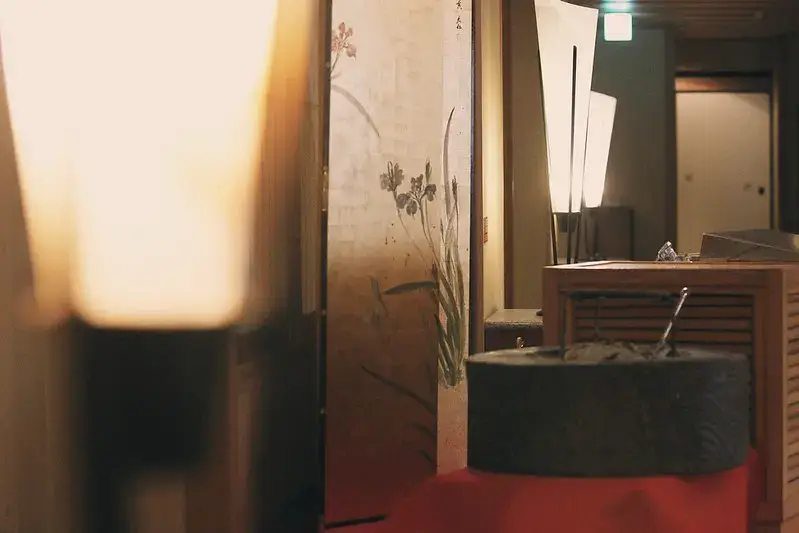
What catches most people off guard is this: the anxiety before an onsen is rarely about being unclothed in the abstract. It is about being seen in a particular way: assessed, compared, found wanting. The nakedness is almost incidental; it is the imagined gaze of others that creates the tension.
Remove the possibility of that gaze, not through rules but through culture, and the nakedness stops being remarkable. When you know that no one in the room is looking at you, being undressed loses most of its weight.
This is why the discomfort tends to evaporate so quickly once you are actually in the water. The anxiety was anticipating a judgment that was never going to arrive.
Not looking is a form of respect in Japan
This way of managing attention is not unique to the onsen. You notice it in other places too.
On a crowded train, people do not make prolonged eye contact with strangers. In a restaurant, a nearby conversation is treated as something not heard. In a waiting room, each person is effectively alone, even in company. The careful management of attention, knowing when to look and when deliberately not to look, is a kind of social skill that Japanese culture cultivates from childhood.
The onsen, in this sense, is not an exception to Japanese social norms. It is one of their clearest expressions.
How Japan Learned to Bathe Together
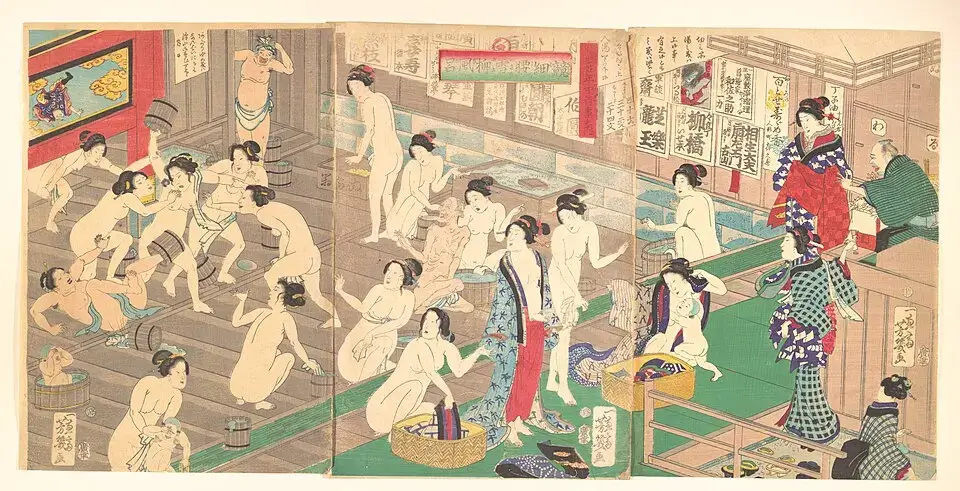
Utagawa Yoshiiku, CC0, via Wikimedia Commons
Bathing was not a private act
For most of Japanese history, the bath was not something you did alone at home. Until well into the twentieth century, private bathing facilities were a luxury that most households did not have. People went to the sentō, the public bathhouse, as a matter of daily necessity, the way people might stop at a well or a market. It was infrastructure, not indulgence.
The Edo-period sentō was not merely a place to wash. It was a social institution as lively and important as a neighbourhood pub. Men and women of all ages gathered: merchants and craftsmen, the elderly and the young, side by side in the same steamy rooms, talking, gossiping, conducting minor business, catching up on the news of the street. Ukiyo-e woodblock prints from the period depict sentō as places of noise and laughter, bodies pressed together in the steam, conversations flowing across the water.
In this context, the body was simply what you were when you bathed. Nakedness carried no more social significance than the act of eating did at a communal table. It was the ordinary condition of a necessary task.
When Mixed Bathing Came to an End
For centuries, men and women bathed together without particular controversy. As Japan opened to the West in the late nineteenth century, however, many Western visitors regarded the practice as improper. In its effort to present Japan as a modern nation, the Meiji government gradually moved to restrict mixed bathing. Tokyo prohibited mixed bathing in 1872. Gender separation in public baths became law by the 1950s.
What did not change was the fundamental comfort with communal bathing itself. The separation of men and women was an imported idea, adopted for diplomatic reasons as much as moral ones. The idea that bathing with others was inherently shameful never took root. The sentō survived the Meiji era, and so did the social ease that had always surrounded it.
Water as something more than water
There is something else here, though. Something that sits beneath the history. In Shinto, the indigenous religion that shapes Japanese culture in ways both visible and invisible, water is a purifying force. Before entering a shrine, you rinse your hands and mouth at the temizuya, the stone water basin. The act is not decorative. It marks a transition between the ordinary world and a space that requires a different quality of presence.
Hot spring water, which rises from the earth with its own mineral character, carries this sense of purification into everyday life. You are not simply washing your body. You are shedding something. The dust of the day. The weight you have been carrying. The residue of the hours behind you. The person who enters the water is not quite the same as the one who emerges.
When a space is understood this way, the body inside it is not an object of scrutiny. It is something being renewed.
Learning Before Self-Consciousness Sets In
It begins in the bath at home
In many countries, the bathroom is a private space from very early in a child's life. A parent might sit at the edge of the tub to wash an infant, remaining clothed, the child's bath a contained and supervised event. By the time children are old enough to bathe independently, the idea of doing so alone is simply assumed.
In Japan, this is not typically how it begins. Babies are bathed with their parents, skin to skin in warm water, from the very start. Even after children no longer need help with bathing, many families continue to share the bath for a while. The bath is where conversations happen, where the day is talked through, and where a particular kind of unhurried closeness is possible.
Even after children begin bathing on their own, shared baths remain part of family life. A weekend visit to a neighbourhood sentō, a family trip to an onsen, or a stay at a ryokan often means stepping into the water together once again. By the time Japanese children reach adolescence, communal bathing has usually appeared in enough ordinary moments that it no longer feels unusual.
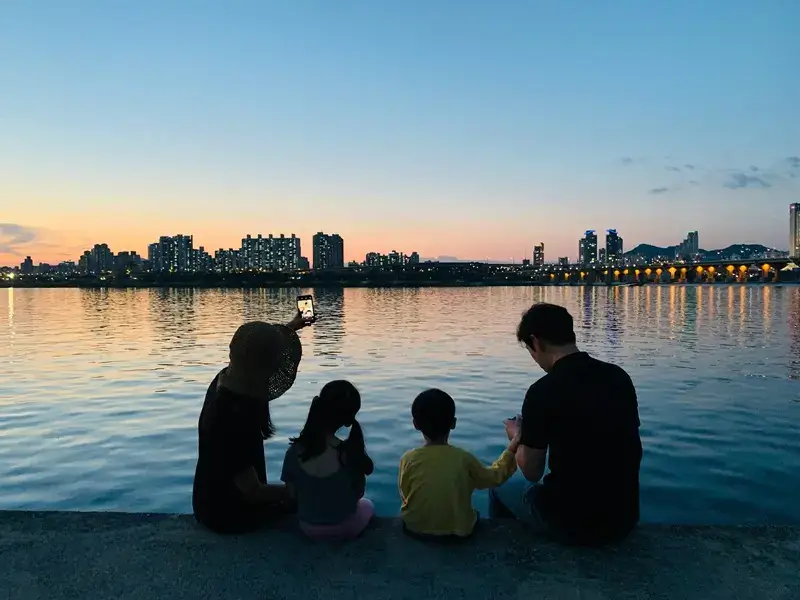
Photo by Minkyung Kim on Unsplash
Communal bathing as a rite of passage
Japan has a tradition of school trips called shūgakuryokō, events without a direct equivalent in most other countries. For those unfamiliar, shūgakuryokō are multi-day school trips that Japanese students take at several stages of their education, most commonly in elementary, middle, and high school. Students travel together, stay in shared accommodation such as a ryokan, and often bathe together in the communal baths.
For many Japanese people, this is the moment when shared bathing moves beyond the family and into the wider world. And it tends to happen at a relatively young age, before the full weight of adult self-consciousness has settled in. By the time body image becomes complicated, as it does for almost everyone in adolescence, the basic experience of communal bathing already exists in the memory as something that was simply normal.
This is the quiet logic at work: the habit arrives before the hesitation does.
Modesty is learned. So is its context.
Nobody is born knowing what to hide, or where, or why. These are cultural lessons, absorbed over years of watching how the people around you behave. Japanese children learn modesty. They are not exempt from it. But they also learn early that the bath is a space where different rules apply. The same body that is carefully covered in everyday life can be uncovered in the bath without a second thought.
That contextual distinction is the real inheritance. Not a lack of modesty, but an understanding of where modesty belongs and where it can be set aside.
What We Leave in the Changing Room
A Japanese phrase for unguarded connection
Japanese has a phrase, hadaka no tsukiai (裸の付き合い), that does not translate cleanly into English. Literally, it means something like "naked association" or "naked companionship." But in practice, it refers to a quality of relationship that nakedness can make possible: the kind of conversation that happens between people who, for the moment, have nothing left to hide behind.
The physical act of removing your clothes is only part of it. What matters, in the Japanese understanding of this phrase, is that the social armour comes off at the same time. The uniform, the business card, the title, the salary: these things signal rank and role in daily life. In the bath, they are folded in a basket in the changing room. What remains is simply a person.
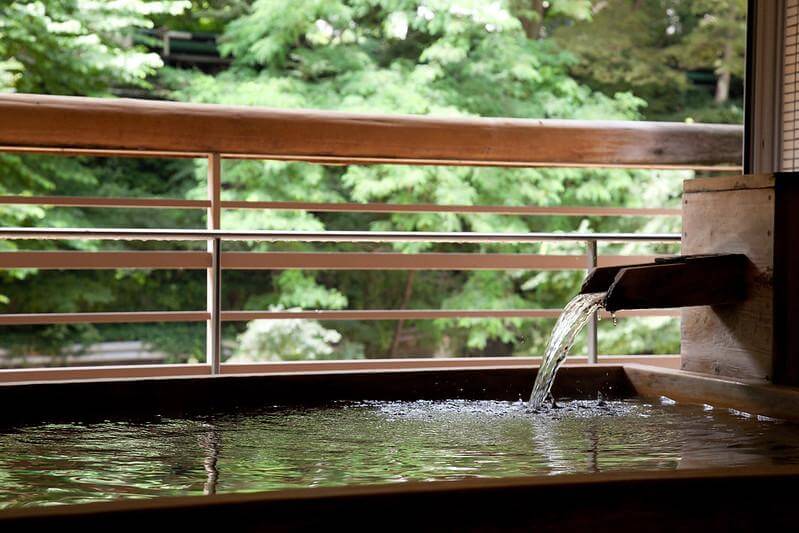
The bath as a briefly equal place
Japanese social life is structured by hierarchy in ways that are sometimes invisible to outsiders but felt constantly by those within it. Age, seniority, professional position: these shape language, behaviour, and the flow of conversation in ways that are rarely suspended. In most contexts, you do not forget who outranks whom.
The onsen is one of the few spaces where this structure relaxes. A company director and a new employee, shoulder-deep in the same water, are simply two people in a bath. There is no performance of status available, because the props of status are in the changing room.
Company trips in Japan have often included stays at onsen ryokan, where the communal bath is simply part of the experience rather than the purpose of the journey. When colleagues bathe together during such a trip, the usual workplace hierarchy may briefly feel less rigid. Titles and uniforms remain in the changing room, sometimes allowing conversation to become a little less formal than it would be at the office.
A Society That Protects Dignity Through Inattention
Perhaps the most interesting thing about the onsen is what it reveals about one possible approach to shared public life. It is not a space that requires courage, or open-mindedness, or the deliberate suspension of your own cultural instincts, though those things may help at first. It is a space built on a particular kind of social agreement.
Nobody will look at you. Nobody will evaluate you. Nobody will say anything about your body then or afterward. This is not a rule. It is a shared understanding so deeply held that it shapes the atmosphere of the room without needing to be spoken.
In a culture where dignity is often protected through what is not said, the onsen is one of its clearest expressions. The Japanese people in the bath with you are not indifferent to your presence. They are honouring it, in the way they know how: by not making it remarkable.
Frequently Asked Questions
Do you have to be completely naked in a Japanese onsen?
Yes. In a public onsen or a communal bath at a ryokan, you bathe without a swimsuit or other clothing. A small towel is used while walking between the changing room and the bath, but it is not taken into the water. This rule is based on hygiene as well as tradition, as clothing and swimwear are not considered suitable for the bathing water.
Will people stare at me in an onsen?
Almost certainly not. This is the concern first-time visitors mention most often, but the etiquette of an onsen discourages looking at other people's bodies. Most people keep their attention on the water, the scenery, or simply their own thoughts. Many visitors discover within minutes that the scrutiny they expected never happens.
What if I have a tattoo?
Many traditional onsen still restrict tattoos because of their historical association with organised crime. However, policies are gradually changing, especially at facilities that welcome international visitors. If tattoos are not permitted, you can often book a kashikiri (private reserved bath) or choose a room with its own rotenburo (open-air bath).
What is the etiquette in a Japanese onsen?
The etiquette is simple and is designed to keep the bath clean and comfortable for everyone.
Before entering the bath, wash your body thoroughly with soap and rinse off completely. When using the washing area, avoid splashing water or soap onto other bathers, and rinse your stool and bucket before leaving them for the next person.
When you enter the bath, tie up long hair so that it does not touch the water. Your small towel can be carried with you but should not be placed in the bath itself. Once you have finished soaking, dry yourself lightly before returning to the changing room to help keep the floor dry.
Most first-time visitors find that these customs quickly become second nature, and other bathers are generally understanding if they see that you are making a genuine effort to follow them.
This article contains no affiliate links.