
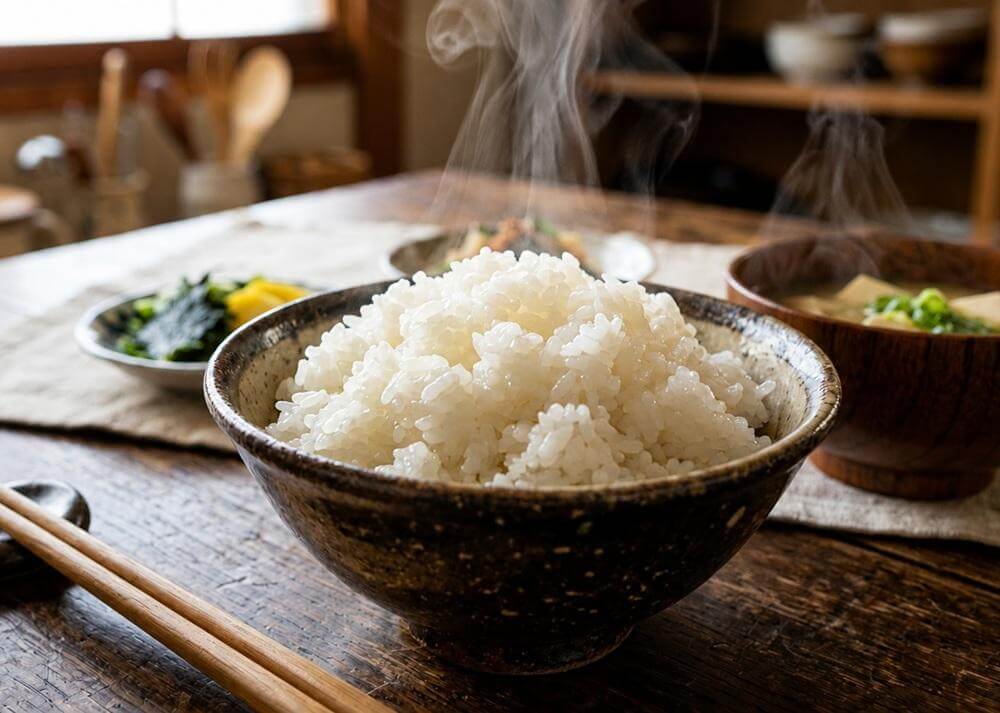
The first thing I couldn't get right, after moving to Australia, was cooking a decent bowl of rice.
In Japan, rice isn't a side dish. It's at the centre of the meal. Grilled fish, curry, pickles, and miso soup are all served with rice. When the rice isn't right, the whole meal feels different.
Since moving to Australia, I've spent years trying to perfect rice. I went through several rice cookers, but none of them came close to the rice I wanted. Then, a few years ago, I finally found the solution. This article shares what I learned, so you can enjoy delicious Japanese-style rice without years of trial and error.
Why Japanese Rice Is Hard to Cook Outside Japan (Rice & Voltage Issues)
Cooking rice sounds like the easy part of Japanese cooking. Rinse it, add water, press a button. Back in Japan, I never thought about it much either.
That changed the moment I started cooking for myself in Australia.
The first problem is the rice itself. In Japan, the rice most people eat has a natural stickiness and sweetness once cooked. Plump grains that hold together without turning gluey.
My parents grew their own rice, harvesting a full year's supply, and I grew up eating that rice without knowing it sold for well above what most households bought. My palate, it turned out, had been set by it. The short-grain rice on sale at an ordinary Australian supermarket carries the same label, "short grain rice," but the variety, the milling, how long it's sat since harvest, changes its texture and flavor entirely.
Japanese-grown rice is available for purchase here too, at Asian grocery stores, but the price puts it out of reach as a daily staple, especially with two growing boys at the table. What I wanted wasn't rice for a special occasion. I wanted rice I could buy without thinking twice, cooked well enough to eat every day.
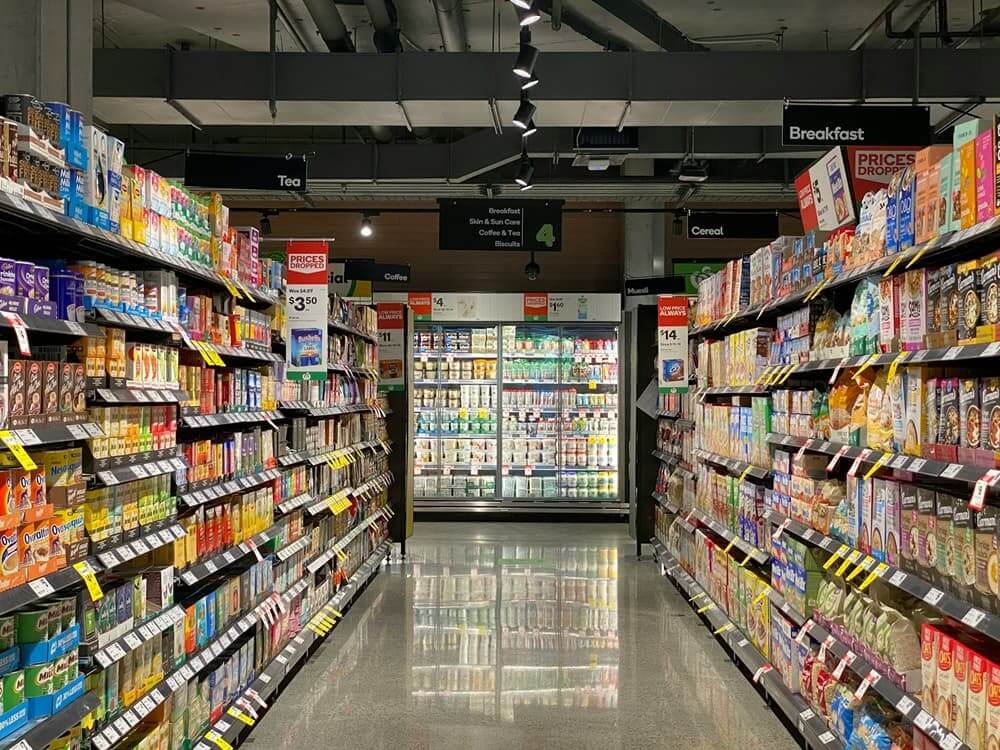
Photo by Franki Chamaki on Unsplash
Then came the rice cooker problem. Yes, we can buy rice cookers here too, but they aren't the same thing as the ones Japanese people use. Since rice is the heart of Japanese cooking, Japanese manufacturers put enormous effort into developing extraordinary rice cookers at every price point, but they're built for 100-volt power, and Australia runs on a different voltage entirely. A transformer can bridge the gap, but for an appliance used daily, the size, the safety, the cost involved stop feeling worth it. There are rice cookers made for the export market as well. I once spent over 500 dollars on one and carried it home in my luggage, hoping this would finally be the machine that closed the gap.
It wasn't.
The rice it cooked wasn't inedible. It simply never had the stickiness, sweetness, the slight chew I was after. Even with an expensive machine doing the work, neither I nor my family called it good. I thought about testing the cooker with the imported Japanese rice sold here, just to see. I decided against it. My goal was never to prove that good rice existed somewhere on a shelf in Australian stores. It was to cook the rice readily sold in most Australian supermarkets, and cook it well. What I actually needed wasn't a better machine. It was a different method, one built around the rice I could actually buy.
Why a Pressure Multicooker Makes Better Japanese Rice Than My Rice Cooker
The turning point came when I bought a Crock-Pot Express to keep homemade natto warm while it fermented. It's a multicooker built for pressure cooking, slow cooking, even homemade yogurt, the same category as the better-known Instant Pot in the US. For a while I used it for soups and stews and little else. Cooking rice in it never crossed my mind. For me, rice is cooked in a rice cooker. Period.
Then one day I was looking at an ad for a Japanese pressure rice cooker, and the word "pressure" caught my attention. If a rice cooker could use pressure, why couldn't the Crock-Pot do the same thing?
I wasn't expecting much, if I'm honest. The first attempt came out mediocre. Cooking under pressure meant rethinking the water ratio from scratch, and I hadn't worked that out yet. What kept me experimenting with this method was its incredible efficiency. A standard Japanese rice cooker takes close to an hour on a normal setting. The Crock-Pot cut that by more than half. Working full-time, that alone was reason enough to keep experimenting.
A few attempts later, I'd worked out the cooking time and water ratio for our usual short-grain rice. I still remember the moment I finally got it right. I opened the lid and there it was, the glossy, plump rice I'd been chasing since I left Japan, the kind no rice cooker here had managed to reproduce. I took a bite. The grains had taken up just the right amount of water, with a gentle sweetness and stickiness, and that chewy quality I remembered. All from the same modest short-grain rice I bought at Woolworths, not some imported, premium bag from Japan.
This was the rice I'd been looking for.
I spent years trying to recreate the rice I grew up with. Ironically, the appliance that finally got me there wasn't a rice cooker at all.
I'd assumed all along that good rice required a better, more expensive rice cooker. What actually made the difference was never the price tag or the brand. It was pressure, the ability to set cooking time down to the minute based on the rice I chose, and getting the amount of water right. The short-grain rice sold here was never going to be identical to what I grew up on, and that was exactly why a multicooker, with settings a standard rice cooker doesn't offer, turned out to be the better match.
Why I Use Two Multicookers (and Dedicate One Entirely to Rice)
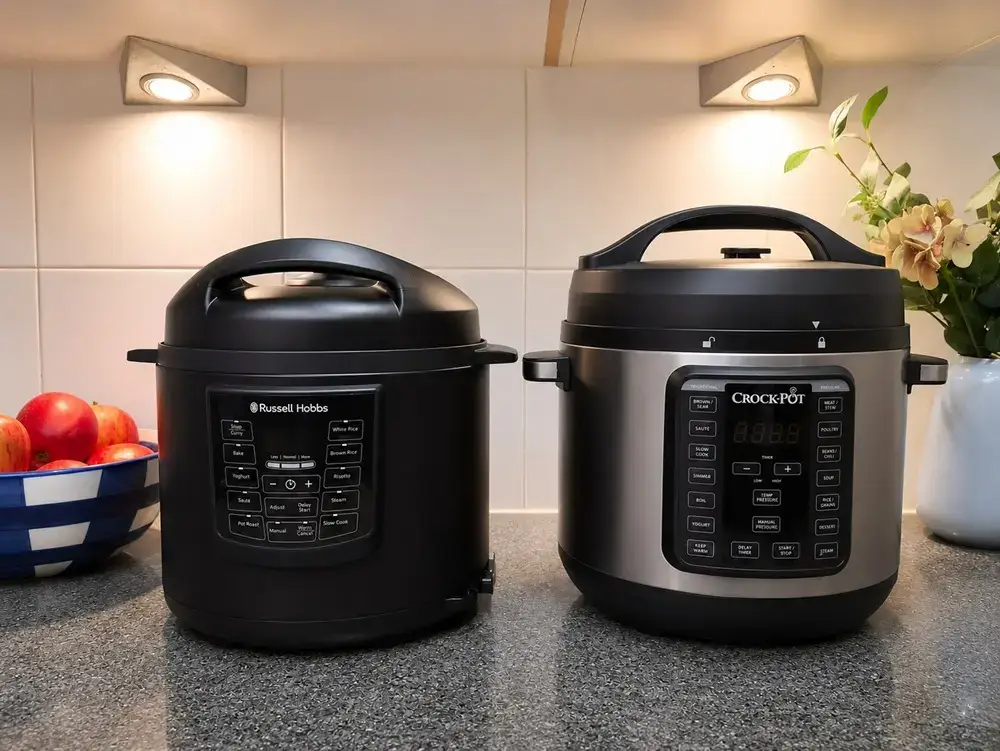
At last, I could cook rice that my family and I were happy with.
But using it every day brought a different problem.
The Crock-Pot Express was never meant to be a rice cooker in my kitchen. It was already my everyday workhorse, soups, stews, fermenting natto, general pressure cooking. Whatever I made, it went in that pot.
Which meant that whenever it was busy cooking rice, nothing else could go in it.
There was a subtler issue too: the smell that lingered in the inner pot. Cook a curry or a spiced stew, then cook rice in the same pot right after, and the scent never quite disappeared. A trace of it would carry into the rice. The smell of freshly cooked rice is its own kind of feast, better than almost anything else on the table, and I wasn't willing to let that be compromised.
So I bought a second multicooker, dedicated to rice alone. I chose a Russell Hobbs model, reasonably priced and easy to find in Australia.
I'll admit I had my doubts at first. Maybe the good rice had something to do with the Crock-Pot specifically. Using it put that worry to rest completely. Any pressure cooker with granular time settings could reproduce the cooking time and water ratio I'd worked out through trial and error, and the rice came out exactly as I expected.
Since then, the division of labor has become permanent in our kitchen. Russell Hobbs for rice, Crock-Pot Express for everything else.
Ironically, the $500-plus rice cooker I'd carried home from Japan with such effort barely gets used anymore. It's been sitting untouched for over four years now.
The Best Multicookers & Tools for Cooking Japanese Rice Outside Japan (US & Australia)
By now you might be wondering: so what should I actually buy?
If you already have a rice cooker you love, keep using it. There's no reason to change what works. But if you're in the same position I was, trying to cook the short-grain rice available where you live and get it right every day, here's what I'd suggest.
Best Multicooker for Japanese Rice in the US
My recommendation is an Instant Pot paired with a ceramic non-stick inner pot. Instant Pot is one of the most widely used multicookers in the US, which means recipes, troubleshooting, and community knowledge are all easy to find. Replacement parts and accessories are also readily available, which matters for something you'll be using for years.
I know Instant Pot comes with a stainless steel inner pot as default, but from what I've read in reviews from Japanese users, short-grain Japanese-style rice tends to stick more than expected in stainless. If rice is going to be one of the main things you cook, a ceramic non-stick pot will make daily use considerably easier.
Instant Pot Duo 7-in-1 Multicooker
The standard Instant Pot base unit, widely available with strong community support and easy-to-find accessories.
View at Amazon → Pair with the ceramic non-stick inner pot below for daily rice cooking.Instant Pot Ceramic Non-Stick Inner Cooking Pot
A genuine Instant Pot accessory pot with a PTFE and PFOA-free ceramic coating, designed to make rice release cleanly without sticking.
View at Amazon → Confirm the quart size matches your Instant Pot base unit before purchasing.Best Multicooker for Japanese Rice in Australia
Like in the US, Instant Pot with ceramic coating is a great choice, and I also personally recommend Crock-Pot Express and the Russell Hobbs multicooker, the two I use myself. Both cook the short-grain rice found at any ordinary supermarket to a result I'm genuinely happy with.
If you already own a multicooker, try using it for rice alongside whatever you already cook in it. And if your household eats rice every day the way mine does, setting aside a second machine just for rice ends up being the more comfortable arrangement in practice.
Crock-Pot Express Multi-Cooker
A pressure cooker, slow cooker, and rice cooker in one, with a removable non-stick bowl. The machine that led me to this discovery.
View at Amazon → I use this one for everyday cooking, not rice specifically.Russell Hobbs Digital Multicooker
A pressure multicooker with fine-grained time settings, reasonably priced and easy to find at major Australian retailers. This is the one I keep dedicated to rice.
View at Russell Hobbs → Confirm the inner pot finish (ceramic or non-stick) before purchasing, as this varies by model.What makes a multicooker worth the investment isn't limited to short-grain rice, either. Once you dial in the time and water for a particular variety, it can take other rice to another level too. Basmati alongside an Indian curry, jasmine rice for Thai cooking, even brown rice, each comes out at its best once you find the right settings.
Essential Tools for Cooking Japanese Rice
A few things beyond the multicooker make daily rice cooking easier.
The first is a rice paddle. It's an everyday object in Japan, but harder to find abroad than you'd expect, and a paddle designed specifically for rice, one that separates the grains without crushing them, changes how the rice handles more than you'd think.
Next is a draining bowl for washing rice. It makes rinsing at the sink far easier, and you no longer have to worry about grains slipping down the drain every time you tip out the water.
Plastic storage containers designed specifically for rice are worth having too. I always cook a bit more rice than we need and portion the extra into containers to freeze. Reheated in the microwave, it comes surprisingly close to fresh, and it's saved more weekday lunches and dinners than I can count.
Rice Paddle (Shamoji)
A curved, non-stick paddle designed to fluff and serve rice without crushing the grains.
View at Amazon →Rice Washing Bowl with Strainer
A perforated bowl that makes rinsing rice at the sink faster, without losing grains down the drain.
View at Amazon →Microwave-Safe Rice Storage Containers
Containers built specifically for rice, with a vent-free lid you can microwave straight through and a domed base that heats the centre as evenly as the edges. Dishwasher safe, and they stack neatly when not in use.
View at Amazon →You don't need to fill your kitchen with expensive appliances to bring Japanese cooking into a home outside Japan. What matters is choosing tools and ingredients that are easy to find locally and easy to keep using, wherever you happen to live. That, more than anything else, is the shortest and realistic path to satisfying Japanese meals.
Frequently Asked Questions
What rice do I actually use in Australia?
I use an ordinary short-grain rice sold at Australian supermarkets, SunRice's Hinata, not anything imported or specially sourced from Japan. Rice grown in Japan, Koshihikari for instance, would likely cook up even better. But this is our family's daily staple, four people eating it every day, so what matters most to me is the good balance of quality and cost. Think of my method less as "how to cook expensive Japanese rice at its absolute best" and more as "how to cook the short-grain rice available where you live, well, every single day."
What is the best water ratio and cooking time for Japanese rice?
At home, I use 5 cups of raw rice (Australian measuring cups, 250ml) to 5 cups of water, cooked at high pressure for 7 minutes. This is the setting I landed on after a lot of trial and error, adjusted to the short-grain rice we buy regularly in Australia. For basmati, I use roughly double the water and a slightly shorter pressure time. The right setting changes with the type of rice, so enjoy experimenting with the amount of water and cooking time until you get rice you're happy with.
Do you let the rice rest after cooking?
The wait for the pressure to release does that job for me. Once the pin drops, I fluff the rice right away with a rice paddle. If I don't have time to wait, I release the pressure manually, and any rice I'm not serving right away just sits under the lid, which lets it finish resting on its own.
What rice should I buy in the US or UK?
If you're in the US, I'd try Botan Calrose rice. It's technically a medium-grain rice rather than short-grain, but it belongs to the japonica family and has a relatively low amylose content, so it cooks up soft and slightly sticky, much closer to Japanese rice than most long-grain varieties. If you're in the UK, you're in luck, you have far more options. Yutaka Sushi Rice and Tesco Sushi Rice are both easy to find at most major supermarkets.
Is eating rice as a staple good for your health?
I'm not a health expert, and whether it's healthier is hard to say definitively. One thing worth noting is that rice contains no gluten, so it may be worth considering if that's a concern for you. In Japan, generations have also built meals around rice paired with vegetables, fish, and soy-based foods. I think of rice less as a "health food" in itself and more as one part of a balanced way of eating that's shaped Japan's reputation for longevity.
Continue Reading


Some links in this article are affiliate links. If you make a purchase through them, Untranslated Japan may earn a small commission at no extra cost to you. We only feature products that meet our criteria for craftsmanship, usefulness, transparency, and cultural integrity.