
This article continues from What I Learned Before Making Matcha at Home.
Before I Bought a Matcha Whisk, I Thought Any Chasen Would Do
Honestly, at first I didn't think I needed a proper chasen at all. I'd only just started getting to know matcha, and I had no idea whether I'd love it, so a cheap, well-reviewed one from Amazon seemed like it would do the job. Looking at the photos, Japanese-made and imported whisks looked more or less the same to me. Both were made of bamboo. Non-Japanese chasen had decent reviews as well. It's bamboo, I thought. How different could it really be.
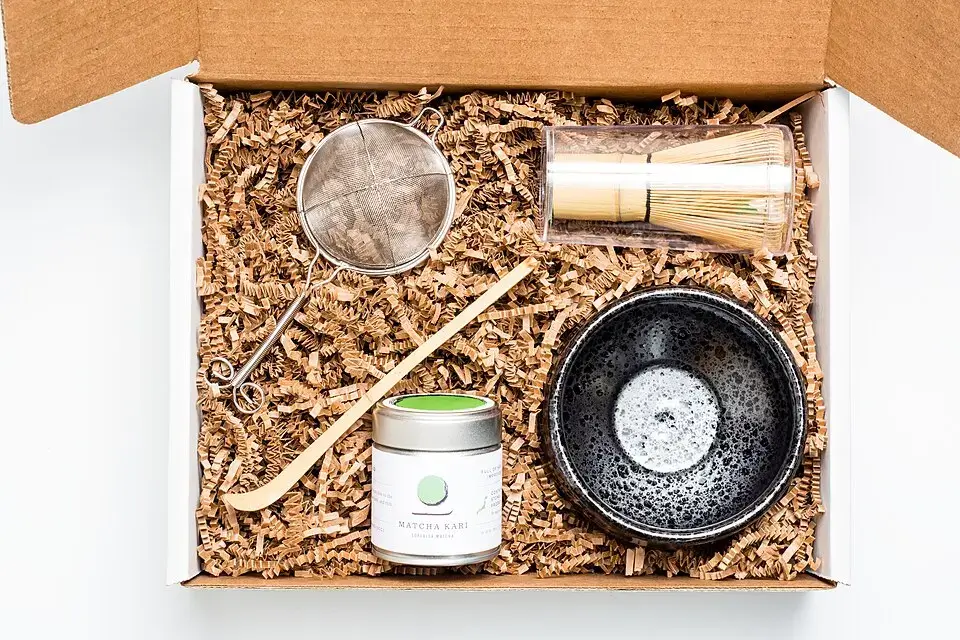
Photo by MatchaKari1, CC BY-SA 4.0, via Wikimedia Commons
But once I started looking into which one to buy, one question kept nagging at me. Why were the Japanese ones so expensive? At first, I assumed it was simply because they were handmade by craftsmen. The more I read, though, the more I realized the price wasn't just about "a craftsman made this."
A single chasen turned out to involve far more time, and far more people's work, than I had imagined. Somewhere along the way, I noticed I wasn't researching which whisk to buy anymore. I was researching how a chasen is actually made. By the time I finished, my thinking had completely changed.
Types of Japanese Chasen I Discovered Along the Way
Knowing nothing about chasen, I started by looking into what kinds were even out there. Every whisk looked pretty much the same to me, yet the product descriptions were full of words I'd never seen before: shiratake, kurochiku, susutake, "100 tines," "80 tines." Once I looked into it, each of these turned out to mean something specific, right down to what the whisk was actually meant for.
The Three Main Types of Bamboo Chasen
Chasen are made from bamboo, but there are three types you'll commonly come across.
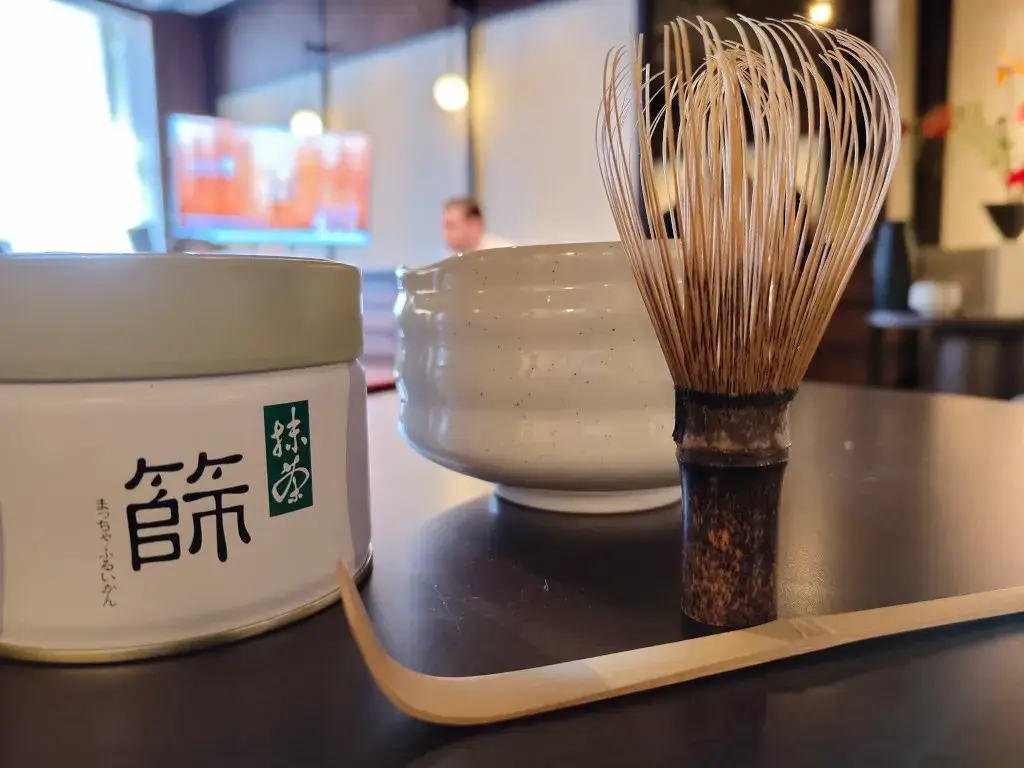
Shiratake (White / Bleached Bamboo)
Shiratake, or white bamboo, turned out to be the most common material for tea whisks. It isn't really a separate species. Green bamboo is harvested in winter, its natural oils drawn out, then bleached under the cold winter sun until it turns a soft, pale golden color. It's the type used most widely in tea ceremony, and the standard first choice for beginners, which explains why it kept coming up first in everything I read.
Kurochiku (Black Bamboo)
Kurochiku, black bamboo, comes from a natural variety whose culms darken to brown or black as it matures. In terms of performance, I found it's identical to white bamboo. The real difference comes down to color and character. With its quiet, understated look, it's easy to see why some people choose it purely for how it looks in the hand.
"Preparing to make japanese tea" by JuliaC2006, CC BY 2.0
Susutake (Smoked Bamboo)
Susutake, smoked bamboo, had a completely different story behind it. It's reclaimed from the roof structures of old Japanese farmhouses, where it spent decades, sometimes centuries, slowly curing into a rich amber color from the smoke of the hearth below. Genuine susutake is extremely rare today, and it's mostly reserved for high-end, artisan-crafted whisks.
At this point, I found myself oddly drawn to the idea of a whisk made from bamboo that spent decades absorbing smoke in the ceiling of an old farmhouse. That's probably a story for another article.
Understanding Chasen Tine Counts
The other finding was the tine count. Listings mention things like chuaraho, kazuho, "80 tines," "100 tines," and at first I assumed more tines simply meant a higher-end whisk. That's not quite it. The number is really about how you intend to whisk your matcha, not how expensive the whisk is.
For usucha, the everyday, lighter style of matcha, whisks like kazuho, 80-tine, and 100-tine versions are the common choices. More tines means the whisk incorporates air more easily, making it easier for a beginner to build a fine, smooth foam. The tradeoff is that each individual tine is thinner, so they're more prone to breaking with regular use.
Koicha, thick matcha, calls for a different approach. It isn't whisked into foam so much as slowly worked into a smooth paste. If the tines are too fine, they don't have enough body to properly knead the tea. That's why a coarser whisk, like a chuaraho, with thicker, sturdier tines, is used instead.
Looking further, I found that even the two major schools of tea ceremony have their own preferences. Urasenke favors a fine, dense foam, while Omotesenke traditionally whisks with barely any foam at all. I hadn't expected the same bowl of matcha to vary this much, just based on which whisk made it.
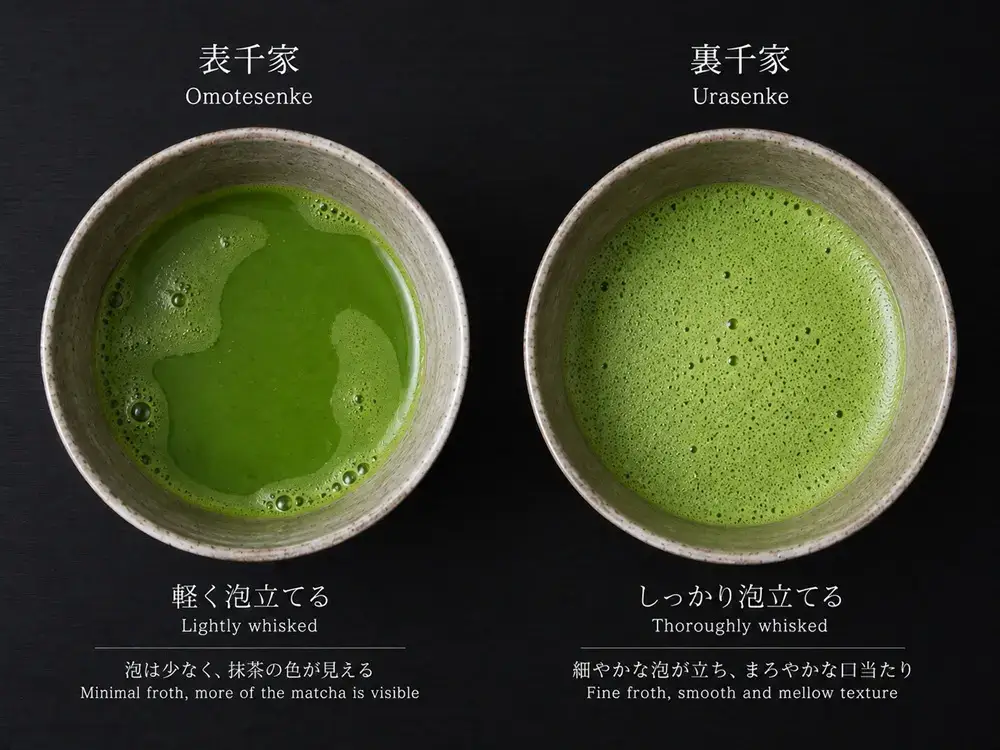
Photo by Untranslated Japan
Japanese vs. Imported Matcha Whisks: What I Learned
Even after all that, I still assumed an imported chasen would probably do the job.
Some imported chasen on Amazon have good reviews, and it felt reasonable to think, "this is probably fine." That's more or less where I stood too.
Then by coincidence, I came across this YouTube video, and I was completely blown away. This made me want to research a bit more before I settled with the imported Amazon chasen.
Every Japanese Chasen Is Still Made by Hand
I'd assumed that some Japanese chasen were fully handmade while others relied on machines for at least part of the process, the way a lot of traditional crafts quietly split the work between hand and machine these days.
That wasn't the case at all.
Every single step of a genuine Japanese chasen, every one of them, is still done entirely by hand, by a trained craftsman. There's no machine-assisted middle ground. And it isn't because anyone is being sentimental about "the old way of doing things." It's because a machine simply can't do it.
A single piece of bamboo is split into fine strands, softened in hot water, and then each tip is shaved down to less than a tenth of a millimeter before being curved gently inward one by one. Every piece of bamboo differs slightly in hardness and thickness, and a craftsman adjusts by feel as they work. No machine capable of that kind of judgment exists yet.
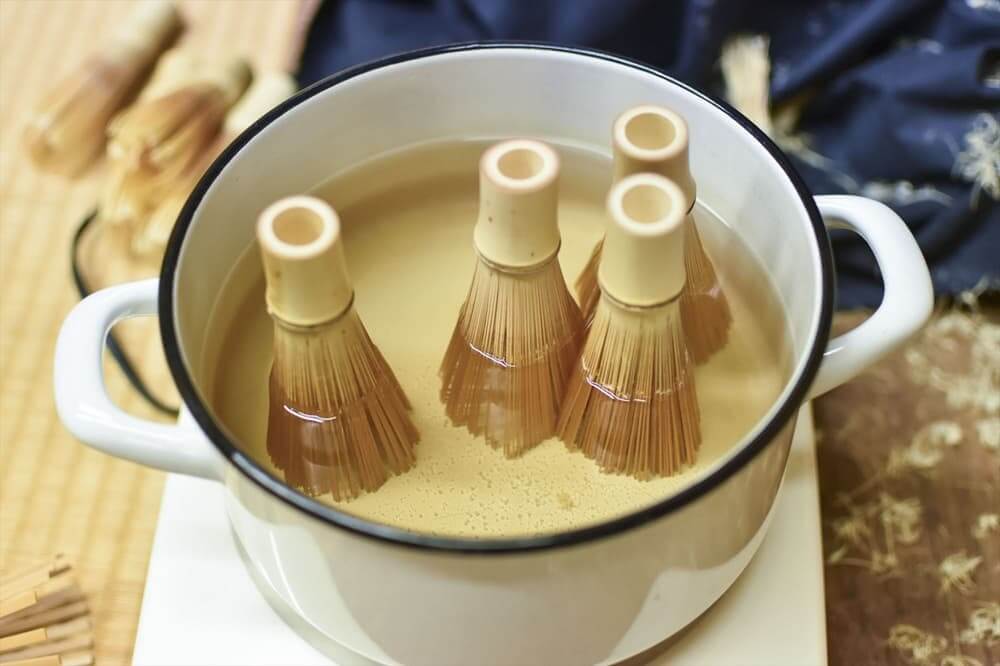
Photo by YY&L, via Photo AC
What surprised me even more was learning that roughly 90 percent of all Japanese-made chasen come from one place: Takayama, in Ikoma City, Nara Prefecture. A technique passed down for more than 500 years, and every workshop there still relies on nothing but a small knife and a file.
At this point, I felt satisfied. Of course Japanese chasen cost more, I thought. They're carved by hand, one by one.
But then, that raised a question. If a machine truly can't do this work, wouldn't an imported whisk also end up being made by hand in the end?
So What Actually Separates Japanese and Imported Whisks?
Looking into it, I couldn't find much detail published about how imported chasen are actually made. But the final steps, splitting the bamboo, shaving the tines, shaping the whisk, do seem to be done by hand in most cases, wherever they're made.
So where does the real difference come from?
Digging further, three differences stood out.
The first came down to how the bamboo is dried. In Japan, bamboo harvested in winter has its oils removed, then spends two to three years drying and aging naturally. During that time, roughly forty percent of it cracks or warps and gets discarded. What survives that process is bamboo tough enough to resist cracking at the shaft or snapping at the tines later on. Imported bamboo, from what I found, sometimes goes through a shorter drying period, occasionally sped along with chemical treatment or rapid drying, which can leave the finished whisk more prone to breaking with use. Not every imported whisk works this way, but it was the first time I understood that durability starts years before the whisk is even carved.
The second difference was in how the foam turns out. Japanese chasen are shaved so the tines taper thinner toward the tip, giving them a springy, flexible quality. That subtle flex is what lets the tines move easily through the water and build a fine, smooth foam quickly. Imported whisks, often made through divided or standardized processes, sometimes leave the tines slightly thicker or less flexible. You can still make a decent bowl of matcha with one. It's just harder to get the same fine texture.
The third was about safety. Japanese makers are upfront that no chemicals are used, just untreated bamboo shaped by hand. Some imported whisks don't disclose much about anti-mold treatments or bleaching. That doesn't mean every imported chasen uses chemicals, or that none of them are well made. It just means that without that information published, it's hard to know either way before buying.
By this point, I was starting to think that what really separates a Japanese chasen from a non-Japanese one isn't something you can see at first glance. I was especially drawn to the process that takes place before the bamboo ever reaches the hands of a craftsman. How is the bamboo actually prepared in Japan?
Why Are Japanese Chasen So Expensive? It Starts Long Before They're Made
I wanted to understand what this traditional bamboo preparation process actually looks like in Japan today. Looking into it, there turned out to be far more time, and far more steps, involved before a craftsman even picks up a knife than I'd expected.
Bamboo Is Harvested Only in Winter
The first surprise was that bamboo for a chasen can't just be harvested any time of year. It's cut once a year, sometime between December and February.
Why winter?
From spring through summer, bamboo draws up a lot of water and nutrients through its roots. Cutting it during that season makes it much more prone to mold and insect damage. In winter, bamboo enters a dormant period, so its water and sugar content drops. The cold also tightens the bamboo's fibers, making it sturdier and less likely to crack once it's shaved down thin.
I'd always assumed bamboo was bamboo, whatever the season. Just from this first step, I was already wrong.
Aburanuki: Removing the Natural Oils
The harvested bamboo isn't used as it is. The first thing done to it is called aburanuki, boiling the bamboo in hot water to draw out excess oil and moisture.
At first, boiling bamboo seemed unnecessary to me. But it turns out this step lets the moisture inside the bamboo escape smoothly and evenly later on, rather than unevenly, and it tightens the bamboo's fibers, giving it more durability and a more consistent springiness.
Once aburanuki is done, the bamboo starts turning from something that was simply growing in a field into material for a whisk that will actually last.
Kanzarashi: Drying Bamboo in Winter Sun and Wind
After aburanuki, the bamboo is dried outdoors for one to two months. This step is called kanzarashi, cold-air bleaching, and in Takayama, Nara, the whisk-making region, it's become a familiar sight of winter.
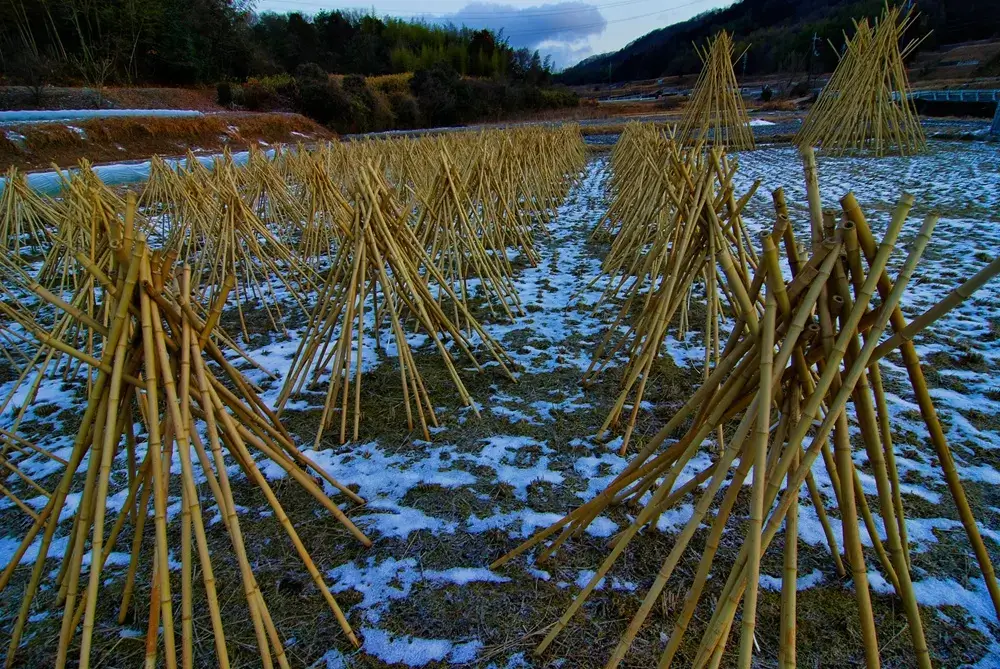
Photo by けんけん, via Photo AC
Here too, the bamboo isn't just drying passively. Winter sunlight slowly turns it a beautiful golden color, and the dry winter wind draws moisture out gradually, which helps prevent the cracking and warping that comes from drying too fast. The sunlight, and the harsh cold of winter nights, are also said to have a natural disinfecting and pest-repelling effect.
There was something distinctly Japanese, I thought, about shaping a material by simply letting nature do the work.
Two to Three More Years of Aging
This was the part that surprised me the most.
Bamboo that's been through kanzarashi still isn't ready to become a chasen. It's left to rest in a well-ventilated space for another two to three years.
That long stretch of time lets even the smallest remaining traces of moisture escape, and it settles whatever tension is still pulling the bamboo to warp or twist. After aging this long, the bamboo's fibers stabilize, the blade moves through it more cleanly, and it gains just the right balance of hardness and flexibility needed to shave its tines down to a fraction of a millimeter.
During this aging period alone, roughly forty percent of the bamboo cracks or splits and becomes unusable.
My first thought was that this seemed like an awful waste. But looked at differently, it's really a kind of quality test that nature runs on its own. Only the bamboo that survives that long, difficult stretch of time finally makes its way to a craftsman. And the final products are meant to last.
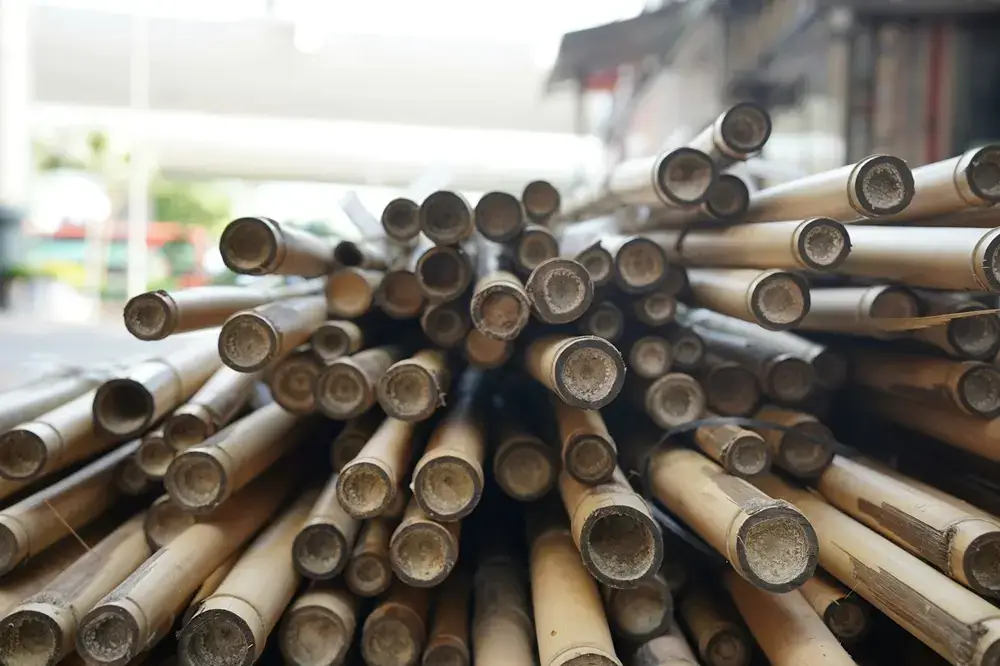
Photo by Lewis Yin on Unsplash
By this point, it finally clicked for me.
The price I'd been looking at wasn't really "the price of one whisk." Someone cuts the bamboo in winter. Someone removes its oils. Someone manages the cold-air bleaching outdoors, and someone oversees years of aging. Only after all of that does a craftsman finally sit down and carve it, by hand, one at a time.
Years of work from several different people were packed into that one small object.
Knowing all of this, I found myself thinking, "I really do want a genuine Japanese chasen."
But right around then, another question was waiting for me.
Could I actually get a genuine Japanese chasen in Australia in the first place?
Trying to Buy a Genuine Japanese Chasen Outside Japan
The price that had seemed high at first made a lot more sense once I understood everything that went into it. I was ready to buy one.
I searched for a Japanese chasen in Amazon Australia.
No luck.
I checked Amazon US as well.
Nothing.
Surely Amazon Japan would have it, I thought. But searching "Takayama chasen" turned up almost nothing I could actually trust as genuine. Rakuten was much the same.
Maybe I was just searching wrong, I thought. I tried different keywords, searched by Japanese maker names, and looked through tea shop websites. As a last resort, I even considered ordering from a long-established Japanese chasen maker online, having it shipped to my family's house in Japan, then having them forward it on to me.
That's when I ran into something even more surprising. Many genuine Japanese chasen were sold out, even on the makers' own official sites. What is going on?
Why Genuine Japanese Chasen Are Becoming Harder to Find
It turned out I wasn't the only one who couldn't buy one. Right now, high-quality, genuine Japanese chasen are in short supply across the country, and it isn't down to just one cause.
The first is the global matcha boom. Far more people overseas are drinking matcha now, and demand for Japanese-made chasen is coming from outside Japan as well as within it. Apparently plenty of overseas visitors travel to Takayama, Nara, just to buy one in person.
Supply, meanwhile, can't easily keep up. Chasen are still made entirely by hand, so a rise in orders doesn't translate into mass production. On top of that, the craftsmen themselves are aging, and there aren't enough new people training to take over.
Even the Bamboo Is Running Short
Digging further, I found the fascinating facts that are contributing to the shortage of bamboo itself.
Having grown up somewhere with bamboo groves nearby, I'd always assumed bamboo was something Japan simply had plenty of. That may be true, but the bamboo suitable for a chasen is actually very limited. It has to be the right type, thickness and age.
Hachiku, the bamboo species used for chasen, has an odd habit. It flowers all at once roughly every 120 years, and once it does, the entire grove dies off soon after. I found a 2023 study from a research team at Hiroshima University that had actually tracked this. According to their records, hachiku across Japan last flowered on a mass scale between 1902 and 1908, and the cycle has already started catching up with us. In 2020, researchers in Higashi-Hiroshima recorded a hachiku grove flowering a few years ahead of the expected schedule. That timing alone explained a lot of what I'd been running into. And once a grove dies, the study noted it isn't easy to regenerate through seeding, and it's said that it can take more than ten years before the bamboo is usable again.
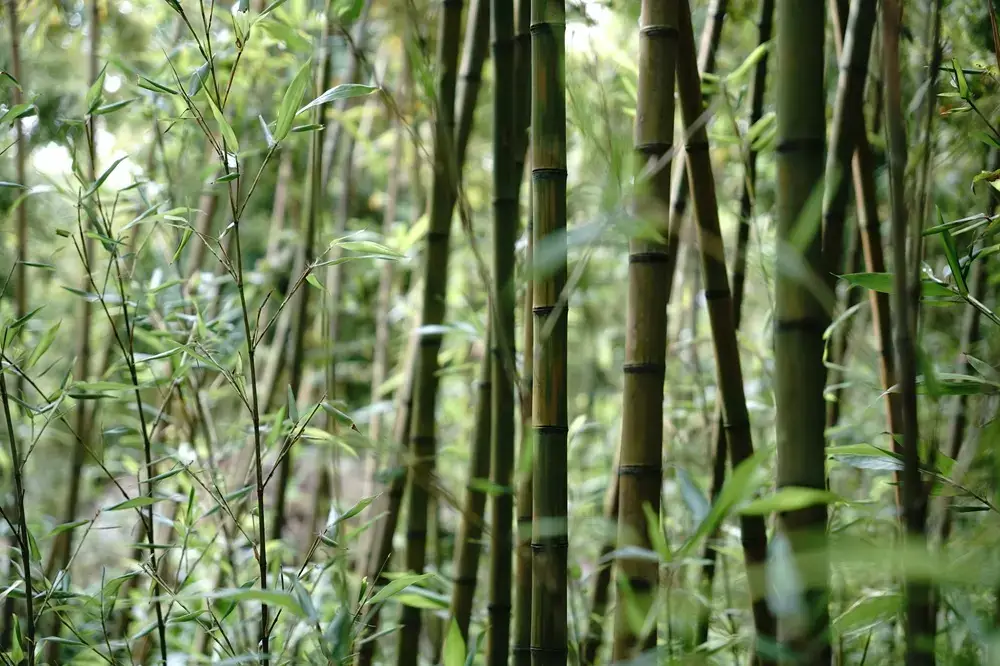
Photo by Hoang Anh on Unsplash
There was more to it, too. With fewer people managing bamboo groves, moso bamboo, a much sturdier species grown for construction, has been spreading into hachiku groves and crowding it out. And bamboo once regularly cut for building material isn't in demand the way it used to be, which has made the groves themselves harder to maintain.
In other words, "Japan has plenty of bamboo" turned out not to be the whole story.
The Starter Set I Finally Chose
I still wanted a genuine Japanese chasen. But realistically, I couldn't find one I could buy from Australia with any confidence.
So I shifted my thinking. I'd use a good imported one for now, and buy a Japanese one whenever I eventually came across one.
I spent more than two hours comparing listings, checking reviews, and reading product descriptions. Some claimed the bamboo had been "aged for two years," but there was no real way to verify those claims.
The more I searched, the more I realised that most imported chasen looked remarkably similar, regardless of the brand name. Different logos, different packaging, different prices, but very similar-looking whisks. At that point, I stopped worrying too much about which imported whisk was "the best."
Instead, I started looking at the set as a whole. I'd already bought a Japanese matcha bowl, so I didn't need a complete tea set. What I still needed was a bamboo scoop and, more importantly, a whisk holder. I'd also learned that a whisk holder isn't just for display. It helps the tines keep their shape as the whisk dries, which can make it last longer.
That turned out to narrow the options surprisingly quickly. Many sets included a bowl or sifter I didn't need. Among the sets that included only the tools I needed, I found myself zooming in on the product photos to check whether the whisk holder actually had an open base. That's an important feature because it allows air to circulate inside as the whisk dries. Surprisingly, many listings never showed the bottom clearly enough to tell.
Eventually, I found this starter set, which includes a 100-tine whisk, bamboo scoops, and a whisk holder with the open base I was looking for. It was also shipped directly by Amazon, which gave me a little more confidence about the purchase.
To my surprise, it was also much cheaper than I'd expected. After everything I'd learned about Japanese chasen, I was fully prepared to spend quite a bit more. Finding a set that included exactly what I needed at that price made the decision surprisingly easy.
Will I still buy a genuine Japanese chasen one day?
Absolutely. Now that I understand how much time, skill, and patience go into making one, I'd love to own one when the opportunity arises.
But I also realised that waiting for the perfect whisk wasn't bringing me any closer to making fluffy matcha at home. Now I'm really looking forward to receiving the products I chose and starting to use them.
Frequently Asked Questions
Why do some chasen have curled tips?
That curl is a sign of skilled handwork, shaped to help the tines catch air and produce a finer foam. It also uncurls naturally the first time you soak the whisk in hot water, so a tightly curled tip is actually a good sign that the whisk is unused and in good condition.
Should I be concerned about chemicals on my chasen?
Some inexpensive imported whisks are treated with anti-mold agents or bleach during production. Rinsing a new whisk in hot water a few times before first use helps reduce any smell or residue. If it's still a concern, choosing an untreated Japanese whisk, such as one made in Takayama, or a resin version, is the safer route. In everyday use, drying the whisk properly after each session matters more than chemical residue, since a damp whisk is what actually invites mold.
Why does the center of the whisk look closed up?
The thicker bundle of bamboo left at the center gives the whisk its strength and spring, letting it whisk vigorously without falling apart. On a new or well-cared-for whisk, that center sits tightly closed, and it opens up naturally once soaked in water before use. If it stays open even when dry, that usually means the whisk wasn't dried properly after a previous use, which can shorten its life and weaken the foam.
What is the thread wrapped around the base of the whisk for?
That binding thread holds the finely split tines in their curved, bowl-like shape so they whisk efficiently. It also works as a stopper, keeping the tines from splitting or snapping off at the base while you're whisking or washing the whisk. Traditional whisks use hemp or silk thread, which adds a bit of visual character along with its practical job.
How long does it take to make one chasen?
From harvest to finished whisk, the full process takes about two to three years, most of which is spent drying and aging the bamboo so it won't crack or warp later. The hands-on carving itself, splitting the bamboo into fine tines and binding them, generally takes a trained craftsman only one to two hours per whisk.
Sources & Primary References
- Yamada T, Imada K, Aoyagi H, Nakabayashi M, "Does monocarpic Phyllostachys nigra var. henonis regenerate after flowering in Japan? Insights from 3 years of observation after flowering," PLOS ONE, 18(6): e0287114 (2023). On hachiku's roughly 120-year flowering cycle and post-flowering regeneration. doi.org/10.1371/journal.pone.0287114
- Hiroshima University, press release on the 2020 Higashi-Hiroshima hachiku flowering and the research team's findings. hiroshima-u.ac.jp
- Nara Prefecture, official tourism information on Takayama and its bamboo whisk craft, including its share of national chasen production. pref.nara.jp
Continue Reading
This article contains affiliate links. If you purchase through them, Untranslated Japan may earn a small commission at no extra cost to you.