
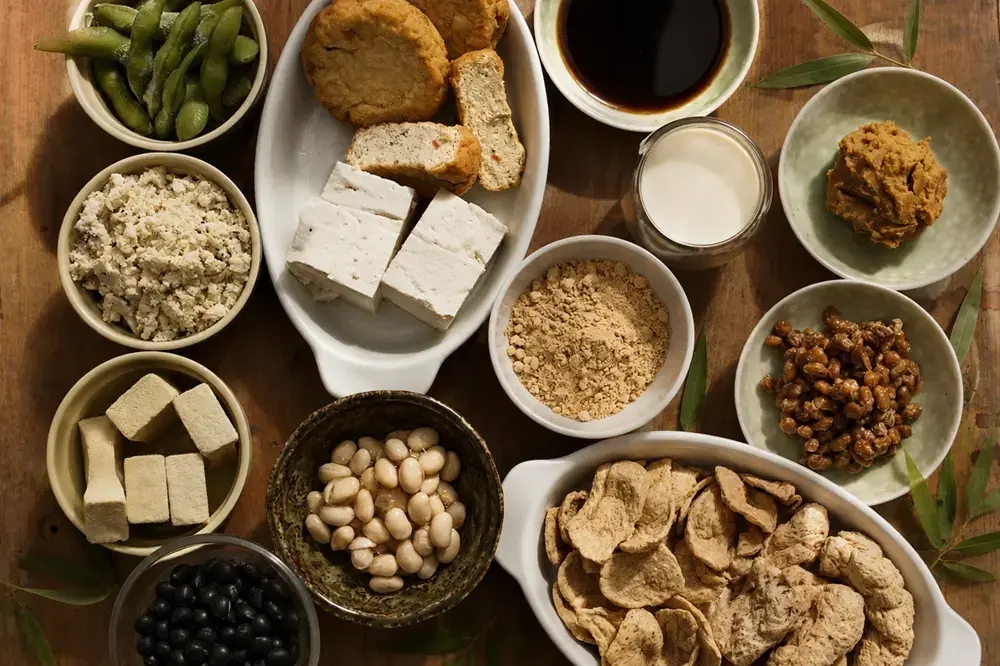
If you often cook soups or stir-fries, try replacing some of the meat with extra-firm tofu.
Protein-Forward Eating: Why I Started Seeing Soy as a Source of Protein
Lately, I've started looking at soy a little differently, largely because of my son, who's about to turn 14. He's never been much of a fish eater, and while he likes meat, we try not to rely on red meat too heavily, so we keep it to a few times a week. I'd love for him to eat more fish as a source of protein, but negotiating over it at every dinner is exhausting and takes the joy out of the meal.
Natto has become something of a saviour for us. My son loves it, and so does the rest of the family.
When we lived in Japan, keeping natto in the fridge and eating it daily never felt like anything special. It was cheap, easy to find, and supermarkets stocked plenty of varieties. That sense of "normal" disappeared once we moved to Australia. Natto is available at Asian grocery stores, but it costs roughly five times what I used to pay in Japan. That's fine as an occasional purchase, but it adds up fast for a family that wants to eat it regularly. For us, natto has never been a special-occasion food; it's something we'd happily have every day. So eventually I started making it myself in large batches, so we could keep eating it regularly. That's also what first got me thinking of natto not just as something I grew up with, but as a practical source of protein for my family.
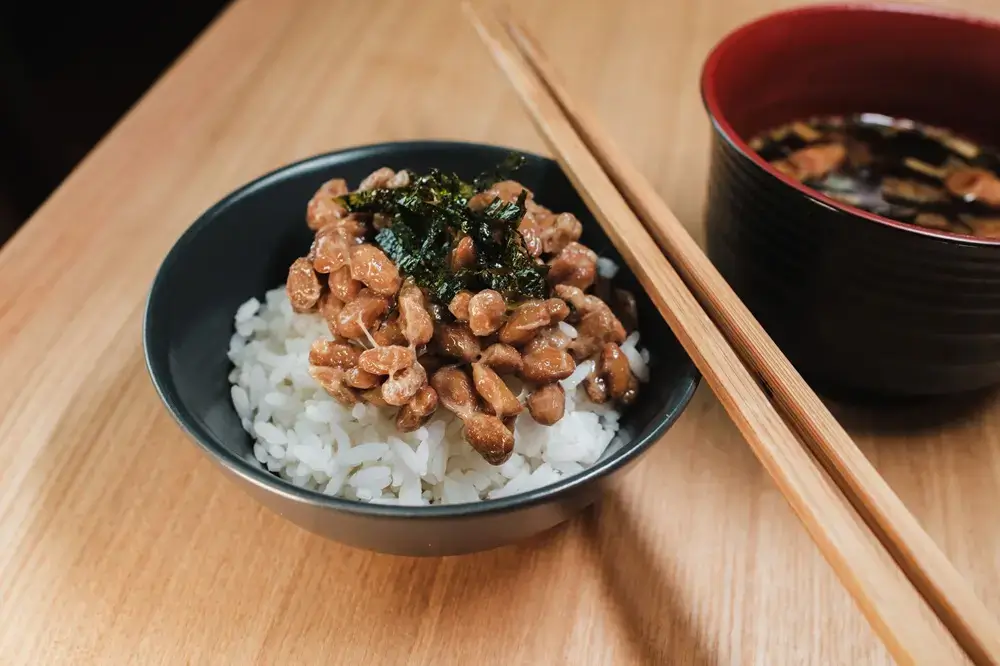
Photo by Airam Dato-on on Pexels
Protein, of course, has become hard to ignore. Supermarket shelves are stacked with high-protein yoghurts, cereals, snacks and protein bars, with the grams of protein on the label often doing the heavy lifting as a selling point.
And natto comes from soybeans. So do tofu, kinako and soy milk. Suddenly, foods I'd been eating since childhood started to look a little different.
Is soy actually a good plant protein?
So how good is it, really, as a protein source? Soy turns out to be one of the higher-quality plant proteins there is.
The proteins we eat are built from 20 amino acids, which our bodies use to build and repair tissues and to make many of the molecules needed for normal bodily functions. While our bodies can make 11 of these amino acids on their own, the remaining nine cannot be produced in sufficient amounts and must come from our diet. These are known as the essential amino acids.
One important part of assessing protein quality is its essential amino acid profile, including whether it provides all nine in sufficient amounts. Soy stands out among plant proteins because it contains all nine essential amino acids in a well-balanced profile, which is why it is widely regarded as a high-quality complete protein.
That means you don't necessarily need a protein powder or a specially formulated high-protein product to get your essential amino acids. Everyday foods like tofu, edamame and natto can provide them too.
None of this means we should stop eating animal protein and replace it all with soy. Meat and fish bring their own nutrients and benefits. But if you want a practical, everyday protein that can sit alongside animal foods rather than replace them entirely, soy is a genuinely useful option.
Real Food & the UPF Backlash: Not All "Soy Foods" Are the Same
Over the past few years, it has become almost impossible to read about food and health without coming across the term "ultra-processed foods," or UPFs. At the same time, more people are choosing foods with simpler ingredient lists. They are looking for foods where it's easier to see what they're made from and how they were made, rather than products built from a long list of refined ingredients and additives. This is part of the broader shift toward what is often called "real food."
Look at soy through that lens, and the picture gets more complicated. In English, all sorts of products can fall under the broad label of "soy food." Some, like edamame, are eaten in a form that is still very close to the original bean. Others, such as tofu and natto, are traditional foods that have been processed in relatively simple ways for generations. Then there are plant-based meat alternatives and protein snacks made with ingredients such as soy protein isolate and a long list of other components. They may all come from soybeans, but the foods we actually end up eating can be very different.
Processed food and ultra-processed food aren't the same thing
Processing food is nothing unusual. We cut it, boil it, dry it, ferment it, strain it, set it. Most of the foods we eat have been processed in some way, and tofu and natto are processed foods too. Processed and ultra-processed simply aren't the same thing.
One of the most widely used systems for thinking about UPFs is the NOVA classification, developed by researchers at the University of São Paulo in Brazil. Instead of looking only at nutrients such as calories or fat, NOVA sorts foods into four groups by the degree and type of industrial processing involved, and it's not simply a matter of counting how many steps a food has gone through. Foods in Group 4, the ultra-processed group, are industrial products made by combining ingredients extracted from foods, or industrially processed food components, often with flavourings, colourings, emulsifiers and thickeners added to create a particular taste, texture or appearance.
Cutting, cooking or fermenting a food is one thing. Breaking it down into components and rebuilding it into a new product is another.
That distinction matters once you apply it to soy foods. Take the plant-based meat products that have become increasingly common in supermarkets. Many use soy protein isolate or soy protein concentrate as a protein base, then combine it with oils, flavourings, thickeners, emulsifiers and other ingredients to recreate the taste and texture of meat. Soy may still be one of the starting ingredients, but the final food looks very different from the original soybean. Under the NOVA system, many commercially available plant-based meat alternatives are classified as ultra-processed.

Photo by cottonbro studio on Pexels
That doesn't automatically make a food "bad" just because it's classified as ultra-processed. Plant-based meat products vary a lot, both in ingredients and in nutrition. What matters more is that the word "soy" alone tells us very little about what's actually on the plate. Some soy foods, such as tofu and natto, make it relatively easy to trace how the original soybean became the final food. Others are built by extracting components from soy and combining them with several other ingredients. Soy foods sit across a surprisingly broad spectrum of processing.
So the useful question with soy isn't "Does this contain soy?" It's "What form of soy am I actually eating?" That question comes back again with the next big health trend, because soy isn't only a protein story. Depending on the form we eat it in, it can also bring fibre, oligosaccharides and fermentation into the picture, and that takes us straight into gut health.
Gut Health: Soy Brings Both Fibre and Fermentation to the Table
Gut health has become another major health theme, right alongside protein. From yoghurt and kefir to kimchi and kombucha, supermarket shelves are now crowded with foods and drinks labelled "probiotic" or "prebiotic." But gut health isn't simply about adding live beneficial bacteria from the outside.
Our intestines are home to tens of trillions of microorganisms, forming a complex ecosystem known as the gut microbiome. What we eat helps shape both the composition and activity of that community. In particular, some components our own digestive system can't fully break down, including fibre and certain types of oligosaccharides, can reach the large intestine, where gut bacteria put them to use. And once again, soy enters the picture.
Soy contains compounds gut bacteria can use
Whole soybeans and edamame contain fibre, and soybeans also contain oligosaccharides such as raffinose and stachyose. These soy oligosaccharides aren't completely digested in the small intestine, so some reach the large intestine, where gut bacteria can use them. In one randomised trial involving healthy adults and several types of non-digestible carbohydrate, soybean oligosaccharides were associated with an increase in Bifidobacteria.
That doesn't mean every soy food contains the same amount of fibre or oligosaccharides. Edamame, which remains relatively close to the whole bean, is different from soy milk, where the liquid portion is extracted, and tofu, which is then made from that soy milk. Different forms of soy leave us with different nutritional profiles.
So the same question comes up again here: "What form of soy am I actually eating?"
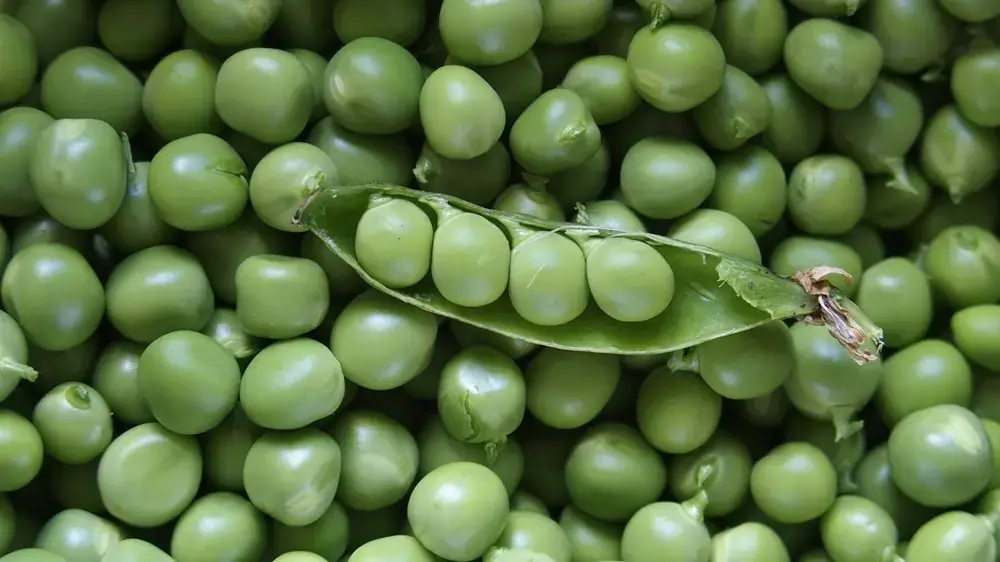
Photo by Jean-Michel GARCIA on Unsplash
Soy can also be fermented
Natto, miso and soy sauce all begin with soybeans, but through the work of microorganisms, they develop aromas, flavours and textures that are completely different from the original bean.
The natto I make every month is a good example. Steamed soybeans don't turn into natto on their own. I add natto bacteria and leave the beans to ferment at the right temperature. By the next day, a pale coating has formed across the surface, and when I stir the beans, they produce those familiar sticky threads. What was an ordinary batch of steamed soybeans the day before has become an entirely different food overnight.
During fermentation, microorganisms use compounds in the soybeans, breaking some down and converting others into different forms. So fermentation changes more than flavour and aroma; the form and amount of some components change too. Fermentation, then, is more than a way of preserving food. It's a process where microorganisms take one ingredient and turn it into something with genuinely different characteristics.
It's worth drawing a distinction here: fermented food and probiotic food aren't necessarily the same thing. The microorganisms involved in fermentation aren't always still alive by the time we eat the finished food. Some products are heat-treated during manufacturing, while others are heated during cooking. With miso, for example, processing and cooking can affect how many live microorganisms remain by the time it reaches the table.
So rather than casually describing miso and natto as magical foods that "deliver good bacteria to your gut," I think it's more accurate, and more revealing, to look at what fermentation itself does: microorganisms take soy and transform it into foods with entirely different characteristics.
Metabolic Health & Heart Health: What Does Soy Do After We Eat It?
Protein, real food, gut health. Another health term that has become increasingly common is metabolic health. Broadly speaking, it refers to how our bodies process what we eat and use it for energy, including blood glucose after meals, blood lipids, weight management and insulin function. And increasingly, the question isn't only what we eat, but how long we stay satisfied after eating. Here again, the protein in soy starts to matter.
Protein, satiety and the versatility of soy
Meals higher in protein tend to be more filling than ones built mainly around carbohydrates, and soy offers one way to add high-quality protein through ordinary food.
That doesn't mean soy has a unique advantage when it comes to satiety. Other high-quality protein foods can do much the same job. A study comparing soy and beef, for example, found little difference in appetite, satiety or how much participants ate afterwards.
What makes soy particularly useful is how many forms it can take. Meat is usually eaten as the main protein in a meal. Soy can do that too, but it can also appear throughout the day in many different forms, from tofu at the centre of a meal and edamame as a snack to soy milk at breakfast and kinako sprinkled over yoghurt or toast.
That flexibility makes it easier to spread protein across the day without relying on protein bars, powders or specially marketed diet foods. Instead, soy can remain what it has long been: ordinary food, eaten in many different forms as part of an everyday diet.
And once we move beyond what happens right after a meal and look at heart health, soy comes with a fairly solid body of scientific evidence behind it.
Soy and LDL cholesterol
Many health claims have been made about soy over the years. One of the better studied, and more firmly supported, is the relationship between soy protein and LDL cholesterol. Having high levels of LDL cholesterol in the blood over time is recognised as one of the major risk factors for atherosclerosis and cardiovascular disease. In a meta-analysis of 46 studies identified by the U.S. Food and Drug Administration, soy protein intake was associated with an average reduction in LDL cholesterol of around 3 to 4 percent in adults.
Three to four percent. At first glance, you might think, "Is that all?" But I actually find that modest number quite compelling. Soy isn't a fast-acting drug. It's not a magical food that dramatically changes your cholesterol after a single serving. It's simply an ordinary food that can be part of an everyday diet.
And yet this ordinary food has been tested in numerous clinical trials, with results showing a small but statistically significant average reduction in LDL cholesterol. I think that fact alone is meaningful. Health Canada, after reviewing the scientific evidence, has also authorised a health claim linking soy protein with lower blood cholesterol.
The point isn't to turn soy into an overhyped "miracle superfood that prevents heart disease." A more grounded way to think about it: choosing soy as one of your protein sources, instead of always turning to meat or protein products, may come with a modest additional benefit for your blood lipid profile beyond protein alone.
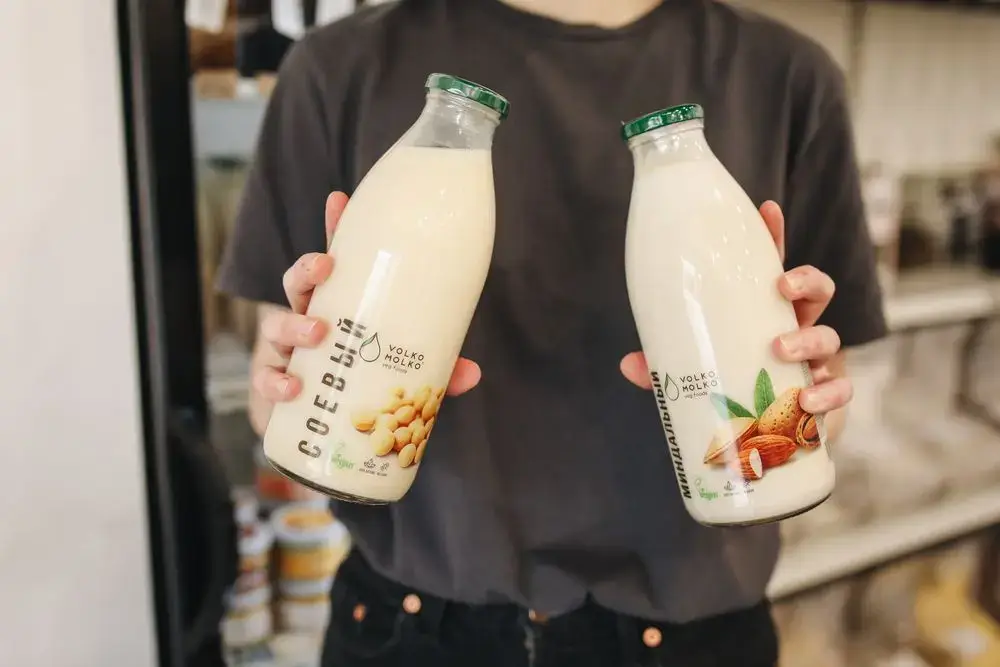
Photo by Polina Tankilevitch on Pexels
It's not just about adding soy. It's about what soy replaces
Simply adding soy on top of everything you already eat is very different from swapping out part of a meat-heavy main dish for tofu or another soy-based food. The overall nutritional change isn't the same.
A meta-analysis combining several randomised controlled trials that replaced some animal protein, including red meat, with plant protein such as soy, found average reductions not only in LDL cholesterol but also in non-HDL cholesterol and apolipoprotein B (ApoB), key blood lipid markers closely linked with cardiovascular risk. Soy protein may have its own modest LDL-lowering effect, and replacing foods higher in saturated fat with soy may add a further benefit on top of that. The two effects can work together to improve blood lipid profiles.
Of course, none of this means that meat or fish should be removed from the diet. Meat and fish provide important nutrients that soy doesn't offer in the same way, including vitamin B12 and heme iron, while fish can provide EPA and DHA. But at the same time, there's no need for every protein source in our diet to come from animal foods. Having more options means we don't have to rely too heavily on any one food. For me, that's another part of soy's value.
Sensory Maximalism: Soy Can Taste and Feel Like Completely Different Foods
When we think about everyday eating, there are some things a nutrition label simply can't explain. Does it taste good? Will I want to eat it again tomorrow? Those questions matter more than we sometimes realise. No matter how nutritious a food is, it's hard to keep eating the same thing every day just because it's "good for you." And this is where soy becomes genuinely fun.
Silky, sticky, juicy, crisp: all from the same soybean
Recent food trends have also put more emphasis on the full sensory experience of eating: not just taste, but texture, aroma, appearance and temperature. You sometimes see this described with phrases such as "Layers of Delight" or "Sensory Maximalism." And from that perspective, soy is a surprisingly unusual ingredient, because there's no single thing you could really call "the texture of soy."
Take silken tofu served chilled as hiyayakko. It's so delicate that it seems as though it might collapse under the spoon, then almost melts across the tongue with a smooth, custard-like texture. Its mild, gentle flavour lets soy sauce, ginger and other toppings come through clearly. Firm tofu, on the other hand, feels like a completely different food. As moisture is pressed out, the soybean flavour becomes more concentrated and the tofu develops a satisfying density and springiness. Because it holds its shape and has a more substantial bite, it can take centre stage in dishes such as grilled tofu steak or a hearty stir-fry.
Then there is natto, one of the most distinctive foods on the Japanese table. The steamed soybeans still have a pleasant bite, but their surface is covered in that unmistakable sticky texture. The more you stir them, folding air into the beans, the more the pale threads stretch between them. The richness of the soybeans is joined by the deep aroma of fermentation and plenty of umami.
Bright green edamame shows yet another side of soy. Push the beans from their firm pods and they pop out with a gentle springiness; bite into them and you get both a satisfying texture and the soybean's natural hint of sweetness. Even simply boiled with salt, they have plenty of character.
Aburaage, thin slices of fried tofu, is crisp and fragrant on the outside, while the inside develops a fine, airy, sponge-like texture. Drop it into dashi or miso soup and it quickly absorbs the liquid, releasing warm, savoury broth when you bite into it. Koya-dofu, or freeze-dried tofu, starts out hard and dry, but once rehydrated and simmered in dashi, its honeycomb-like structure soaks up the broth and releases it slowly with every bite.
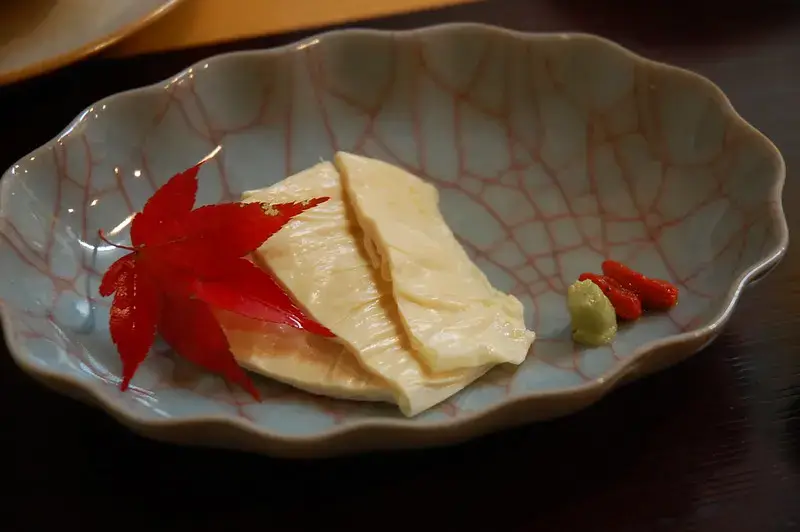
Yuba is more delicate still. It's the thin skin that forms on the surface of heated soy milk and is gently lifted away, giving it a smooth texture with just a little elasticity. A small amount of wasabi soy sauce is enough to let its subtle soybean flavour come through.
“DSC_6479” by hiro kobashi, CC BY 2.0
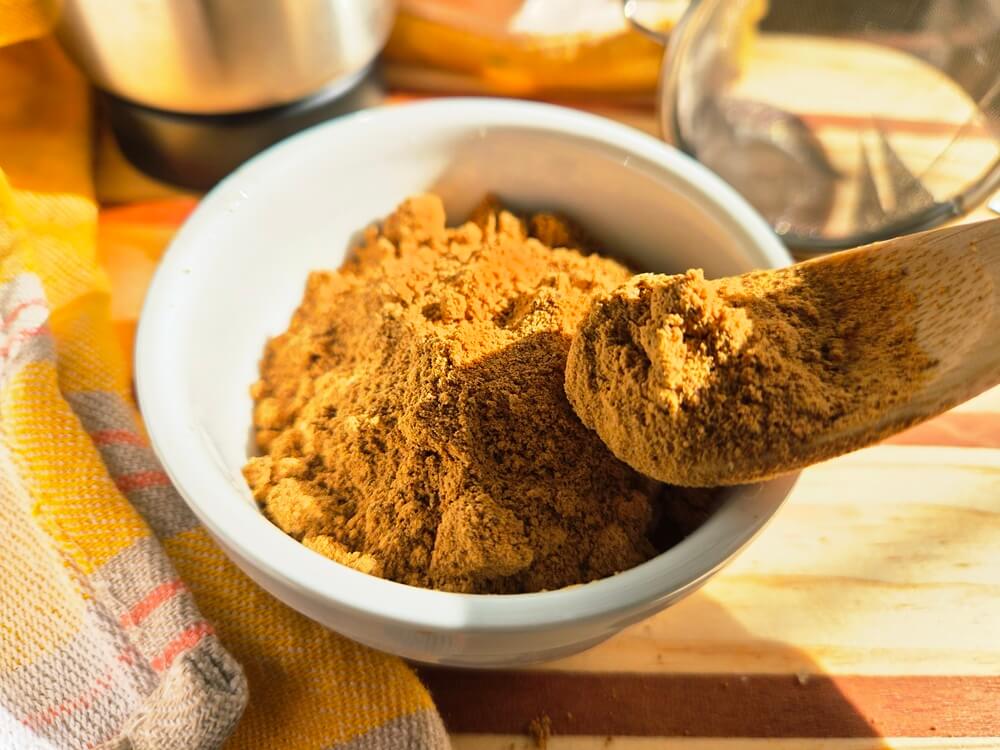
And then there is kinako. By this point, there's almost no visual trace of the original bean left. Roasted soybeans are ground into a fine powder, creating a soft, dry texture and a nutty aroma with a gentle natural sweetness. Sprinkle it over mochi, yoghurt or ice cream and that roasted fragrance rises as soon as you take a bite.
All of these foods begin with the same plant: the soybean. Eating soy doesn't mean eating one food over and over again. It can also mean enjoying the remarkable range of textures, flavours and dishes that one ingredient can produce.
Soy is both a canvas and a source of umami
Alongside all that variation in texture, another of soy's great strengths is the sheer range of flavour it can take on.
Tofu itself is mild and understated. But that's exactly what allows it to become a perfect blank canvas for other flavours. It works chilled with a little ginger, soy sauce or olive oil. It can absorb dashi in a warm soup. Or it can carry the punch of chilli and Sichuan pepper in a fiery mapo tofu. Because tofu doesn't overpower the ingredients around it, it can move naturally between Japanese, Western, Chinese and other cuisines.
Put soy through fermentation, however, and it can develop entirely different flavour profiles. Natto and miso, for example, become powerhouses of umami and deep, aromatic savouriness. And once you get to soy sauce, soy is no longer something that shows up on the plate as the main ingredient. It becomes the savoury foundation that can make almost any other ingredient taste dramatically better: the ultimate supporting player.
Depending on how it's prepared and what it's paired with, soy can take on such different forms that eating it often doesn't feel like eating the same thing twice. And that's part of soy's appeal that can't be explained simply by talking about how efficiently it delivers nutrients.
That variety also makes soy surprisingly easy to work into the meals you already eat.
A Simple Place to Start
You don't need to overhaul your diet or suddenly start eating soy every day. A much easier way is to begin with the meals you already eat and choose one form of soy that fits naturally into them.
Soups, stir-fries and meat dishes
A quick side dish or snack
Keep edamame in the freezer. It is one of the easiest ways to add soy to an ordinary meal.
Breakfast
If yoghurt or oats are already part of your morning routine, try adding kinako.
Toast
Try making a paste with two parts kinako, one part honey and one part softened butter as an alternative to sweeter spreads such as jam or Nutella.
If natto feels like a big first step
Try natto furikake over rice. It isn't the same as eating fresh natto, but it's an easy way to introduce a little natto into a familiar meal.
Patties or meatballs
Try replacing part of the minced meat with finely mashed or blended firm tofu to lighten the texture while keeping the meal satisfying.
The point isn't to find the “best” soy food. It's to find the form that fits most easily into the way you already eat.
Nature's Answer
Whenever a new health craze or diet trend appears, we tend to go looking for the next superfood or some elusive "perfect food." But sometimes, before searching somewhere far away for something new, it's worth taking another look at the familiar foods that have been sitting quietly beside us for generations.
And when I look at soy again through what we understand today, it feels surprisingly modern. In fact, it has come to feel like Nature's Answer: a familiar food that happens to fit remarkably well with many of the things we now value in the way we eat.
Frequently Asked Questions
Is soy a complete protein?
Yes. Soy contains all nine essential amino acids, which is why it is widely regarded as a high-quality complete protein and one of the stronger plant-based protein sources.
Does processing soy automatically make it an ultra-processed food?
No. Processing and ultra-processing are not the same thing. Cutting, cooking, fermenting, straining or setting a food are all forms of processing. The key distinction in the article is how the food is processed, what remains in the final food, and what other ingredients are added.
How can soy relate to gut health?
Whole soybeans and edamame contain fibre, and soybeans also contain oligosaccharides such as raffinose and stachyose that can reach the large intestine and be used by gut bacteria. The amount that remains varies depending on the form of soy food.
Are fermented soy foods the same as probiotic foods?
Not necessarily. Fermentation uses microorganisms to transform soy, but those microorganisms may not still be alive when the food is eaten. Processing and cooking can affect how many live microorganisms remain.
Can soy protein lower LDL cholesterol?
The article cites a meta-analysis of 46 studies identified by the U.S. Food and Drug Administration in which soy protein intake was associated with an average LDL cholesterol reduction of around 3 to 4 percent in adults. The effect is modest, but it has been observed across multiple clinical trials.
Continue Reading

This article contains affiliate links. If you purchase a product through one of these links, Untranslated Japan may earn a small commission at no additional cost to you.