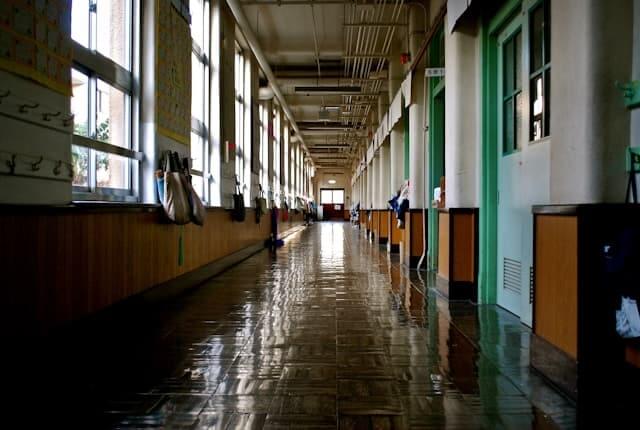
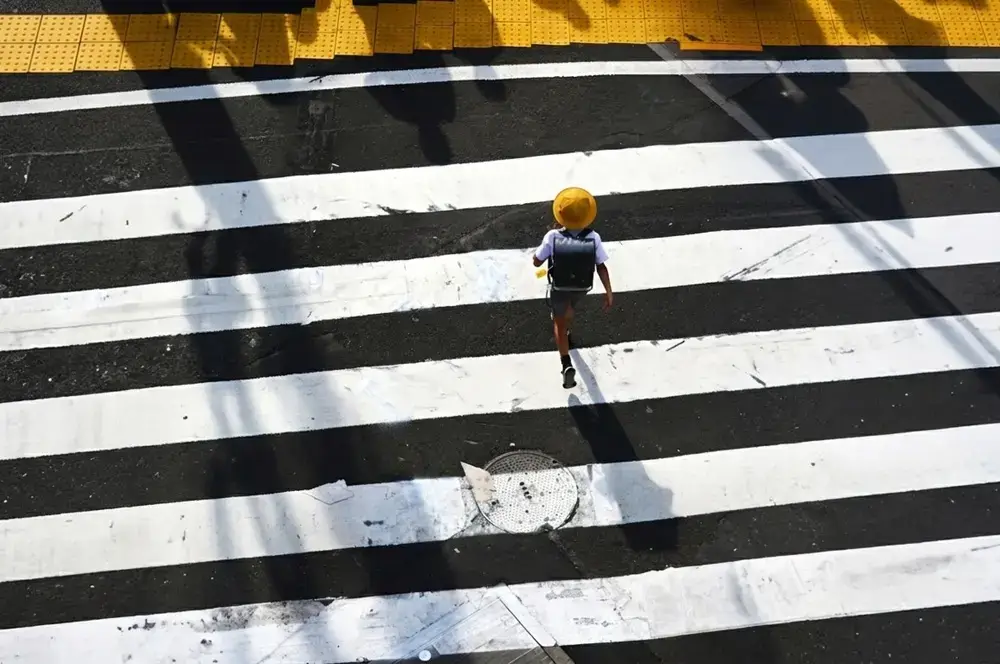
Every morning, the same scene plays out in residential neighborhoods across Japan.
A child, perhaps six years old, stands quietly at a crossing in a bright yellow school hat, a backpack almost as big as they are, waiting for the light to change. When it does, they cross the street and continue walking to school, chatting with a friend along the way.
There is no parent beside them.
In Japan, nobody finds this unusual. Office workers pass by on their morning commute. High school students cycle past. A neighbor heads to the convenience store. No one stops to watch. No one seems surprised. Outside Japan, though, the same scene often prompts a very different reaction.
"Can a child that young really walk to school alone?"
"Isn't that dangerous?"
For many people, Netflix's Old Enough! was the first time they had asked those questions. The answer most people arrive at is simple: Japan is a safe country. And that is certainly part of the story.
But is it really the whole story?
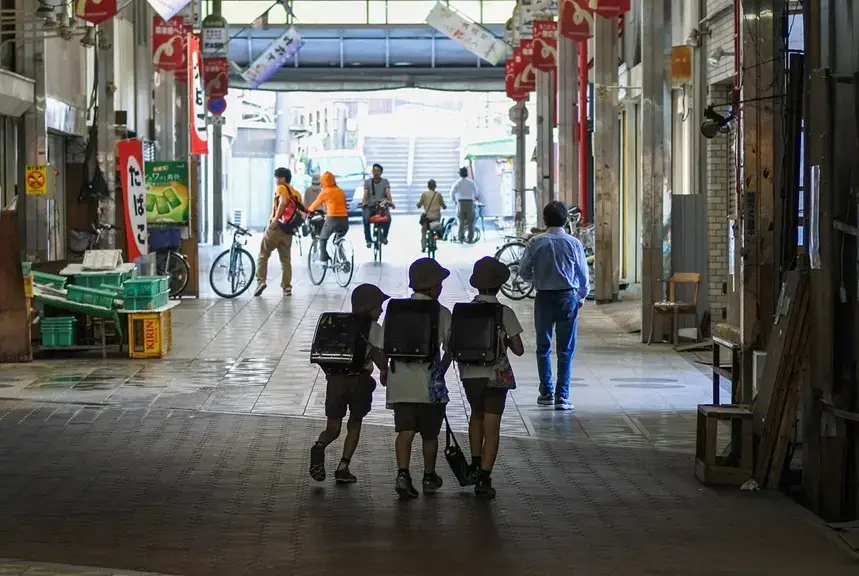
"ランドセルトリオ" by m-louis .®, CC BY-SA 2.0
The Reality Behind Japanese Children Walking to School Alone
It's easy to understand why this scene surprises people from outside Japan.
In the United States, the UK, and many other English-speaking countries, children are usually driven to school by their parents or take a school bus. Opportunities for young children to travel to and from school on their own are limited, and in some places, allowing a child that young to walk alone would be considered irresponsible.
Of course, not every English-speaking country is the same. Here in Australia, where I live, plenty of children walk or ride their bikes to school. Even so, seeing a six-year-old make that journey alone, every day, as a matter of course, is still unusual for many people.
That is why visitors to Japan, and many people who first encountered this scene through Netflix's Old Enough!, often ask the same questions.
"Aren't the parents worried?"
"What if something happens on the way?"
"How can they let such a small child walk to school alone?"
To many Japanese people, those reactions can seem a little exaggerated. But that does not mean Japanese parents worry any less. They worry about traffic. They worry about strangers. They worry about all the same things parents elsewhere do.
The difference is that they live with those worries while also sharing a deeply rooted understanding that this is simply how children grow up. It is a way of thinking shared not only by parents, but by schools and local communities as well.
Seen from that perspective, the scene on a Japanese street is more than an ordinary morning made possible by a safe country. It is a glimpse of a society that has spent generations making this ordinary.
So when, and how, does that way of thinking begin to take root in a child?
Photo by Yanhao Fang on Unsplash
Preparation Starts Before the First Day of School
If you imagine a Japanese first-grader setting off to school alone on the very first day without any preparation, the reality is quite different.
Before school even begins, most elementary schools identify a small number of recommended routes for children to use. Parents choose the one that best suits their home, then walk it with their child again and again. Where do you cross the road? Which traffic light do you use? What should you watch for at this corner where a car might not see them until it's too late?
"Cars sometimes turn here without much warning, so let's stop and look both ways first." Conversations like these are repeated over and over. Little by little, children learn the route for themselves. More importantly, they begin learning how to notice danger and make small decisions on their own.
Of course, that doesn't make the worry disappear. Surveys of Japanese parents consistently show that traffic accidents and suspicious strangers remain among their biggest concerns. Even so, most parents still support the idea of children walking to school.
One reason is simple: they grew up doing the same thing.
For many Japanese adults, their strongest memories of primary school are not of holding a parent's hand. They remember walking with friends. They remember following behind older students. And a few years later, they remember becoming one of those older students themselves, looking after the younger children on the walk to school.
Many look back on those mornings as an important part of growing up. Naturally, they want their own children to have the same experience.
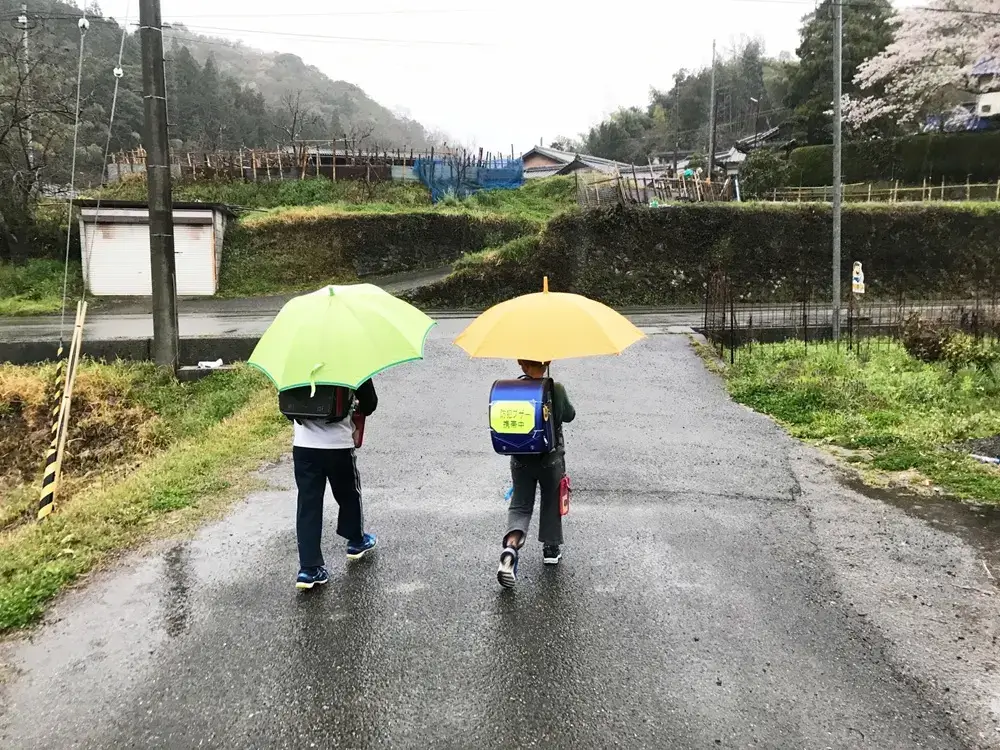
Photo by もじゃ, via Photo AC
In Japan, the idea that children should make their own way to school is less a written rule than something people simply take for granted.
That doesn't mean parents insist on walking under every circumstance. On rainy days, when a child is unwell, or in places where the school is simply too far away, parents may drive instead. But those situations are generally seen as exceptions rather than the everyday routine.
Parents do everything they can to prepare their children. They worry, especially at first. Then, little by little, they begin letting go, trusting that this is part of becoming independent.
And that trust is never carried by the family alone. Schools share it. Local communities share it. Even the streets themselves are designed to share it.
The Invisible Safety System Behind Every School Walk
Parents can let their children walk to school because, in reality, they are never completely on their own.
From the moment a child leaves home until they arrive at school, many people take on small parts of the responsibility.
School Walking Groups (Tokohan)
One of the best-known examples is the tōkōhan, or school walking group, found in many parts of Japan. Children who live in the same neighborhood meet at a designated place and walk to school together, usually led by the oldest students.
For a first-grader, almost everything is still new. Which crossing should you use? When is it safe to cross? The youngest children learn simply by watching the older ones in front of them.
The older students have responsibilities too. They make sure no one has fallen behind. They check that everyone has crossed the road safely. They keep an eye on the youngest children if someone looks lost or upset.
For many Japanese children, this is one of the first times they experience being responsible for someone other than themselves.
The Adults Along the Way
Not every school uses walking groups. In some areas, children walk to school individually along designated routes. Even then, they are rarely alone. On many school mornings, local volunteers and parents stand at busy crossings, holding bright yellow safety flags. As children pass, they exchange the same familiar greetings.
"Good morning."
"Have a good day."
The exchange lasts only a few seconds. But repeated every morning, it quietly teaches children that there are adults nearby who know they're there.
Along many school routes, you may also notice signs reading Kodomo 110-ban no Ie ("Children's Emergency House"). These are homes and local businesses where children can seek help if they ever feel unsafe or need assistance. The system is supported by local residents, schools, community organisations, and the police.
School Route Inspections
Schools keep watch too, in a more structural way.
Working with parent associations, local governments, and the police, they regularly inspect the roads children use every day. Dangerous crossings, poor visibility, missing guardrails, or heavy traffic are identified and reported, and schools may ask local authorities to improve the area.
Routes are reviewed when necessary, and parents are informed whenever new risks emerge.
In recent years, some schools have also introduced technology such as GPS safety tags or IC cards that notify parents when a child arrives at or leaves school.
School Zones and Green Belts on Japanese Roads
Many public elementary schools are surrounded by designated school zones.
Exactly how they operate varies from place to place. Some roads are closed to traffic during school commuting hours. Others introduce lower speed limits or temporary one-way systems to make walking safer.
In rural areas, where narrow roads often have no sidewalks or guardrails, the edge of the road is sometimes painted green to create what is known as a Green Belt. On school routes, these markings help make the space where children are expected to walk more visible and remind drivers to watch for young pedestrians.
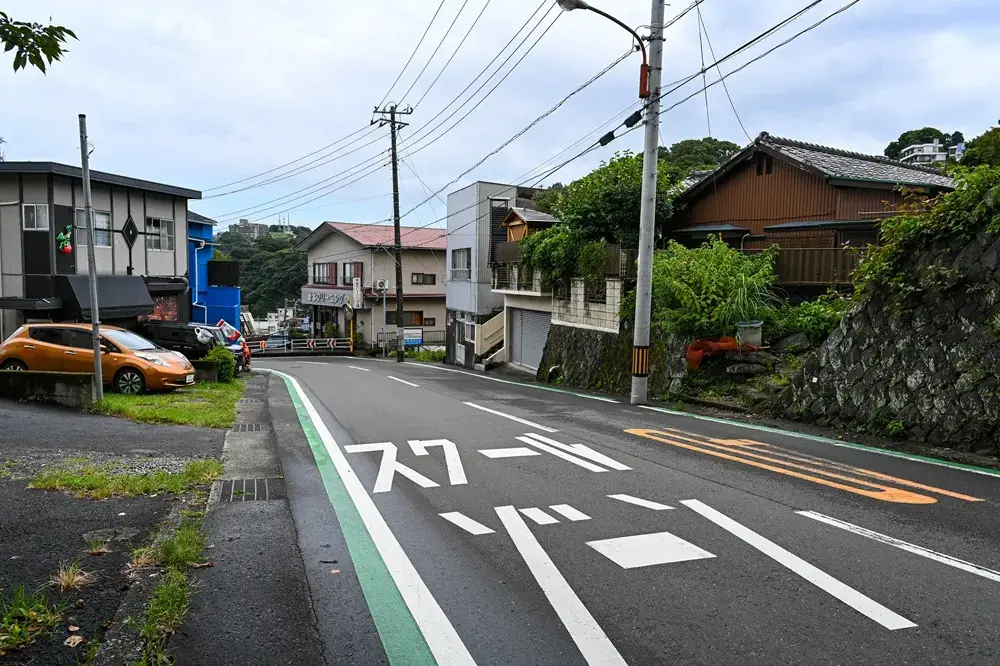
"スクールゾーン" by m-louis .®, CC BY-SA 2.0
Of course, not every part of Japan looks the same. In remote mountain communities and sparsely populated areas, schools may be too far away for children to walk, and school buses are often provided instead. In places like these, daily life depends much more heavily on cars.
Even so, wherever walking is practical, the expectation that children make their own way to school remains remarkably common.
When you look at the whole picture, it becomes clear that Japan is not simply a country where children are left to walk alone. The children may be the ones doing the walking. But the journey itself is supported by parents, schools, local communities, and even the streets they walk on. Each plays a small part. Together, they make it possible for children to make that journey on their own.
What Children Learn Beyond Getting to School
By this point, it's clear that walking to school in Japan depends on far more than the child alone.
But its purpose is not simply to help children arrive safely. The walk itself is part of the learning.
Developing Decision-Making Skills
Children are not just following the same route every morning. From the moment they leave home, they begin making one small decision after another.
"What time do I need to leave to reach the meeting point?"
"Should I cross before the traffic light changes, or wait for the next green?"
"Could a bicycle or a car appear from behind that parked vehicle?"
For an adult, these decisions are almost automatic. For a six-year-old, each one is new.
Building a Cognitive Map
When a child sits in the back seat of a car, they are taken to their destination. Familiar shops and intersections pass by the window, but they do not need to think about which road to take or where to turn.
Walking is different. Each turn gives them another landmark.
"After this house comes the narrow street."
"When the park comes into view, school is only a few minutes away."
By walking the same route day after day, children gradually build a mental map of their neighbourhood. Psychologists call this a cognitive map. It is more than memorising directions. Children begin to understand where they are, which direction home lies, where the dangerous places are, and where they can go if they need help. They learn the structure of their town by moving through it.
Fostering Independence
Walking to school also means taking responsibility for everyday mistakes. If a child arrives at school and realises they've forgotten their notebook, a parent is not driving just behind them with a spare copy. If rain starts falling and they chose not to bring an umbrella, they are the one who gets wet on the way home. If they leave the house too late, the other children in their walking group may be left waiting.
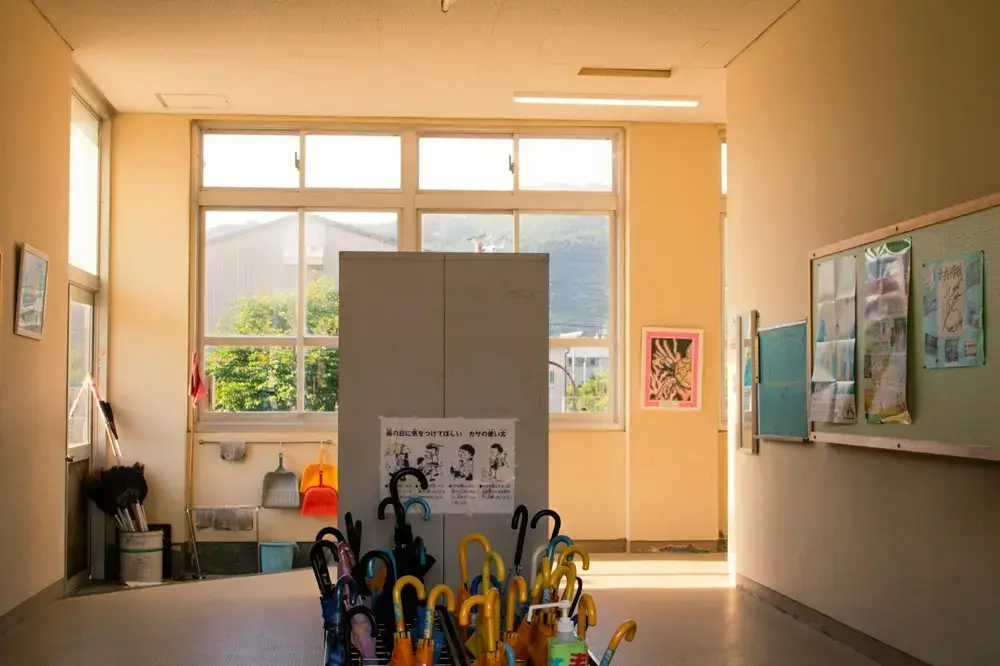
Photo by Rory Frasch on Unsplash
Of course, young children do not make every decision perfectly. They forget things. They arrive late. They trip over. Sometimes an older student reminds them what they should have done differently.
But those small failures matter. Instead of having every problem solved for them, children experience the consequences themselves. They learn to think about what they could do differently next time.
Little by little, they begin to trust their own judgement. Each successful walk to school becomes a quiet reminder: "I can do this."
The lessons are not only about themselves. In a walking group, the child who once followed behind an older student eventually becomes the older student. They wait for the younger children. They check behind before crossing the road. If the line begins to spread out, they call everyone back together. The goal is no longer simply arriving at school on time. It is making sure everyone arrives together. Responsibility is not taught only through words in a classroom. It grows, little by little, by matching your pace to someone else's every morning.
Finding Their Place in the Community
The walk also connects children with the people around them. They greet the crossing guard waiting at the intersection. They pass the same local shop each morning. They wave to the neighbour sweeping outside their house.
By walking the same streets every day, children come to know the town between home and school as more than a backdrop. There are people here who recognise them. There are places they could turn to if they ever needed help. They begin to feel that they, too, belong here. That sense of belonging is much harder to develop from the back seat of a car.
The walk to school is not simply the time between leaving home and arriving at the classroom. It is where children learn to notice, decide, greet, help, and gradually find their place in the society around them.
How Walking to School Shapes Lifelong Habits
Graduating from elementary school marks the end of some familiar routines. Children no longer wear their yellow hats. Walking groups gradually disappear. The volunteers waiting at street corners each morning become a less visible part of daily life.
But walking itself does not disappear. As children grow older, the routines change, but the habit remains. They may cycle to junior high school, walk to the nearest station in high school, or travel farther to university. The destination changes, but moving on foot does not.
Over time, walking simply becomes part of everyday life: a fifteen-minute walk to the station, a long passage between train platforms, a flight of stairs, a short walk to school or work. It is why so many people say, "I don't really exercise," even though they spend much of the day on their feet.
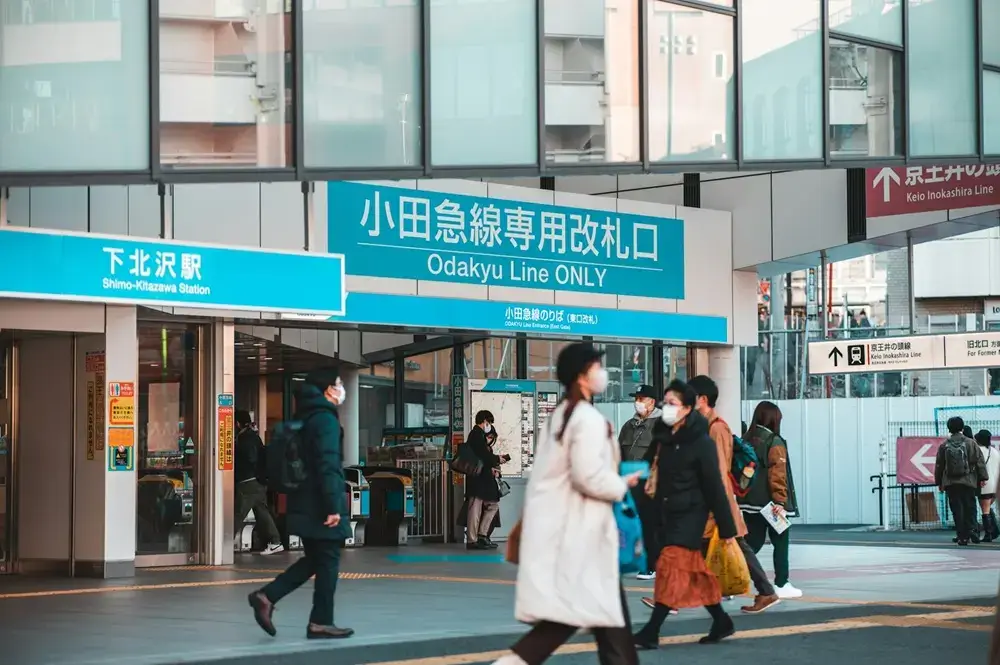
Photo by Fratto Kenchiku on Unsplash
Of course, this is not true everywhere in Japan. In many rural areas, trains and buses are infrequent, and daily life depends much more heavily on cars. People living in large cities often walk more simply because that is how public transport works. Even so, for most people, getting somewhere on foot is still simply part of the day.
These everyday movements matter when we think about health and longevity in Japan. Japan is often described as a country of long life, but that cannot be explained by any single food or healthy habit. As I explored in my earlier article, many behaviours that support good health are built naturally into everyday life through schools, food, the changing seasons, and the way people move around.
Walking is one of them.
The habit of walking to school does not end with graduation. What begins as the daily walk to school gradually becomes an ordinary part of everyday life.
A Tradition Worth Protecting
For generations, the idea that children should walk to school has simply been part of everyday life in Japan.
Walking to school is more than a way of getting children to class.
It is a culture.
A culture that values helping children enter society safely, rather than trying to shield them from every possible risk. A culture that believes children grow by being trusted with a little more responsibility each year, rather than having every problem solved for them. A culture that sees raising children not only as the responsibility of individual parents, but of the wider community as well.
These values have been passed on quietly from one generation to the next.
But this culture is now facing new challenges.
In some parts of Japan, the number of school-age children has fallen so much that it is becoming difficult to organise walking groups at all. In other areas, fewer children mean longer walks to the meeting point before the journey to school even begins.
The local volunteers who have long watched over children on their way to school are also growing older. As more people continue working later in life, while many long-time volunteers are reaching the point where they can no longer continue, fewer people are stepping in to take their place.
At the same time, as dual-income households have become the norm, many parents find it more difficult to take part in morning crossing duties. As a result, some schools have begun reducing or even discontinuing their walking group systems.
Japan's tradition of walking to school has always evolved with society. As society changes, the ways of supporting it will have to change as well.
Even so, many people still believe this tradition is worth preserving.
Not simply because it helps children get to school, but because they believe there are some things that can only be learned on that short walk each morning.
Frequently Asked Questions
Is it actually safe for young children to walk to school alone in Japan?
Japan's low crime rate is part of the reason, but it isn't the whole picture. Before starting school, children practise their route repeatedly with a parent. Once school begins, that journey is supported by walking groups, local volunteers, school safety checks, and traffic measures such as school zones and Green Belts.
What is a tōkōhan (school walking group)?
A tōkōhan is a group of neighborhood children who walk to school together, usually led by the oldest students. Younger children learn the route and safety habits by following the older ones, while older students take on responsibility for helping keep the group together and making sure everyone arrives safely.
What is a Green Belt on a Japanese street?
A Green Belt is a strip of road painted green along the edge of streets that lack sidewalks, particularly in rural areas. On school routes, it highlights the space where children are expected to walk and reminds drivers to watch for young pedestrians.
Is this tradition of walking to school changing in Japan?
Yes. Declining birth rates are making it harder to form walking groups in some areas, and the volunteers who have long watched over children on their way to school are aging, with fewer people stepping in to take their place. Many schools and communities are adapting, but the belief that walking to school is an important part of childhood remains deeply rooted in Japan.
Is Old Enough! an accurate picture of Japanese childhood?
Old Enough! focuses on very young children running their first errands alone, not on walking to school. The situations in the programme are carefully planned and supervised behind the scenes. Even so, the show reflects a broader cultural idea that many Japanese people recognise: children gradually become more independent by being trusted with age-appropriate responsibilities. Walking to school is another example of that same way of thinking.