
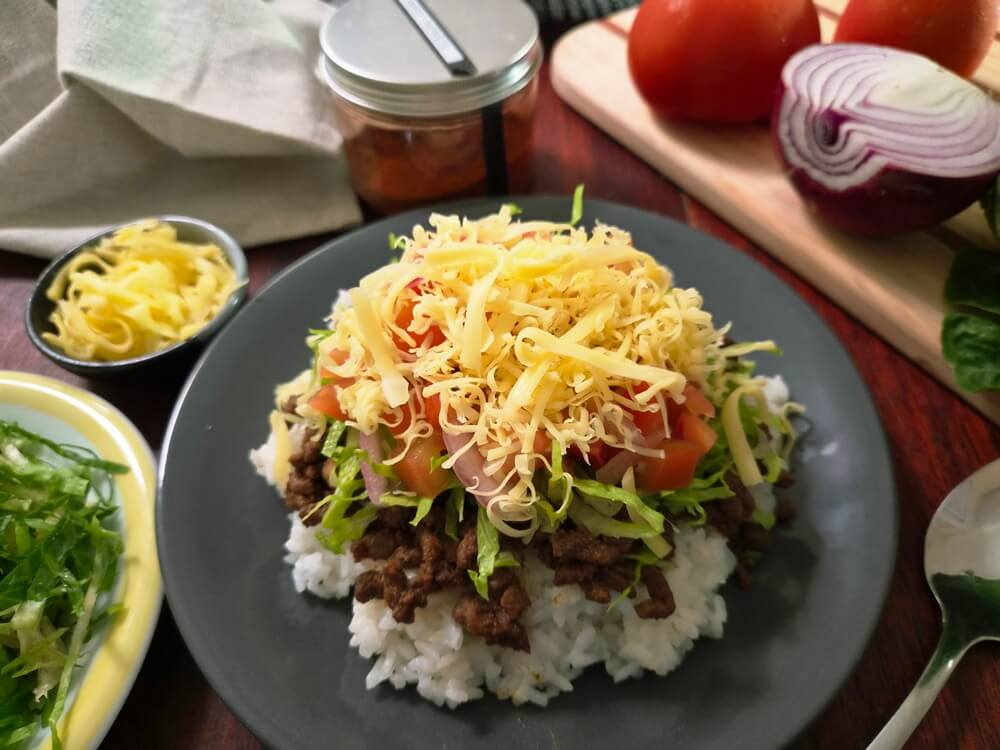
Why You’ll Love This Easy Taco Rice
My family loves taco rice.
The reason I decided to share it here was actually pretty simple: they kept asking me to make it again.
It's one of those meals everyone is happy to see on the table, and it takes very little effort to make. Seasoned minced meat, rice, crisp lettuce, fresh salsa and cheese come together quickly, so I can have dinner ready even on a busy weeknight.
One evening, while making taco rice again, I found myself thinking about the fact that it came from Okinawa. I already knew that much. But I had never really wondered what Japan was like when the dish was created, or what the people who first made and sold it were thinking at the time.
How did a plate of rice topped with taco meat, lettuce, tomato and cheese become one of Okinawa's best-known local foods?
That made me want to look into the story behind it.
The Origin of Taco Rice in Kin Town, Okinawa
The story begins in 1984 in Kin, a town in northern Okinawa.
Just outside Camp Hansen, a large US Marine Corps base, a man named Matsuzo Gibo opened a small restaurant called Parlor Senri. Gibo already had years of experience running restaurants and bars in towns near US military bases, where many of his customers were American servicemen.
At the time, Gibo wanted to offer the young American servicemen something inexpensive but filling. Tacos were already familiar to the servicemen he served, and Gibo came up with a simple idea: instead of serving the seasoned taco meat inside a tortilla, he put it over rice, an everyday staple in Japan.
That became taco rice.
It was cheap, quick to serve and substantial enough to satisfy hungry customers. The dish caught on, first among the American servicemen around the base and then with local Okinawans as well.
Today, we might describe taco rice as "fusion food," combining Mexican-American taco flavours with Japanese rice. For Gibo, though, it was a practical response to what his customers needed.
The idea itself was simple. The setting behind it, though, was much more specific to Okinawa.
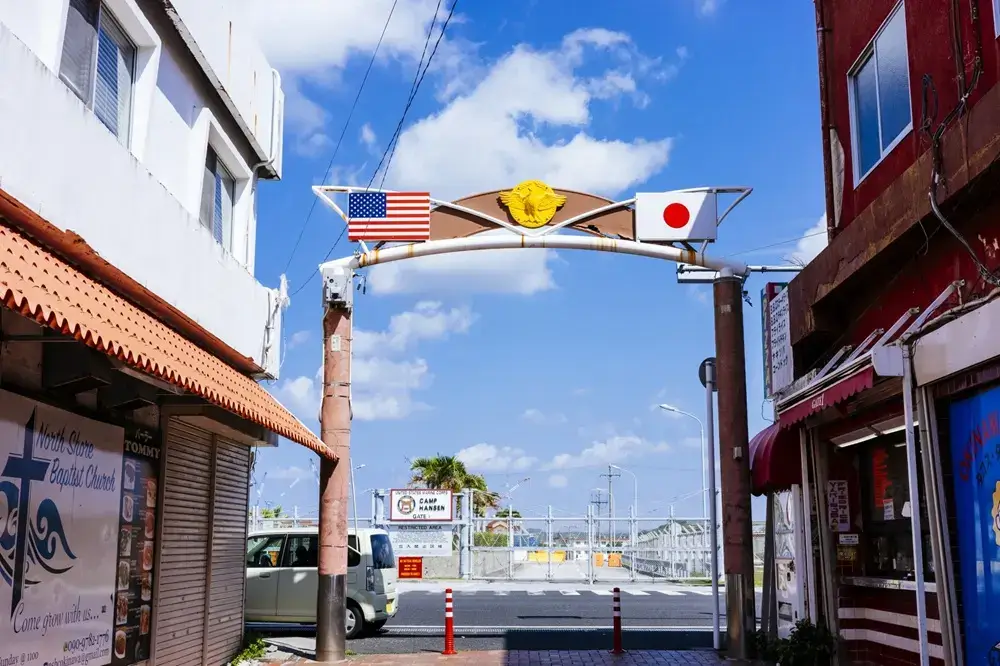
Kin Town in Okinawa by makieni, via Photo AC
The Postwar History Behind Taco Rice
After the Battle of Okinawa in 1945, the islands came under US control. While the rest of Japan regained sovereignty in 1952, Okinawa remained under American administration until 1972, when it was returned to Japan.
By then, US military bases had become a major presence on the island. Many remained after reversion, including Camp Hansen in Kin.
That history is complicated, and the presence of the bases has never been only a story of cultural exchange. Land, politics and everyday life in Okinawa have all been shaped by it, in ways that are still debated today.
Alongside that larger history, though, there was also ordinary daily contact. In towns around the bases, Okinawan businesses served American customers, and restaurants and bars adapted to what those customers ate, wanted and could afford.
Food was one of the places where those worlds met.
Parlor Senri was part of that everyday world. Gibo was an Okinawan restaurant owner serving American customers, and taco rice brought familiar taco flavours together with the rice eaten every day in Japan.
That doesn't make taco rice just an American dish adapted for Japan. What happened next is what made it distinctly Okinawan.
How Taco Rice Became an Okinawan Local Food
Taco rice did not stay around the gates of Camp Hansen for long.
Its low price and generous portions were popular with American servicemen, and young Okinawans took to it too. From Kin, the dish gradually spread across the island.
Today, taco rice is sold in restaurants and cafés throughout Okinawa, with different shops putting their own spin on the meat, sauce and toppings. It has even appeared on school lunch menus in Okinawa.
Parlor Senri closed in 2015, but Gibo's family continued serving taco rice through King Tacos, and by then the dish had already grown far bigger than the small restaurant where it began.
I find it interesting how quickly something so new could become part of a region's food culture. Taco rice has none of the long history we often associate with Japanese regional cuisine. It grew out of ingredients and circumstances that reflected Okinawa at that particular moment.
Yet today, it is widely recognised as one of Okinawa's local foods.
Japanese food does not have to be centuries old to tell us something about Japan. Sometimes a newer dish can tell us just as much about a particular place and period as an old one can.
Why Taco Rice Is the Perfect Weeknight Dinner
Most of the work is in cooking the seasoned minced meat and chopping the toppings. After that, everything is just layered over rice.
It is also easy to adjust to different tastes. For a milder version, I can use fewer spices and let the soy sauce and dashi come through more clearly. For adults who like more heat, adding chilli or extra spices gives the meat a completely different character.
Another reason it works so well at home is that I usually already have most of the ingredients. Rice, minced meat, lettuce, tomatoes, cheese and basic seasonings are all easy to keep on hand, so taco rice does not need much planning.
And unlike some Japanese dishes, the ingredients are easy to find outside Japan. There is nothing specialised here, which is one reason I can make it regularly in Australia.
For me, all of that is what makes taco rice such an easy meal to come back to. It has a very specific Okinawan story, but at home it's just a quick, satisfying meal that works on a busy night.
Quick & Easy Japanese Taco Rice Recipe
This is the version I make at home for four people. The seasoning is easy to adjust, so you can keep it mild or add more chilli and spices if you prefer more heat.
If you'd rather watch the process first, I've also made a short video showing exactly how I prepare and assemble taco rice at home.
Ingredients
- 1 tsp oil
- 700 g minced beef
- 1 tbsp ground cumin
- 1 tbsp sweet paprika
- 1 tsp dried oregano
- 1 tsp garlic powder
- 1/4 tsp chilli powder
- 70 ml soy sauce
- 8 g instant dashi powder
- 3 tomatoes
- 1/2 red onion
- 2 tbsp rice vinegar
- 2 cups shredded lettuce
- 1 cup grated cheese, or as much as you like
- 800 g cooked rice, about 200 g per person
How to Make Taco Rice
- Cook the taco meat. Heat 1 teaspoon of oil in a frying pan and add the minced beef. As the beef starts to cook, add the cumin, sweet paprika, oregano, garlic powder and chilli powder. Cook everything together, breaking up the meat as you go, until the beef is cooked through and the spices are fragrant.
- Add the soy sauce and dashi. Add the soy sauce and dashi powder, then continue cooking until the beef is well coated and most of the liquid has been absorbed.
- Prepare the lettuce. Finely shred the lettuce and set it aside.
- Make the salsa. Dice the tomatoes and thinly slice the red onion. Combine them in a bowl with the rice vinegar and mix well.
- Prepare the cheese. Use pre-grated cheese, or grate your own if you prefer, and set it aside.
- Assemble the taco rice. Divide the cooked rice between four plates or bowls. Add the taco meat, followed by the shredded lettuce, salsa and grated cheese.
Serve straight away.
Frequently Asked Questions
Can I use store-bought taco seasoning?
Yes. Store-bought taco seasoning works well if you want to make the recipe even quicker. I still like to add soy sauce and dashi, which gives the taco meat a slightly more Japanese flavour.
What kind of cheese works best for taco rice?
Shredded cheddar is a classic choice because it adds both richness and colour. If you do not have cheddar, shredded pizza cheese or a mild Gouda also works well.
Can I use store-bought salsa?
Yes. A mild or medium bottled salsa works perfectly well. If you have time, though, making a simple fresh salsa with diced tomatoes, thinly sliced red onion and rice vinegar gives the dish a fresher, juicier texture.
Is taco rice Mexican or Japanese?
Taco rice was inspired by tacos, but the dish itself was created in Kin, Okinawa, in the 1980s. It is therefore an Okinawan dish with clear Mexican-American influences rather than a traditional Mexican recipe.
Continue Reading
This article contains affiliate links. If you make a purchase through one of these links, Untranslated Japan may earn a small commission at no additional cost to you.