
What Is Komenuka? Japan's Rice Bran Skincare Tradition
Have you heard of komenuka? You may already have eaten it without realizing it.
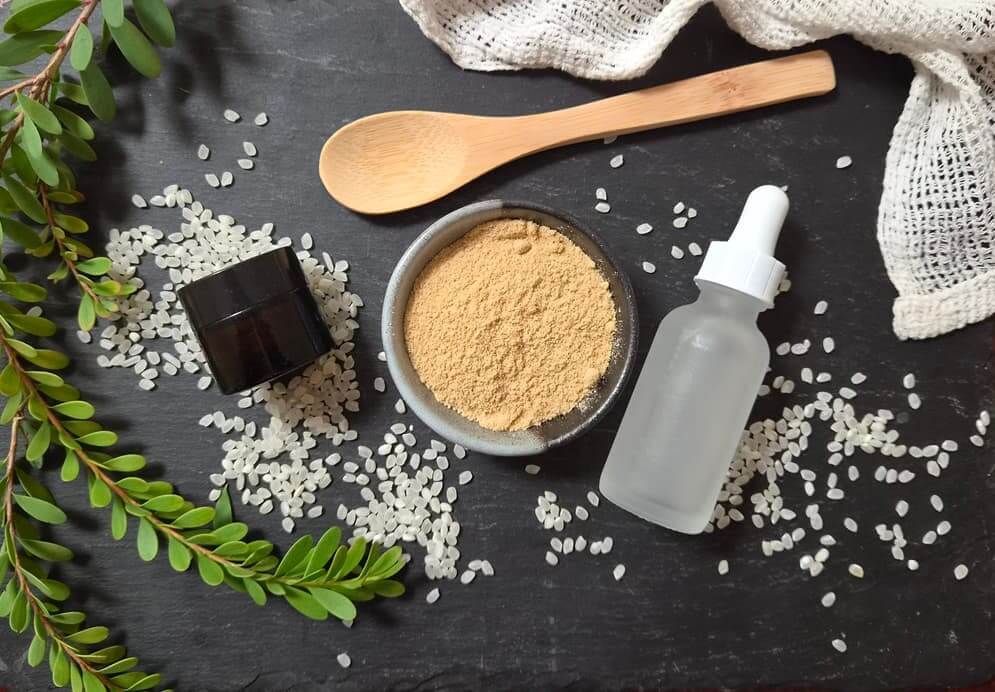
Komenuka is what remains when brown rice is polished into white rice. In English, it's known as rice bran. As the outer layers of the grain are removed, they leave behind a fine, pale-brown powder. That is rice bran. It might sound like something that simply gets thrown away. But rice bran has much more to offer. It contains fiber, fats, vitamins, and minerals, and today it's sold as a food in its own right. You may have seen bags of it in supermarkets or health food stores, meant to be stirred into cereal, yogurt, or smoothies.
But eating it isn't all you can do with this humble brown powder. Have you come across the words “rice bran” somewhere else, perhaps in a beauty article or on the ingredient list of a skincare product? Look at the ingredients in a toner, serum, or cleanser, and you'll find names like rice bran extract, rice bran oil, and rice-derived ceramides more often than you might expect.
It would be easy to assume that rice bran is just another relatively new skincare ingredient. It isn't. In countries where rice has long been a staple, different parts of the grain found their way into uses beyond food. Skincare was one of them. The rice bran we now find listed among the ingredients in modern skincare was once something people applied directly to their skin.
So how did they use it?
How Rice Bran Was Used in Edo-Period Skincare
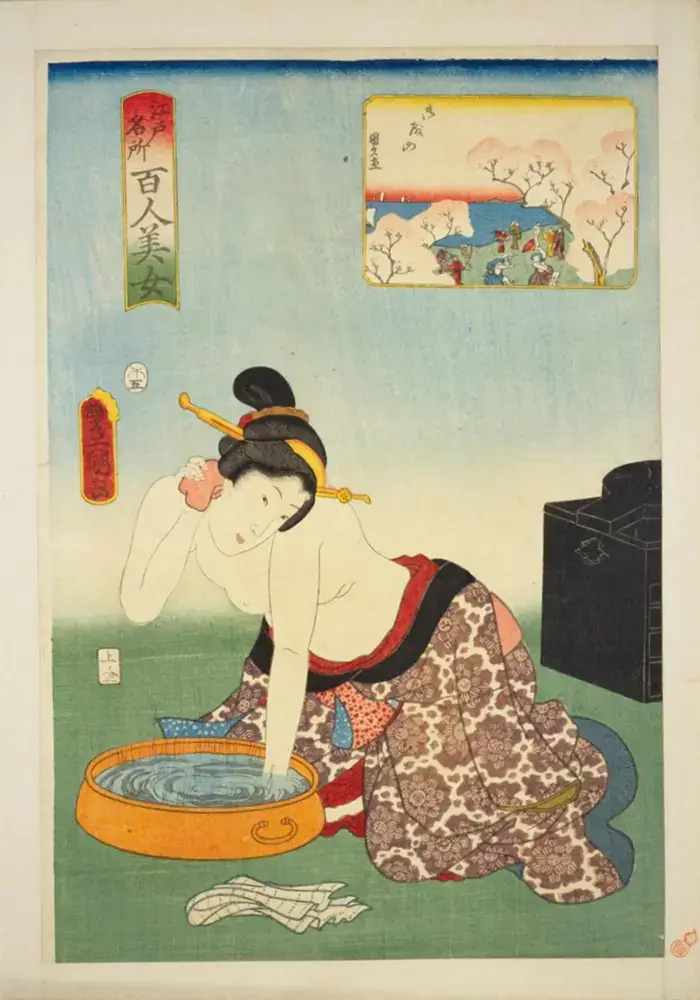
Utagawa Kunisada, Gotenyama, from One Hundred Beautiful Women at Famous Places in Edo, 1857–58. Source: NDL Image Bank, National Diet Library, Japan.
1858, Edo.
A young woman sits in front of a basin. In her hand is a small red pouch. Inside is neither perfume nor an expensive herb. It's the brown powder left behind when rice is polished: rice bran.
This woman appears in the ukiyo-e print Edo Meisho Hyakunin Bijo, by Utagawa Toyokuni III. You can see the basin beside her and the small red nuka pouch in her hand. She dips the pouch into the water, wrings it out, and gently slides the softened bag from the nape of her neck down toward her chest.
What surprised me was finding an even earlier record that describes exactly how rice bran was used to wash the face. Miyako Fūzoku Keshōden, published in 1813, notes that the water used to wash the face shouldn't be too hot, and that the nuka pouch shouldn't be rubbed roughly against the skin. Rubbing too hard, it warns, could damage the skin's delicate texture. The pouches were small bags of silk or cotton, filled with fresh rice bran and soaked in lukewarm water before use.
There's something strikingly familiar about this: use warm water, not hot; don't rub; glide the pouch gently over the skin. More than two hundred years later, skincare advice still tells us much the same thing. Of course, women in Edo had never heard terms like “skin barrier” or “ceramide.” Even so, experience seems to have taught them that skin should be treated gently.
And the nuka pouch wasn't a luxury reserved for wealthy women. As rice-polishing techniques advanced during the Edo period, rice bran became widely available to ordinary people. Public bathhouses sold rice bran, and bathers could bring their own pouches to fill.
Perhaps it was precisely because rice bran was so readily available that people found so many uses for it, including cleansing the skin.
Why Rice Bran Skincare Never Disappeared in Japan
The nuka pouch belongs to the Edo period, but the idea of using rice bran on the skin has never felt particularly ancient to me. When I read manga or novels set in historical Japan, I sometimes come across women using rice bran on their skin or washing with the cloudy water left over from rinsing rice. So long before I started looking through old records, I already knew, in that vague way we sometimes absorb things without remembering exactly where they came from, that rice had once been part of Japanese beauty routines.

An original illustration inspired by my childhood memory of seeing rice bran appear casually in Japanese manga.
And I've used rice bran myself, though in my case, it wasn't in a traditional nuka pouch. The rice bran I know is the modern kind, made into skincare products. Japan still has products and skincare lines that put rice bran front and center, including brands such as Bijin Nuka. So while the nuka pouch itself belongs to another era, rice bran never entirely disappeared from Japanese skincare.
Skincare has changed enormously. Today we choose products by reading ingredient names like ceramides, niacinamide, and retinol, yet this plain brown powder left over from polishing rice is still being used.
This raises a simple question: Did rice bran endure simply because it was accessible, or because generations of women genuinely saw its benefits? The search for answers led me to an unexpected place: a sake brewery.
The Hands of Sake Brewers and the Rise of Rice Skincare
For years in Japan, there has been a familiar story about people who work in sake breweries: their faces may show their age, but their hands remain remarkably smooth and beautiful.
The master brewers who oversee sake production are known as toji. Their work involves rice, koji, rice inoculated with a fermentation culture, and water, with many stages of brewing traditionally done by hand. Somewhere along the way, people began to wonder whether that daily contact might have something to do with the condition of their skin.
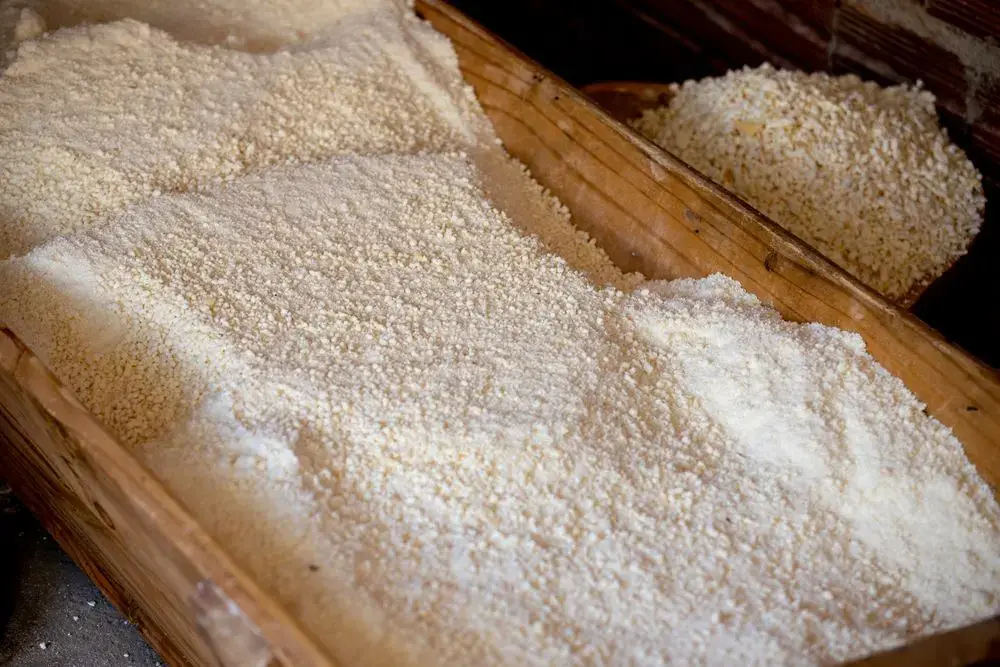
Photo by marquino rocha via Pexels.
One company that paid attention to this idea was Nihonsakari, a sake brewery founded in Nishinomiya, Hyogo, in 1889. According to the company, the observation that sake brewers often had beautiful hands led it to research ingredients found in the sake-making process. In 1987, it launched a skincare line called Komenuka Bijin, or “Rice Bran Beauty.”
Of course, the story of sake brewers’ hands isn't proof that rice bran itself was responsible. Sake brewing involves far more than rice bran alone: there is rice, koji, yeast, fermentation, and constant contact with water. But the story does show something interesting. Long before skincare companies began listing individual active ingredients on labels, people were already noticing what repeated contact with rice-related materials seemed to do to the skin.
So beyond the anecdotes, what does modern science actually reveal about rice bran?
The Science of Rice Bran: Ceramides, Ferulic Acid, and Skin Hydration
Modern research shows that rice bran is far more complex than its humble appearance suggests. From a skincare perspective, two properties are particularly interesting.
Helping the skin retain moisture
Rice bran contains glucosylceramides, lipids related to the ceramides that form part of our skin barrier. In human epidermal models, rice-derived glucosylceramides have been associated with improved hydration and reduced transepidermal water loss (TEWL). In simple terms, they may help the skin hold on to moisture more effectively.
Helping protect the skin from oxidative stress
Rice bran also contains naturally occurring antioxidants, including ferulic acid, γ-oryzanol, and vitamin E compounds. Research on rice-bran-derived ingredients has demonstrated antioxidant activity, making these compounds particularly interesting in modern skincare.
So what does this mean for dry, dull-looking skin?
When skin loses moisture, its surface can become dry and rough. A rough surface reflects light less evenly, which can make the complexion look dull or tired. Supporting hydration may therefore affect not only how skin feels, but also how smooth and fresh it appears.
There is one important distinction. Modern studies generally examine purified compounds, extracts, oils, or formulated products—not raw rice bran inside an Edo-period nuka pouch. So we cannot use modern research to prove exactly what women centuries ago experienced when they washed with rice bran.
What we can say is that the humble brown powder they were using contains compounds that modern skincare researchers still find interesting today.
Rice Beauty Wasn't Unique to Japan
Up to this point, I had been looking at rice bran largely as a Japanese beauty tradition. But when I looked a little further, I found a similar idea in neighboring Korea.
Not exactly the same one, though. Historical Korean records show rice being used on the skin too, although not in the same way as Japan's nuka pouch.
The early 17th-century medical text Donguibogam mentions rice-rinsing water, or migamsu, as something used to wash the body and remove dirt. Later records also describe rice being ground and incorporated into preparations used on the face. These weren't necessarily the same thing we would call skincare today, but they show that rice had found its way from the kitchen onto the skin in Korea too.
Then, as I followed the connection between rice and beauty a little farther, I came across a completely different use in southern China. Not for the face, but for the hair.
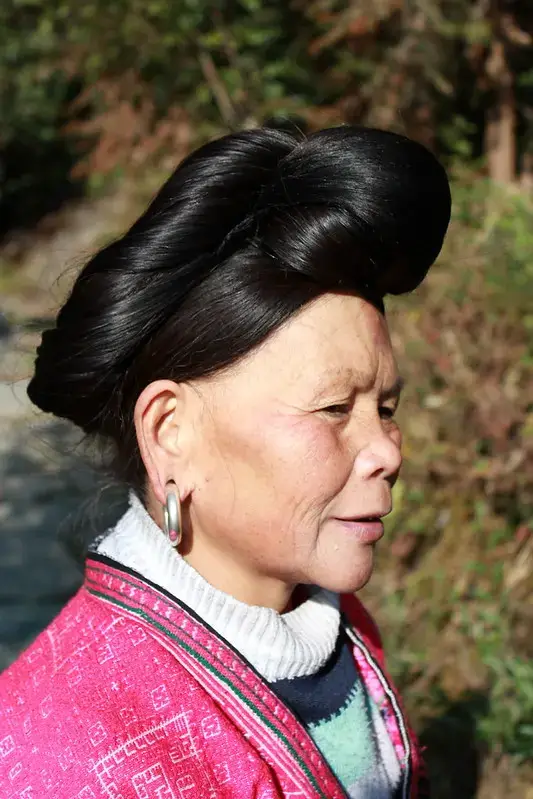
In Huangluo Yao Village, in China's Guangxi Zhuang Autonomous Region, live members of the Red Yao community, whose women are internationally known for their extraordinarily long hair. Their long-hair tradition has drawn international attention, including a Guinness World Records event involving 250 women, and the village is also known for women who retain long, glossy, dark hair well into old age.
Rice appears in their traditional haircare too. The starting point is the water left after rinsing rice, but rather than simply pouring it over the hair, it is traditionally fermented and combined with ingredients such as pomelo peel and other plant materials before being used to wash the hair.
Today, there are modern haircare products inspired by this Red Yao tradition of fermented rice water. Of course, a shampoo bar isn't the same as the traditional liquid used by Red Yao women. But shampoo bars made with fermented rice water are still relatively hard to find, so I'm genuinely interested in trying one someday.
These practices developed within different cultures, and I haven't found evidence showing that one was passed from one region to another. That makes the similarity all the more fascinating: across different rice-eating cultures, the same familiar ingredient found its way beyond the kitchen and into beauty rituals.
Modern Rice Cleansers: A Gentler Way to Exfoliate
So what does this old idea of using rice for beauty look like today?
Modern rice skincare is, of course, very different from an Edo-period nuka pouch. Instead of simply putting rice bran into a cloth bag, skincare companies can now extract particular components from rice, ferment them, or combine them with enzymes and other ingredients.
And this isn't happening only in Japan.
One example is Tatcha, an American skincare brand whose products are made in Japan. Its founder, Vicky Tsai, created the brand after struggling with her own skin and becoming fascinated by the skincare traditions she encountered while visiting Japan.
Its Rice Polish—a powder cleanser made with Japanese rice bran and papaya enzymes—transforms into a creamy foam when mixed with water. The product has even found some high-profile fans: Meghan Markle has spoken publicly about using it. What I find most interesting, though, is what its success represents. A centuries-old Japanese beauty ingredient has been reinterpreted through modern formulation and found an audience far beyond Japan.
The one I've been using myself is the Korean-made Hydro Boost Enzyme Powder Wash by TIRTIR. While centered on rice extract, this modern powder cleanser takes the traditional ingredient in a new direction, pairing it with a multi-tasking blend of enzymes (papain, bromelain, and protease), mild PHA, and fermented ingredients.
I use tretinoin daily, which can leave my skin quite sensitive, so finding a cleanser that doesn't irritate it isn't always easy. I've been able to use this one every morning without any stinging or tightness; instead, my skin feels soft and moisturized after washing.
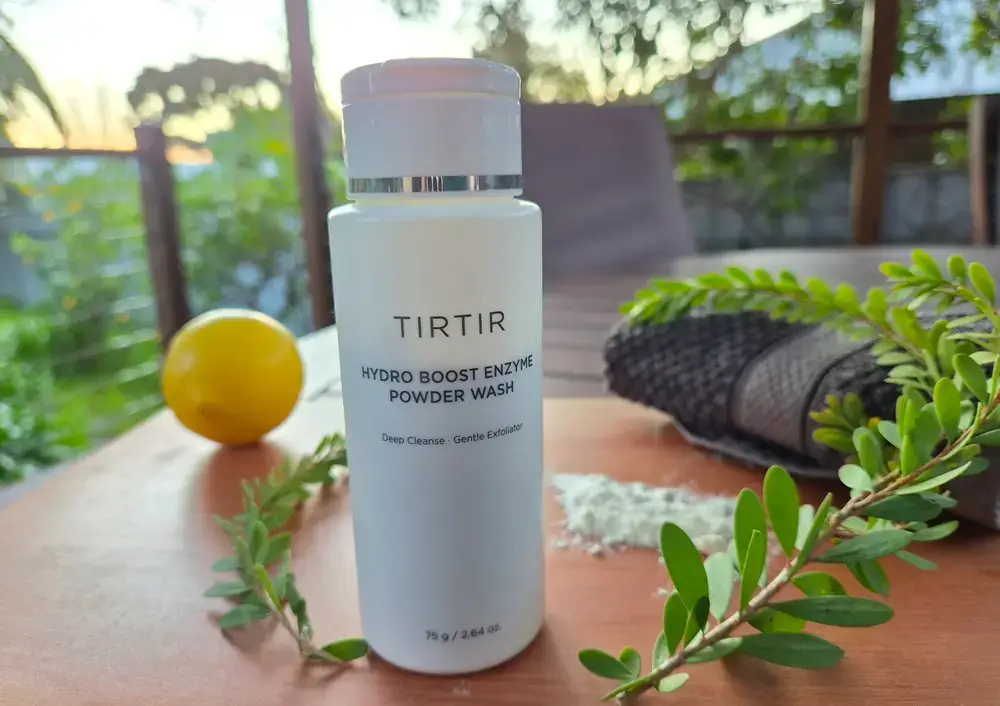
Photo: Untranslated Japan
That's simply what works for my skin. If yours is sensitive or dry, less frequent use may suit you better.
Looking at these products after researching the old nuka pouch, the contrast is striking. The basic idea of using something derived from rice to cleanse the skin has survived, while almost everything about the formulation has changed.
Rice Skincare Beyond Cleansing: Serums and Everyday Care
So far, I've been looking at rice-derived products used to cleanse the skin. But in my daily routine, I care just as much about what I leave on my skin afterward.
My approach to skincare is fairly simple. I like to keep the products I use every day as straightforward as possible, with mostly naturally derived ingredients, minimal fragrance or coloring, and fewer extras that I don't feel I need. Then, when I want something more targeted, I add active ingredients such as vitamin C or retinol separately.
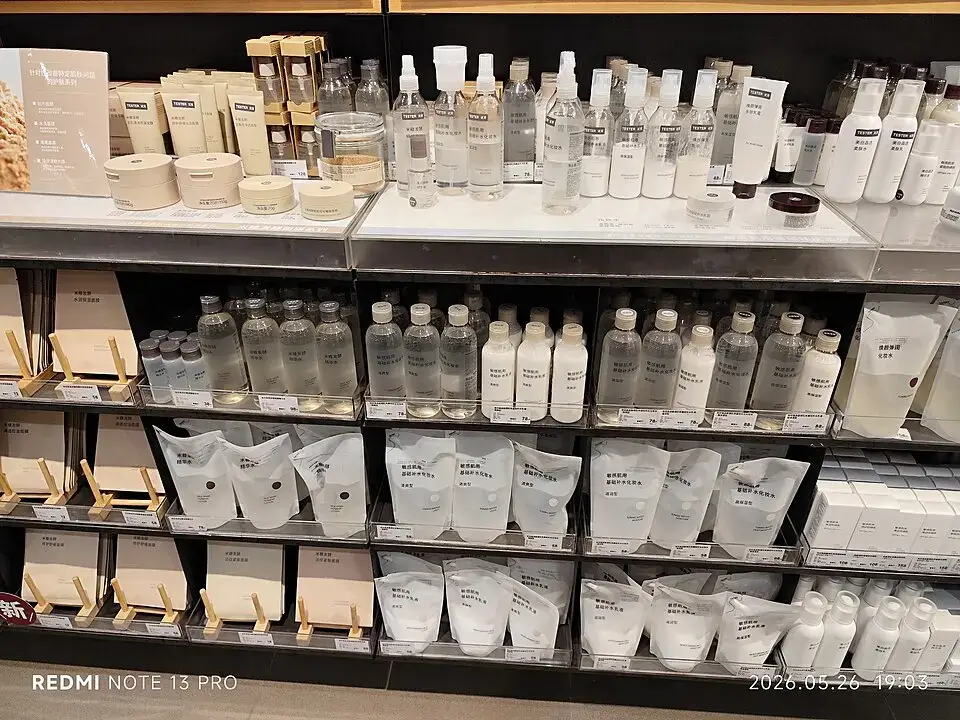
One product immediately caught my attention: MUJI's Fermented Rice Bran Booster Serum.
What makes this serum unusual starts with what isn't in it: water. Instead, more than 65% of the formula is MUJI's own fermented rice bran liquid, made from rice bran grown in Yamagata Prefecture. It also contains Ceramide NP, amino acids, and hyaluronic acid to support hydration. MUJI says the formula is made with 100% naturally derived ingredients and contains no added fragrance, coloring, mineral oil, parabens, alcohol, or phenoxyethanol.
That combination helps explain why the serum has attracted so much attention in Japan. It offers a concentrated rice-bran-based formula while remaining deliberately simple and designed with skin sensitivity in mind. And despite all of that, a 50ml bottle costs just ¥1,990 in Japan.
I've used MUJI skincare for years, and its Sensitive Skin Lotion – High Moisturizing is still my everyday toner. So this is exactly the kind of product that makes me curious: an unusual formula, a brand I already trust, and a price that makes trying it feel remarkably accessible.
Apparently, I'm far from the only one. MUJI Japan currently shows a 4.7 out of 5 rating from more than 6,000 reviews, and even warns that the serum may sell out again shortly after restocking.
When I checked MUJI Australia, it was also sold out online. So for now, it remains firmly on my list for my next trip to Japan.
ZBMAUE oopAAM, CC0, via Wikimedia Commons.
There is one more rice serum I became interested in while researching this article: Beauty of Joseon's Glow Deep Serum: Rice + Alpha-Arbutin. I already use and like the brand's sunscreen, so when I came across the serum, I naturally wanted to look at the ingredient list too.
The ingredient list starts with rice bran water. The formula combines it with moisturizing and skin-conditioning ingredients such as glycerin and panthenol, along with niacinamide and alpha-arbutin. While the MUJI serum serves as an effortless hydrating layer, this formula takes a more targeted approach. If I were looking to address uneven skin tone and dark spots with a rice-based product, this is the one I'd be most curious to try.
I also like that Beauty of Joseon connects its use of rice to the history we looked at earlier, including rice-rinsing water in Joseon-era beauty practices. It brings us almost full circle. What once came directly from preparing rice in the kitchen is now being formulated into modern skincare.
We have come a long way from the days when people simply noticed through experience that rice seemed to do something good for their skin. Today, science can identify the compounds it contains, isolate them, ferment them, and formulate them into modern skincare products.
And yet, I wonder if part of the appeal is still much simpler than that. Rice is something people across Asia have eaten, handled, and lived with for centuries. Perhaps that familiarity is part of why we still feel comfortable putting it on our skin today.
Frequently Asked Questions
What is rice bran, and is it the same as rice water?
No. Rice bran is the nutrient-rich outer layer removed when brown rice is polished to make white rice. Rice water is the cloudy water produced when rice is rinsed or soaked. Both have appeared in Asian beauty traditions, but they are different materials and shouldn't be treated as interchangeable.
Is rice bran actually good for your skin?
Rice bran contains compounds that are of interest in skincare, including ferulic acid and lipids, while rice-derived ceramides have been studied for their role in supporting skin hydration and barrier function. However, research on extracted ingredients or formulated products doesn't prove that applying raw rice bran to the skin will have the same effects.
How did Japanese people traditionally use rice bran for skincare?
By the Edo period, rice bran was being placed inside small cloth pouches called nuka-bukuro and used to wash the skin. An 1858 ukiyo-e print even shows a woman washing her face with one, while an earlier Japanese beauty manual describes how rice bran could be used for cleansing.
Can you use rice bran or rice water directly on your face?
People do use both in homemade skincare, and DIY rice water and rice bran treatments are easy to find online. But raw ingredients aren't the same as skincare products formulated for the face, particularly when it comes to hygiene, stability, and concentration. If you have sensitive skin, a properly formulated rice-derived product may be a more predictable place to start.
Is rice bran skincare suitable for sensitive skin?
It can be, but “rice-based” doesn't automatically mean gentle. The complete formula matters, including other active ingredients, fragrances, and exfoliants. I have sensitive skin from daily tretinoin use and can personally use my TIRTIR enzyme cleanser every morning, but that doesn't mean the same frequency will suit someone else's skin.
What is the difference between rice bran, rice extract and fermented rice in skincare?
Rice bran is the outer layer of the grain itself. Rice extract is made by extracting selected components from rice or rice bran for use in a formulation. Fermented rice ingredients are produced by allowing microorganisms to transform rice-derived material before it is incorporated into skincare. They aren't simply different names for the same ingredient, so the benefits of a product depend on the specific ingredient and the overall formulation.
References
National Diet Library. “One Hundred Beautiful Women from Celebrated Places of Edo.” NDL Image Bank. Includes Utagawa Kunisada's 1857–58 series and identifies the Goten'yama print as showing a woman washing with a nuka pouch.
Sayama Hanshichimaru. Miyako Fūzoku Keshōden. 1813. National Diet Library.
Nihonsakari Co., Ltd. “History of Komenuka Bijin.” Official brand history describing the observation of sake brewers' hands and the 1987 launch of Komenuka Bijin.
Takeda, Shogo, et al. “Comparative Study on Epidermal Moisturizing Effects and Hydration Mechanisms of Rice-Derived Glucosylceramides and Ceramides.” International Journal of Molecular Sciences, 2023, 24(1):83. doi:10.3390/ijms24010083.
Zhou, Jingxiu, et al. “Exploratory Study on the Effect of Ferulic Acid Derived from Rice Bran on Dull Skin.” Drug Discoveries & Therapeutics, 2026, 20(3):245–253. doi:10.5582/ddt.2026.01024.
Heo Jun. Donguibogam, Tang-aek section, Water category: “Migamsu” (rice-rinsing water). Korean Medicine Classics Database, Korea Institute of Oriental Medicine.
Academy of Korean Studies. “Gyuhap Chongseo.” Encyclopedia of Korean Culture. Official reference entry for Bingheogak Yi's 1809 household encyclopedia.
Guinness World Records. “Long Hair Festival: 250 Chinese Women Land Record with Beautiful Combing Ceremony.” 2023. Describes the Red Yao long-hair tradition and fermented rice-water hair washing.
Continue Reading
Affiliate disclosure: Some links in this article are affiliate links. If you make a purchase through them, Untranslated Japan may earn a commission at no extra cost to you. Recommendations remain editorially independent.